
Review each risk point
In the heavy rain days at the beginning of September, the first thing Pung Luong commune officials did was not to wait for landslide reports, but to inspect areas that had been identified as dangerous.
Mr. Le Xuan Dung - Head of the Department of Agriculture and Environment of Pung Luong commune - said that the locality regularly sticks to the area, reviews and assesses the level of risk at each location at risk of landslides.
We proactively arrange 2 large-scale resettlement projects. The goal is to soon create a safe land fund to completely relocate about 50 households located in dangerous landslide areas this year and in the following years" - Mr. Dung said.
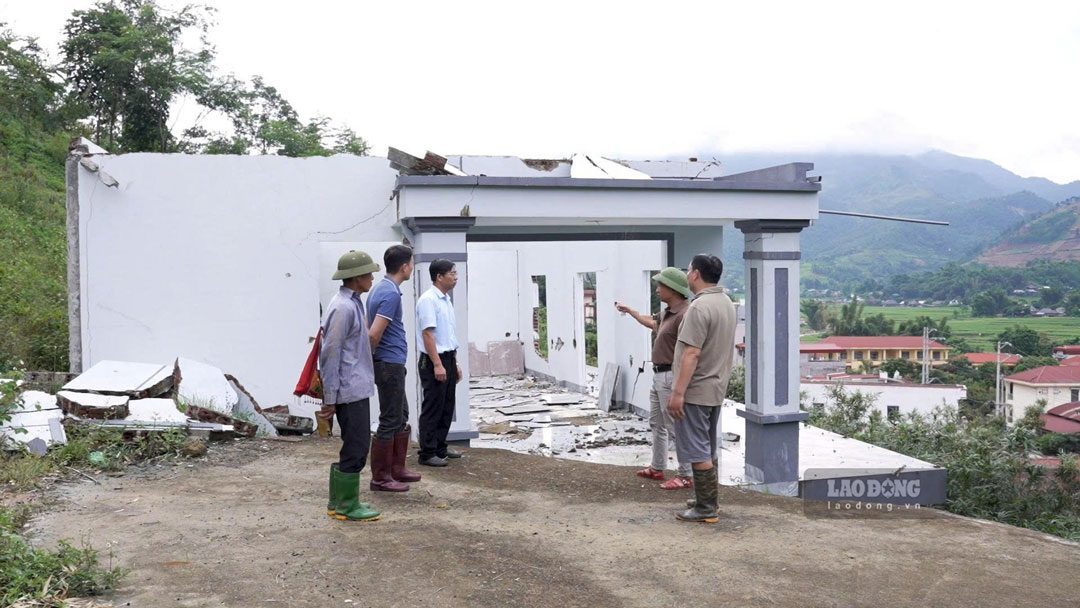
In Tu Le commune, more than 100 households are identified as being located in areas at high risk of landslides. The government is preparing infrastructure, developing relocation plans and building an emergency resettlement project.
Mr. Dinh Khanh Tung - Vice Chairman of Tu Le Commune People's Committee - said that right from the beginning of the year, the commune has developed a plan to respond to each type of natural disaster according to the "4 on-site" motto.
For households in dangerous areas, we have developed relocation plans, worrying about ways back for people to avoid natural disasters" - Mr. Tung affirmed.
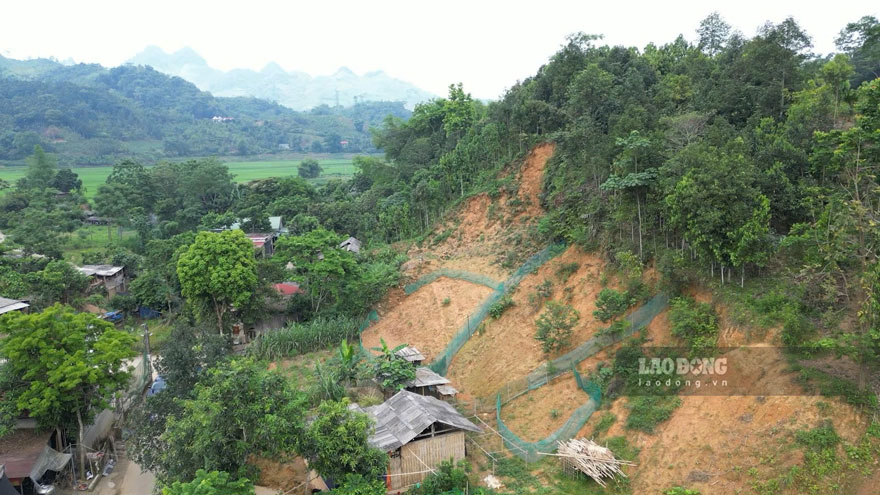
Similarly, through review, Thuong Ha commune authorities identified 91 households living in dangerous and extremely dangerous areas.
Instead of just building a temporary response plan, the locality is considering building 2 concentrated resettlement areas with synchronous infrastructure.
Mr. Nguyen Tien Luat - Deputy Head of the Economic Department of Thuong Ha commune emphasized that the relocation of these households to safe places aims to minimize unfortunate losses of life and property of the people.
Quantifying the risk of natural disasters
According to local authorities, if resettlement is a long-term solution, early warning is a "shield" in the short term.
In Tram Tau commune, many points have experienced landslides or high risks, especially on key traffic routes.
Local authorities are maintaining weather updates and transmitting warnings to people through many channels.
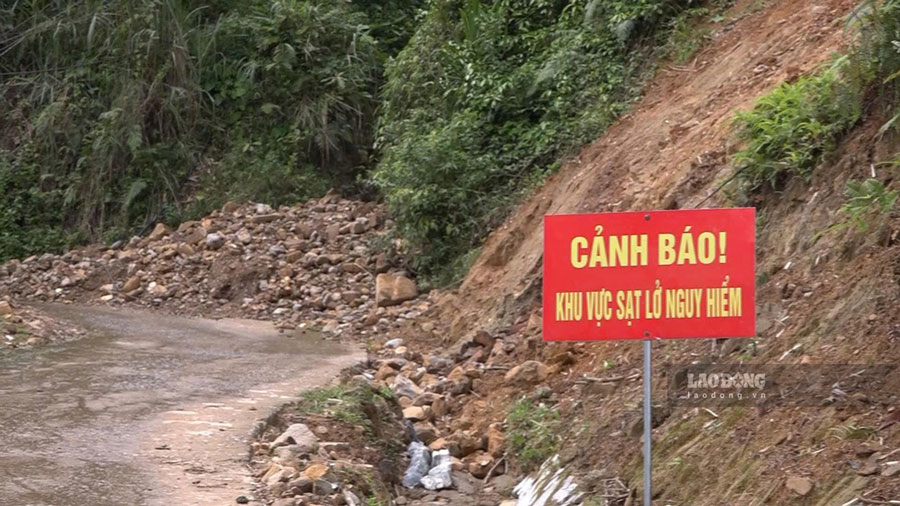
Mr. Bui Hong Anh - Vice Chairman of Tram Tau Commune People's Committee - said that the broadcasting system and Zalo operating groups of the commune and villages are used to transfer information to people as quickly as possible.
Not only sending information, the Military, Police and mass organizations also directly inspect key points.
When landslides occur, dangerous areas are cordoned off and warned to keep people away.
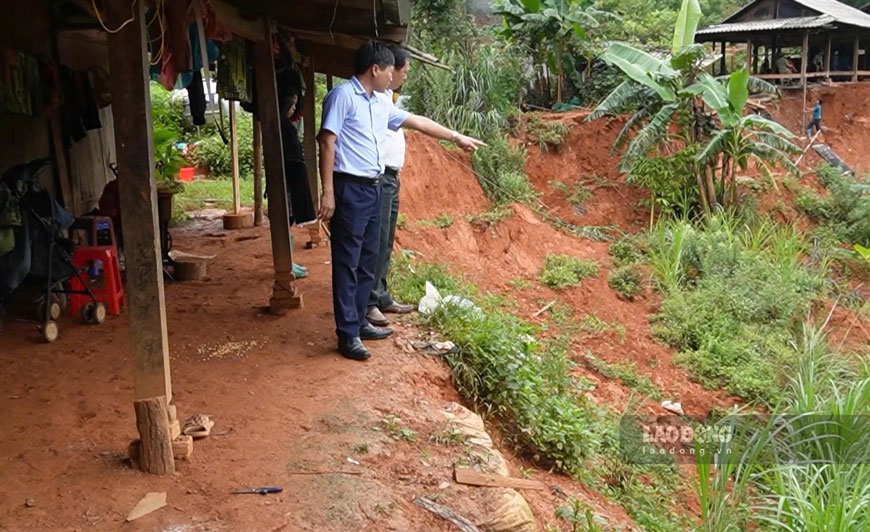
Or in Ban Giang village, Ban Xeo commune, when heavy rain appeared, the Party cell secretary and village head immediately mobilized 4 households to relocate to a safe place.
A relocation taking place before soil and rocks landslide may not create statistical damage figures, but the biggest goal is disaster prevention and control," shared Mr. Nguyen Van Thanh - Vice Chairman of Ban Xeo Commune People's Committee.
Recently, Lao Cai has completed the review and update of disaster response plans in 99 communes and wards, ensuring compliance with the actual situation and the 2-level local government model.
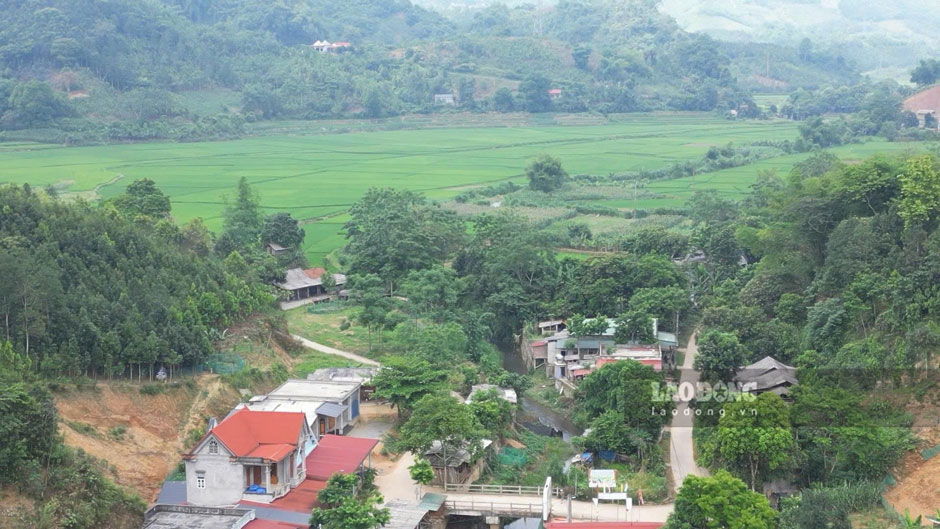
The review results determined that the whole province has 3,428 points and areas at risk of natural disasters, threatening about 23,163 households.
In which, there are 2,795 landslide risk points, affecting about 12,715 households; 404 flood risk points, affecting 9,301 households and 229 flash flood risk points, affecting 1,147 households.
Lao Cai Provincial People's Committee requests localities to eliminate the thinking of building "general" solutions and must shift from "countering" to "preventing".
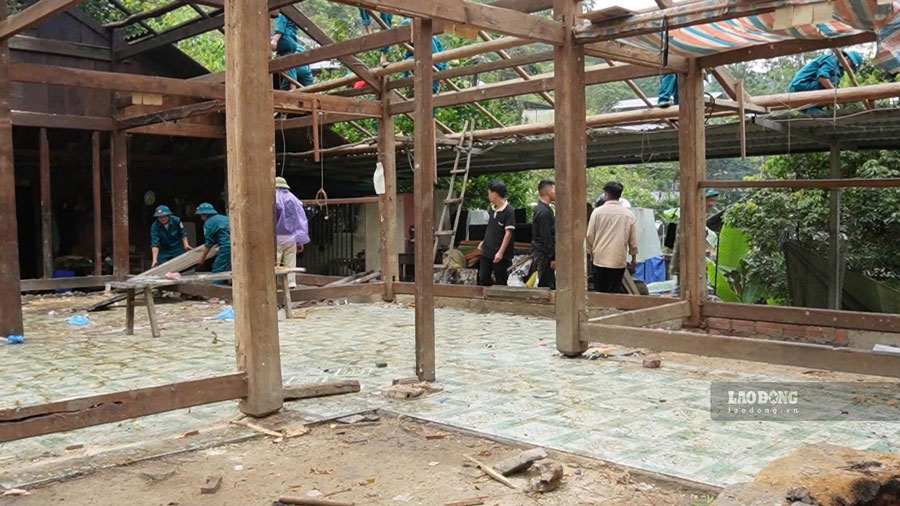
Each option must specifically quantify the number of affected households, evacuation locations, forces, vehicles and necessary resources.
From electricity, clean water, food, medicine to sanitation facilities, ensuring security at the evacuation site must be calculated in advance.
In particular, the support plan between communes must also be prepared so that there is no situation where the locality encounters an accident but does not know where to find support forces.


