Kim Chung Workers' Housing Area (Tien Loc Commune, Hanoi) is invested with budget capital on an area of about 20 hectares, including 28 units. This used to be a model of worker housing in Hanoi, serving the labor force in Thang Long Industrial Park and neighboring areas. However, many items in this housing area are currently abandoned and seriously degraded, causing waste and losing the urban beauty.
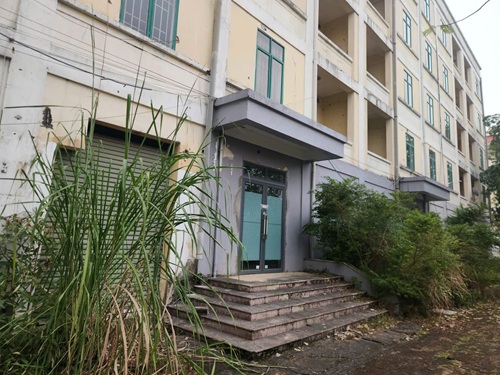
According to Lao Dong Newspaper reporters on December 10, a series of business areas on the first floor of buildings are in a state of "closed doors and bolts", many places are overgrown with weeds and trees sticking close to the entrance and exit. Many kiosks are temporarily covered with corrugated iron, the walls are peeling, and the door frames are damaged. The sidewalks around the buildings are covered with weeds, making it difficult for residents to travel.
Notably, at some closed kiosks, there was a situation of direct discharge of garbage into the walking area, affecting environmental sanitation and the daily life of workers and laborers. This situation shows great waste for public assets invested from the State budget.
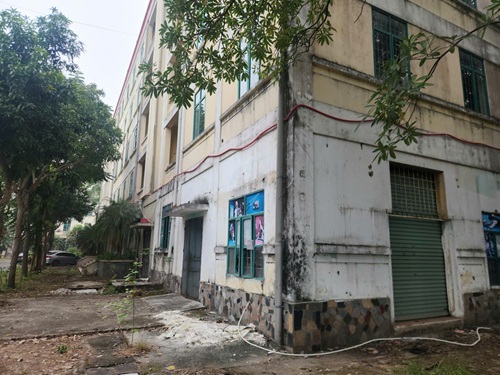
According to research, the initial cause of waste comes from the use of some first floors in buildings for the wrong purpose. Instead of serving essential utilities for workers, many locations have been leased for business and services that are not in accordance with regulations for a long time. Although the city's authorities have requested a revocation since 2017, the handling is still slow and unresolutely determined. By the second quarter of 2024, there were still about 20 illegal leasing points that had not been recovered, forcing local authorities to issue enforcement decisions.
Sharing with reporters, Ms. Nguyen Thi Tho (resident of DNA6 building) said that the kiosks have been abandoned for the past 2-3 years, causing great waste. "Previously, there were shops and eateries that were very convenient for workers after work. Now people have to go to the toad market outside to shop. People hope that these service areas will soon resume operations," said Ms. Tho.
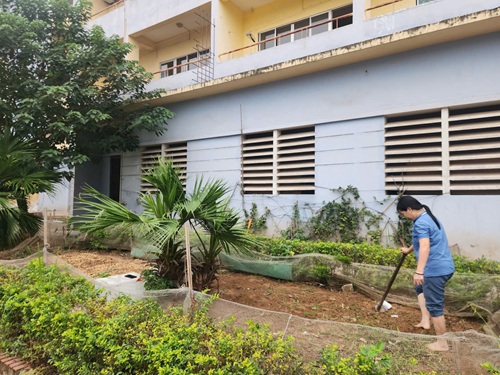
Sharing the same view, Ms. Nguyen Thi Huong (resident of DN3 building) said that because the land in the flower garden area is abandoned, vegetable growing is used to improve meals. "When the management agency requests, I am ready to return it," Ms. Huong shared.
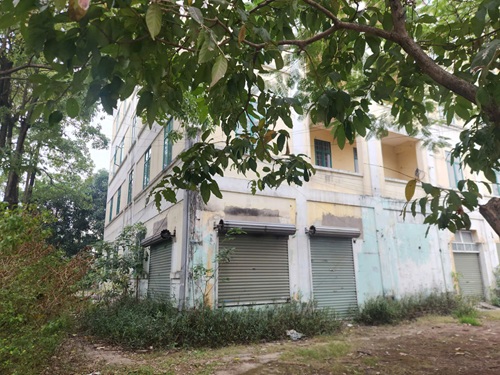
According to the representative of the Economic Department of Thien Loc commune, the recovery of areas used for bad functions has been prolonged because the previous coordination process to handle violations has not been effective. The commune has proposed that the Hanoi City Housing Management Agency soon find solutions to overcome the deterioration of the kiosks. "If not handled promptly, the level of damage will become increasingly serious, leading to increased repair costs," he said.
A representative of the Social Housing Management and Development Enterprise (under Hanoi Housing Management and Development Company Limited - Hanoi Department of Construction) said that Kim Chung Workers' Housing Area currently has an occupancy rate of over 80% in about 1,500 rooms, with two groups of tenants being single households and households. However, the first floor area (service) is currently vacant because according to new regulations, bidding and auction must be organized.
"Previously, we only needed to sign a lease contract, but now we have to follow the auction process. Therefore, the unit has temporarily suspended the lease to count and report, waiting for the Department of Finance to issue a unit price and the Department of Construction to hire an independent consultant before being able to auction. Up to now, there has not been a document directing the implementation, said a representative of the management and operation unit.
Kim Chung Workers' Housing Area is a project with social security significance. Therefore, to avoid wasting prolonged public investment resources, authorities need to soon have a plan to put abandoned kiosks and items back into use for the right purpose, meeting essential living needs and contributing to improving living conditions for thousands of workers living here.