
Early in the early days of the new year, the road leading to Tho Cong Temple in Khanh Khe commune (Lang Son) was already bustling with people's footsteps.
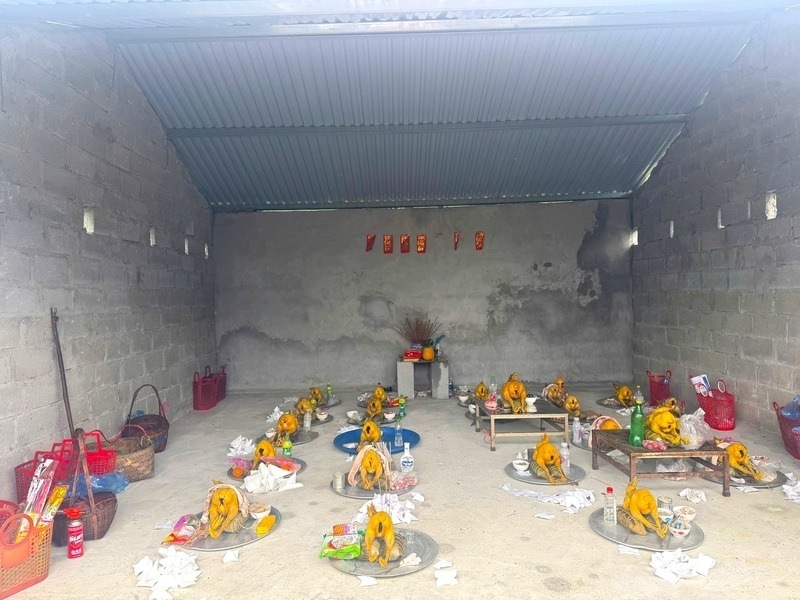
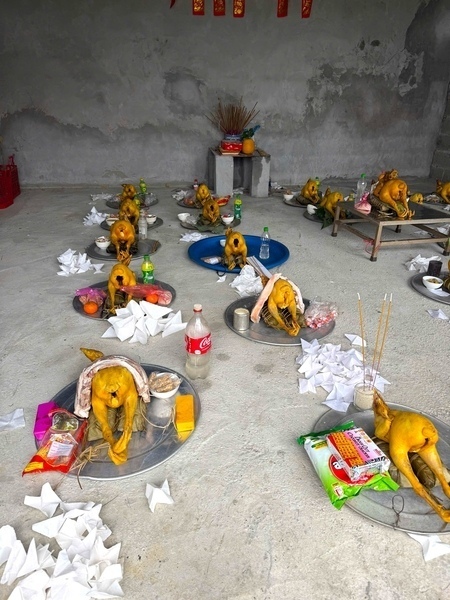
In the hands of the elders, fathers, and eldest sons in the family is a full tray of offerings including golden roosters, sticky rice with turmeric, banh chung, white wine, bowls of vermicelli, candies... All are placed neatly in front of the temple gate, respectfully "presenting the land" at the beginning of spring.
Going to worship Tho Cong, called Pay Tho in Nung language, has long become a unique custom of the Nung people every Lunar New Year.
Not only is it a spiritual ritual, this is also an important community activity, opening a new year for the whole village.
In the beliefs of the Nung people, Tho Cong is the god who manages land, houses, protects livestock, crops and maintains peace for the family.
When arriving at a new land area to establish a village, the first thing people do is to build a temple to worship Tho Cong, as a way to ask for permission from the gods and remember the merits of the village founders and village establishers in the past.
Therefore, almost every Tay and Nung village has a small shrine placed in a deserted, airy place with lush green trees.
Families living in the same hamlet will build a common temple, take care of it together, and burn incense.
Mr. Vi Van Huan (Khanh Khe commune, Lang Son) said: "On the afternoon of the 29th and 30th of Tet, people sent people to sweep and repair the temple to be clean. On the morning of the 1st, each family prepares two trays of offerings, one tray to worship ancestors at home, and one tray for Earth Gods. However, the main ritual is not at a fixed time.
According to Mr. Huan, depending on each village and residential area, people will agree on a common worshiping time.
Some places choose the moment of 0:30 on New Year's Eve, some hamlets organize it at 12 noon on the 1st day of Tet. There are also villages, such as in some residential areas in Khanh Khe, the ritual takes place at 12 noon on the 2nd day of Tet.
Although different in time, the common point is still completing the "tình đất" ritual before children and grandchildren go to "Tết mẹ", expressing respect for the gods who govern the land they live on.
When the time is set, men in the family represent the whole family to bring offerings to the temple. The offering tray cannot be without boiled roosters, turmeric sticky rice, banh chung, white wine, rice, incense and votive paper.
In Khanh Khe, many families prepare an extra piece of fresh pork weighing about 1kg, a bowl of vermicelli, a bowl of candies and two cups of wine.
The chickens chosen are usually large castrated chickens with golden skin, some places even see this as an opportunity to "compete in business", any beautiful, fat and healthy chicken will be praised by the people, as a sign of prosperity.
Depending on the customs of each place, the worshiping ceremony can be presided over by a respected elderly person in the hamlet, inviting a shaman or representing each family to pray. In the incense smoke of early spring, simple prayers send wishes for favorable weather, bumper crops, and harmonious family.
Mr. Vi Van Huan shared: "Offering to Tho Cong is a very important ritual of the Nung people. Before doing great things or entering the new year, we all perform a ceremony to ask for permission from the land god to pray for peace and good harvests.
After the ritual, people receive blessings and pour wine to pray. Chicken, sticky rice, and banh chung are brought home, and the offering wine is sprinkled around the temple.
In the midst of modern life, Pay Tho is still preserved as a part of the cultural core of the Nung people of Lang Son, where faith in the land, in the roots and community is fully entrusted in the first days of the new year.


