
The planning vision is to build Quang Ninh city into an international connecting gateway, an international service and tourism center, a national marine economic center, a civilized, modern, green, smart and sustainable marine city, with a high quality of life meeting international standards, pioneering in national innovation models, putting people and heritage at the center.
Regarding development goals, by 2030, Quang Ninh will become an international tourism service center, a national trade gateway, high-quality services and high-tech application production.
By 2040, it will become a national marine economic center, a civilized and modern marine city, applying innovative models to develop economy, society, infrastructure and governance.
By 2050, becoming a city associated with international heritage, a national and Southeast Asian marine economic center, a regional and international urban area, and one of the important economic locomotives of the nation.
Regarding population scale forecasts, by 2030, Quang Ninh will have about 2.23 - 2.32 million people (permanent population of about 1.75 million people). By 2040, about 2.98 - 3.10 million people (permanent population of about 2.34 million people). By 2050, about 3.6 - 3.8 million people (permanent population of about 2.8 million people).
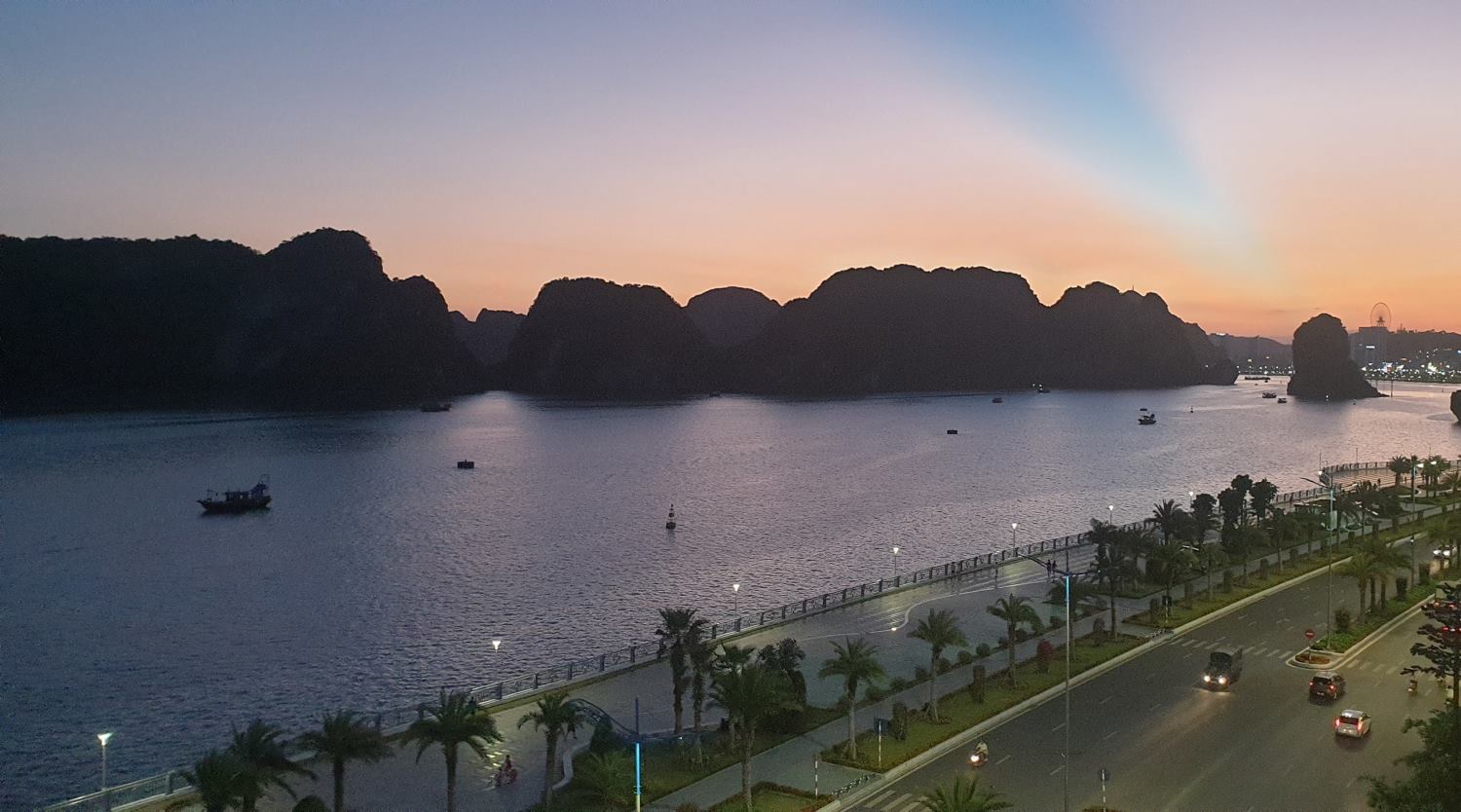
Regarding the scale of tourists, by 2030, Quang Ninh will welcome about 28 - 30 million visitors (international visitors about 9 - 10 million). By 2040, it will welcome about 35 - 38 million visitors (international visitors about 11 - 12 million). By 2050, it will welcome about 40 - 45 million visitors (international visitors about 13 - 15 million).
Quang Ninh's development structure model is a multi-polar, multi-center, multi-tiered, multi-layer urban chain; integrated development of sea, islands, borders, and heritage; development space is organized according to the "3 development corridors, 4 socio-economic regions, 5 development driving centers" structure.
In which, 3 development corridors include: Coastal urban corridor; sea and island corridor; hill and mountain ecological corridor.
4 socio-economic sub-regions include: (1) Western urban area (Ha Long, Cam Pha, Quang Yen, Dong Trieu, Uong Bi); (2) Eastern urban area (Mong Cai, Quang Ha, Dam Ha, Tien Yen); (3) Sea and island urban area (Van Don, Co To, Ha Long Bay); (4) Northern mountainous area.
5 driving centers include urban areas: Ha Long, Mong Cai, Van Don, Quang Yen and Yen Tu Heritage - Ha Long Bay. In which, Ha Long Central Urban Area is a driving center for promoting international tourism development, innovation, digital economy and cultural industry.
Van Don Economic Zone is a driving force for promoting marine economic development, high-class tourism, innovation, free trade and modern services of international stature.
Mong Cai border gate economic zone is a driving force for promoting international trade, logistics, and border trade.
Quang Yen coastal economic zone is a high-tech industrial center, seaport, logistics, marine economic services and processing and manufacturing industry.
The Yen Tu scenic and heritage complex connects Ha Long Bay heritage, Van Don trading port as a cultural, tourism, religious and belief center, cultural industry and preservation of unique heritage values.


