
From the early morning, Mr. Hoang Van Le (Tan Lap village, Tan Trao commune, Tuyen Quang) and the officers of the Forest Protection Department of Area I started a forest patrol. Overcoming steep roads, each forest trip usually takes 9 to 10 hours. Although the journey was difficult, when looking at the old forests that still kept green, Mr. Le's hard work disappeared.
As a member of the Project Forest Protection Team of Tan Trao commune, for Mr. Le, protecting the forest is to keep the peace of life. Not just a responsibility, Mr. Le and the people of Tan Trao commune consider the forest as the home and future of many generations to come.
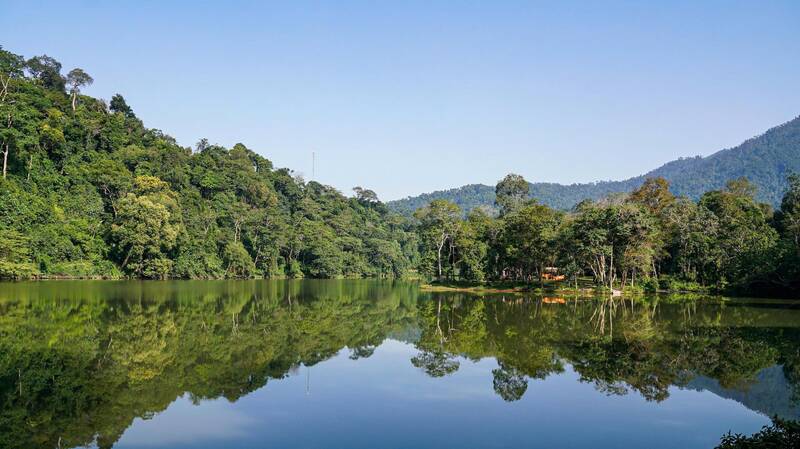
Mr. Le said: "In Tan Lap, in the contract forest areas, our task is to patrol and protect the forest. Each month, the team has 2 to 3 people rotating to patrol the assigned forests. When traveling, everyone follows the route, from their household to the household next to them. A day can go through the area of three to four households.
People here manage nearly 30 hectares each household, not just their own village but all three villages including Tan Lap, Lung Bung, Mo Che, which are special-use forests, the rest are production forests. Going into the forest feels more comfortable, the air is fresh. Seeing my efforts contributing to protecting the green forest and the environment is very encouraging".
According to Mr. Le, from the forest protection contract policy, people have more income and responsibility for the forest. Propaganda work is integrated into village meetings, solidarity festivals, and women's activities.
Previously, when propaganda work was not extensive, people were still in a state of dissemination and farming. In recent years, people have been aware of their responsibility to protect the forest. The primeval forests are thereby well protected, preserving the green color of peace. Since then, people's lives have also changed in a more positive direction.
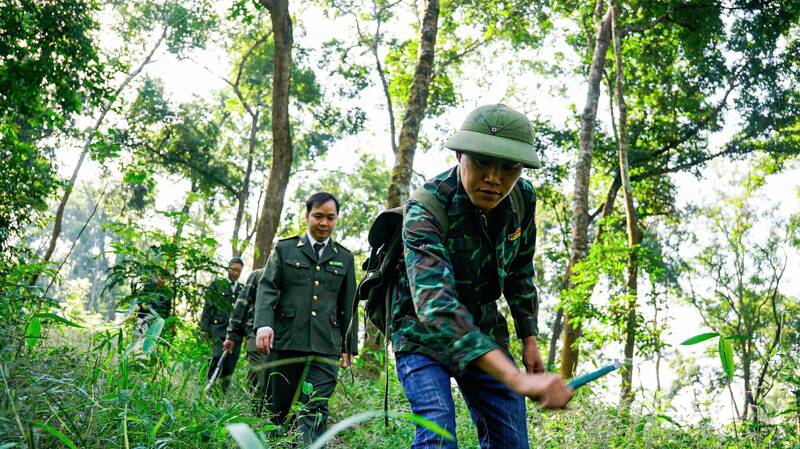
According to Mr. Le, during forest patrols, he and the protection team often encountered many rare species of plants such as ranks and lim. Therefore, the protection of heritage trees, ancient trees, and rare trees is always a top priority.
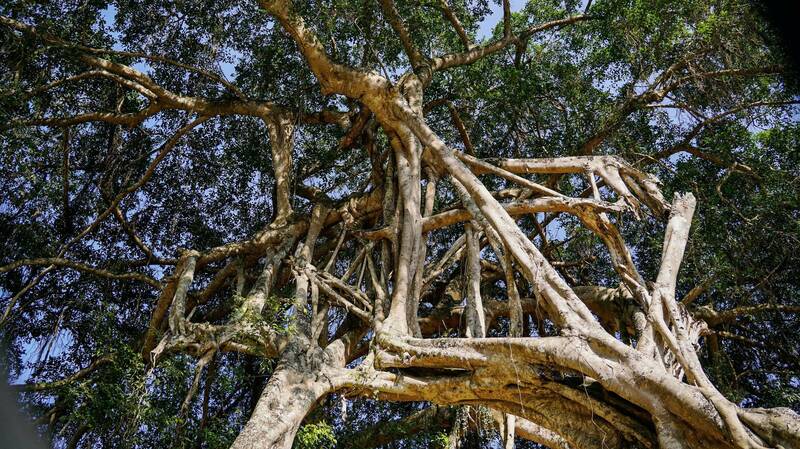
"The women reminded each other to keep precious trees, such as the ancient banyan tree and the heritage banyan tree. We told each other not to destroy or affect the plants. The precious things must be kept. Therefore, there are still many ancient precious trees in the forest.
Currently, Tan Trao special-use forest is strictly protected. People in the village are allowed to go to the forest, while outsiders are not allowed to enter by themselves. It is thanks to that common awareness that the forest still retains its original appearance," said Mr. Le.
According to Mr. Nguyen Thanh An (Tan Trao commune), people often remind people not to bring fire into the forest, especially during the dry season, in March and the months before the grain. Propaganda work is promoted through groups on the village's social networks. Regular propaganda helps people raise awareness of forest protection.
" Patrolling and protecting the forest has become a familiar job, associated with the daily life of many local people. Forests are not only natural resources but also a source of life, a shield to protect the village from natural disasters.
We live by the forest, so we understand very well that if the forest is lost, the water will be dry, the soil will flow, and life will no longer be stable. Every trip to the forest, despite the hardships, steep roads, and many slippery sections, the team members still maintain them regularly. Everyone shares the goal of preserving the entire intact, unsold forest," said Mr. An.
According to Mr. An, one of the core things is that people understand the value of forests. Therefore, forest protection is always a top priority. Not only checking the forest status but people also remind each other and promote raising awareness of forest protection. People have realized that forest protection is to maintain peace, directly linked to the future of future generations.
According to data from the Forest Protection Department of Region I (Tuyen Quang Provincial Forest Protection Department), Tan Trao Special Forests are over 4,000 hectares wide with 734 plant species, belonging to 456 families, 143 families. This is a very large number for a forest with an area that is not too large. Of these, 26 species are listed in the Vietnam Red Book, including rare species such as the Southern mat, the Southern Ancestor, and the Southern mat. These species have special ecological and medicinal values, contributing to the uniqueness of the ecosystem in the Northern region.
The animal system is also diverse with 33 animals. Among them, some rare and valuable species have been recorded as Cranberries, Cranberries, Wild Cranberries, and Cranberries. The forest recorded 58 bird species, of which nearly 70% belonged to the sparrow group, a sign that the ecosystem is still rich in insects and low vegetation. The appearance of these species shows that the forest still maintains a natural structure that is less affected.
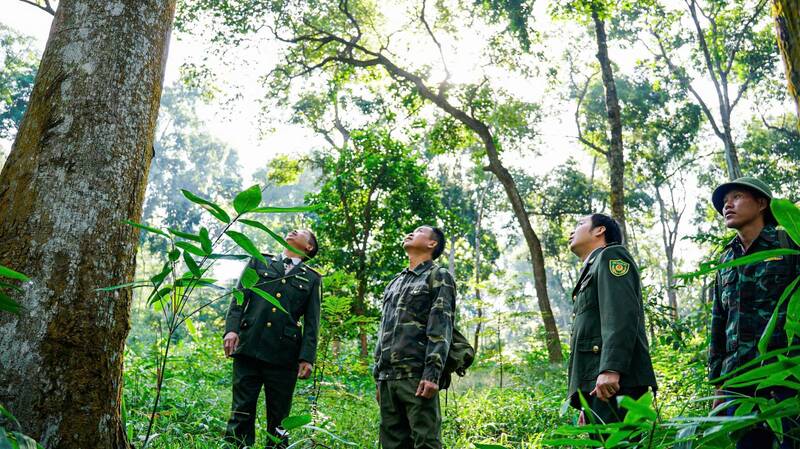
Mr. Nguyen Cong Phuong - Deputy Head of the Forest Protection Department of Region I (Tuyen Quang Provincial Forest Protection Department) - said that the management unit's area has a very large area of forest and forestry land, stretching across the border with many communes and neighboring provinces. In that area, there is a special forest belonging to the Tan Trao National Special Historical Relic Site, where many rare animal and plant species are still preserved, some of which have been listed in the Vietnam Red Book.
"The forest is not only a place for wildlife to live but also a green coat protecting the sacred landscape of the special national relic of Tan Trao.
With large areas and extended forests, many high mountainous areas are isolated, making it difficult to move, inspect and patrol, especially during the rainy season or when there is a high risk of forest fires," said Mr. Phuong.
According to the Deputy Head of the Forest Protection Department of Region I, for many households, forest protection is now not only a task but also a stable source of income from forest protection contracts, from harvesting non-timber forest products, or participating in forest fire prevention and fighting teams. When people directly benefit from the forest, they will voluntarily protect the forest better than anyone else.
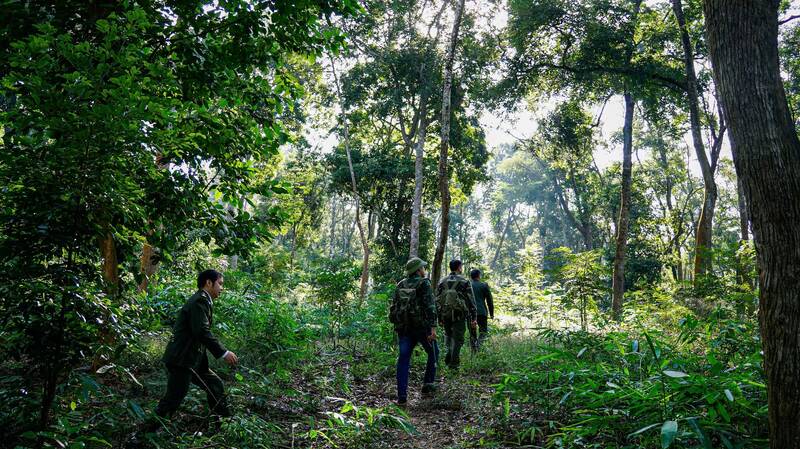
In all forestry development tasks, the people are the most important force. These are people who regularly coordinate with the government and forest rangers in patrolling and controlling. It is the people themselves who are the force that understands information and fluctuations from the grassroots as quickly as possible. At the same time, actively propagate and mobilize families and communities to participate in forest protection and development.
If people do not participate, it will be very difficult for forest protection to succeed. The consensus and participation of the people are the decisive factors.
According to Mr. Nguyen Cong Phuong, in addition to closely coordinating with forest protection teams, the Forest Protection Department of Region I has also increased the application of information technology in forest management. Specialized software to monitor forest developments, digital maps, and forest resource databases are put into regular use.
GIS technology and GPS tracking devices help forest rangers determine boundaries, monitor current situation and organize patrols more effectively. In addition, the handling of administrative procedures for forestry is also digitized, helping people easily access and carry out procedures quickly and transparently.
Thanks to effective coordination, the forests in Tan Trao are still green and peaceful. That green is considered by local people as the future of the next generation. Therefore, protecting the forest is considered by the people as protecting their own lives.


