
Monkeys enter people's houses for food
For more than half a month now, the lives of some households in Vinh Dien neighborhood, Dien Ban ward, Da Nang city have been disrupted by the appearance of 1-2 wild monkeys.
A large one, estimated to weigh 13-14kg, usually appears in the early morning, moving on trees, roofs, riversides and then finding its way into residential areas to find food. People say that when given bananas and bread, the animal sits down to eat and continues to move. But when agitated, it can become aggressive.
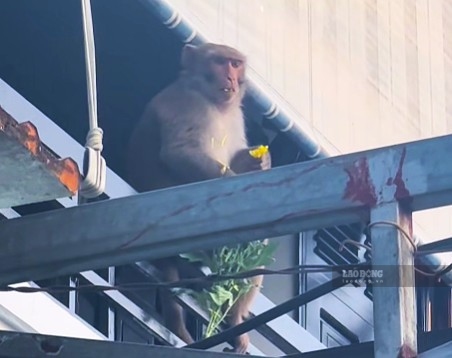
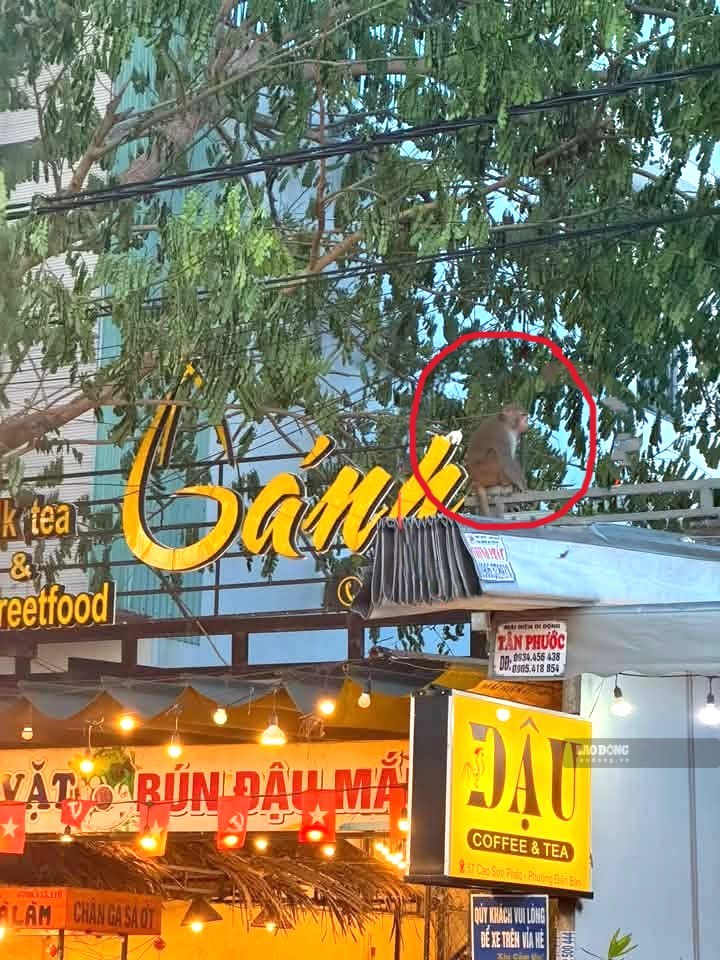
Ms. Nguyen Thi Tuoi (local resident) is still worried after being trapped by a monkey from a tree. She panicked and ran away, fell, and was injured in the arm and hip. After that, the animal returned to attack the family's chickens and ducks.
What made Ms. Tuoi even more uneasy was that the monkey was increasingly not afraid of people. Cameras repeatedly recorded the scene of it entering the shop, opening the barrel, rummaging through and tearing food. She had to temporarily close the shop for fear of being attacked when she was alone. Forest rangers approached to find a way to catch it but were unsuccessful; Dien Ban ward authorities are continuing to coordinate to monitor and find a plan to take the animal out of the residential area.
The story happening in Dien Ban evokes a problem that Da Nang had to warn for many years in Son Tra peninsula: humans are unintentionally "teaching" monkeys to find food in people's places instead of in the forest.
In Son Tra, the scene of tourists bringing bananas, bread, and candies for monkeys to eat is no longer rare. In January 2026, a foreign tourist even wrapped bananas around his body for the monkeys to rush to get food. The management board had to intervene and request to stop this behavior.
Previously, functional agencies recorded that at one point hundreds of monkeys gathered around Linh Ung Pagoda area waiting to be fed; when there was no food, they rummaged through trash cans, snatched things and could attack tourists. Notably, during the COVID-19 epidemic when the number of visitors decreased sharply, monkeys almost did not appear in this area; when tourism returned, the situation of monkeys going down to ask for food reoccurred.
By the end of July 2026, the Da Nang government will continue to request to strengthen propaganda for people and tourists not to feed monkeys when visiting Son Tra peninsula.
When human food becomes "bait
According to the Da Nang City Forest Protection Department, the monkey herd in Son Tra has become accustomed to being provided with food by humans. When they expect to have food but cannot get it, conflicts between monkeys and humans can occur, even some individuals become aggressive.
Mr. Tran Huu Vy - Director of the GreenViet Center for Biodiversity Conservation - once warned that feeding monkeys is thought to be loving animals but causes the opposite consequences.
According to Mr. Vy, monkeys in nature must find their own leaves, fruits and food sources to survive. When food from humans becomes easy to find, the instinct to seek food gradually declines. More worryingly, young monkeys can learn this behavior from adult monkeys, instead of learning food search skills in the forest.
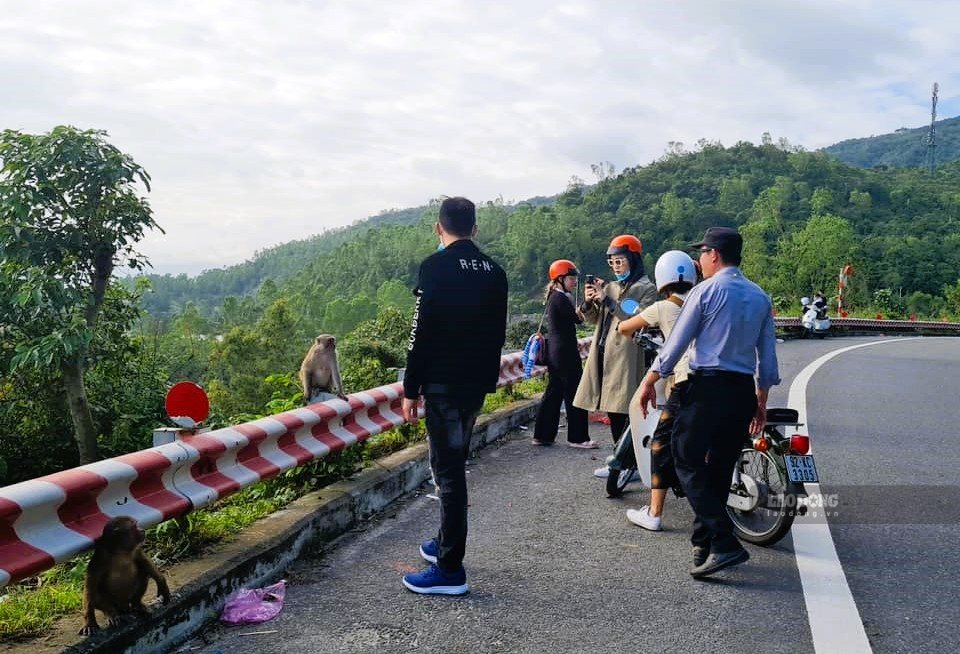
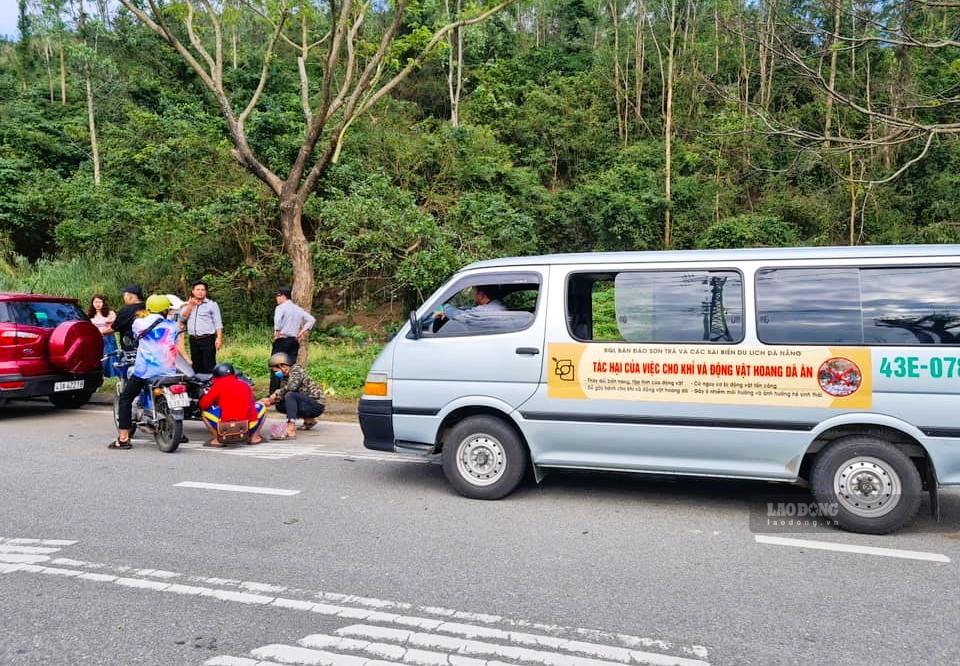
The consequences do not stop at the story of monkeys "begging for food". GreenViet once recorded monkeys from Son Tra descending to residential areas at the foot of the mountain, entering houses to get food and fruits on the altar. As they become more familiar with humans, their range of food seeking is at risk of expanding, leading to conflicts with residents.
This is also not a unique phenomenon of Da Nang, in Cu Lao Cham, wild monkeys also at times flooded into the village to search for food, even "occupying" the playground of a kindergarten on the island.
According to biodiversity conservation expert Tran Van Ngu, the case in Dien Ban needs to be accurately identified the species, origin and individual condition before concluding the cause. But the fact that people continue to leave food or proactively feed monkeys may make the animal more humane and difficult to return to a suitable environment.
The solution therefore is not only to find a way to catch a monkey who is "stirring up" in a residential area. More importantly, cut off food sources from humans, do not approach, lure, tease or feed wild animals.


