Run away from the house before the hill falls
Late afternoon of August 9th, Mr. Ban Tien Loi, in Dien Quang village, Thuong Ha commune, Lao Cai province, was still in shock when returning to his house.
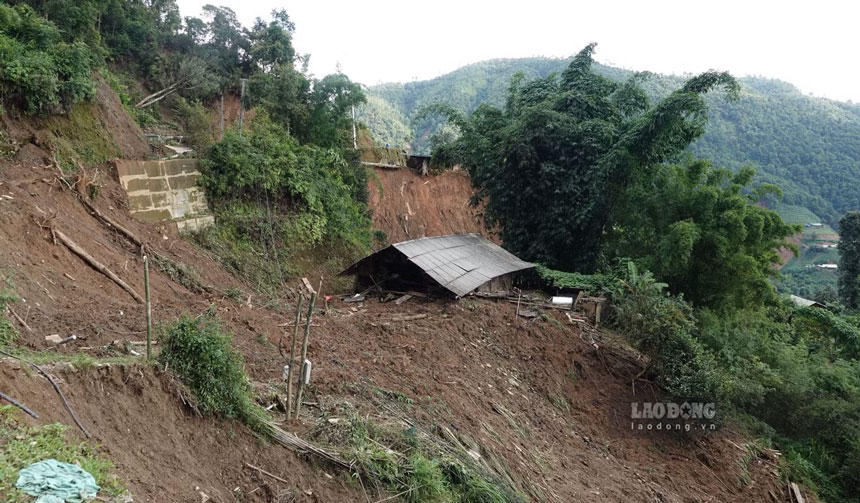
Just one day ago, that place was still the home of four family members. Now, hundreds of cubic meters of soil and rock from the hillside behind have buried nearly half of the house.
What made Mr. Loi shudder was that if the villagers had not discovered the unusual cracks on the hillside and shouted for help, perhaps the consequences would not have only stopped at property.
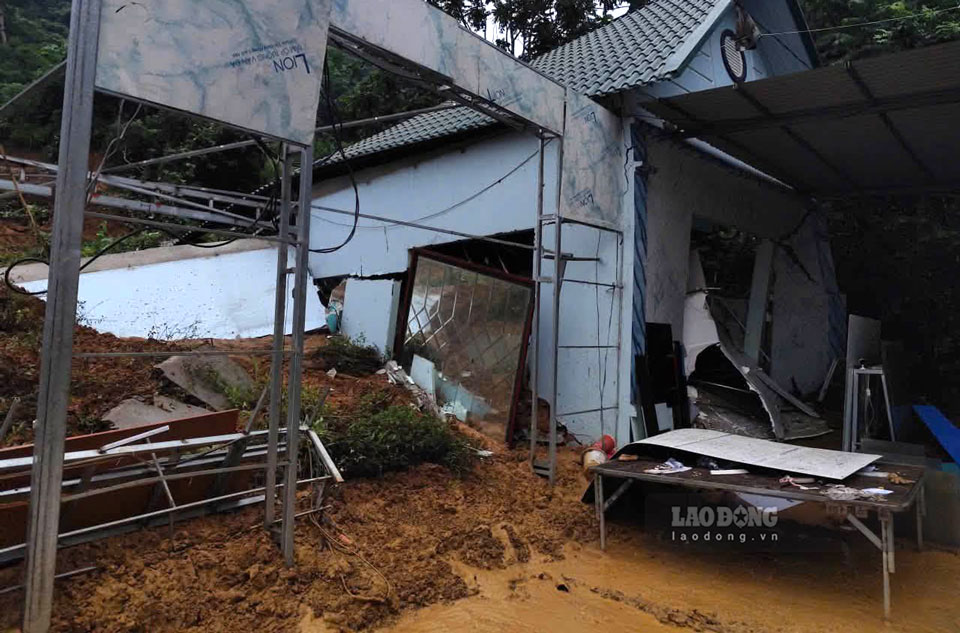
We only had time to grab some clothes and papers and run away. Just a few hours later, the whole hill fell down," Mr. Loi recounted.
Sharing the same situation, Mr. Lu A Lau's family in Che Tao commune is living in days full of anxiety.
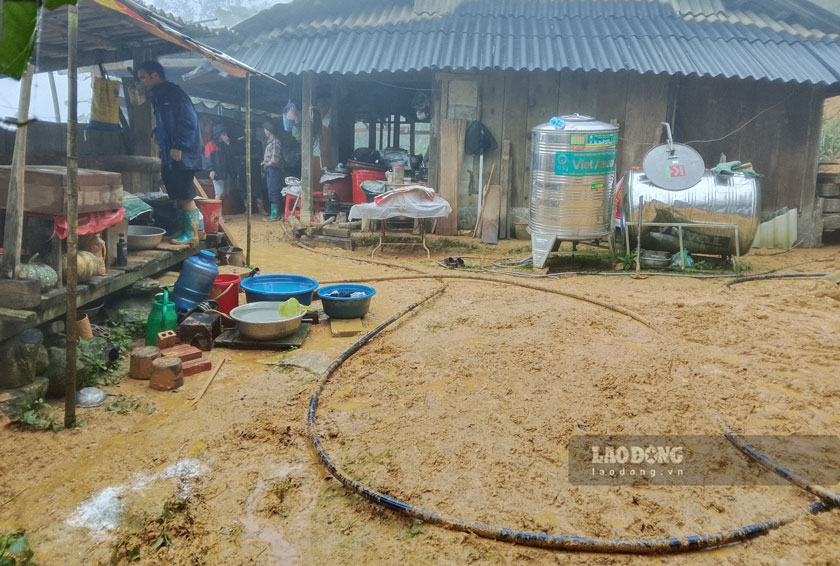
After many heavy rains, soil and rocks from the positive taluy behind suddenly fell down, damaging the wooden house that had been attached to the family for many years.
Currently, the whole family has to live temporarily in a small, cramped kitchen. But behind the kitchen is still a high taluy wall, every rain makes the whole family anxious.
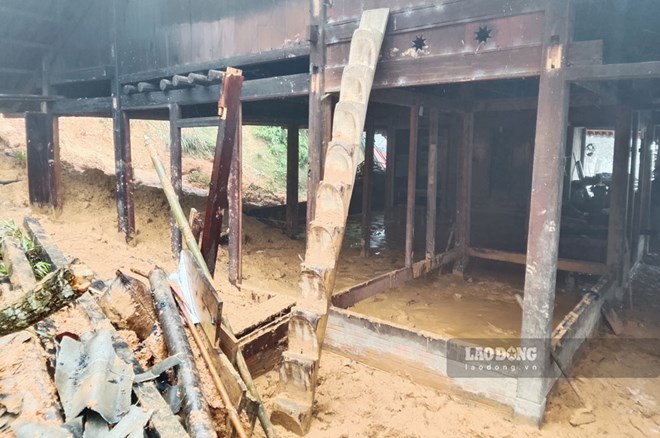
Now I just hope to have a safe piece of land to rebuild the house. Every time it rains, no one in the whole family can sleep," Mr. Lau confided.
According to local statistics, in the rain and flood period from late July to early August alone, Che Tao commune had 43 houses damaged, of which 11 households had to be urgently relocated and had no resettlement place.
The stream of soil and rocks swept away almost everything
Taking advantage of rare sunny days to pick up the remaining items after the landslide on the night of July 17, Mr. Sung Pao Chua, in Hu Tru Lenh village, Lao Chai commune, still cannot imagine what life will be like in the future.
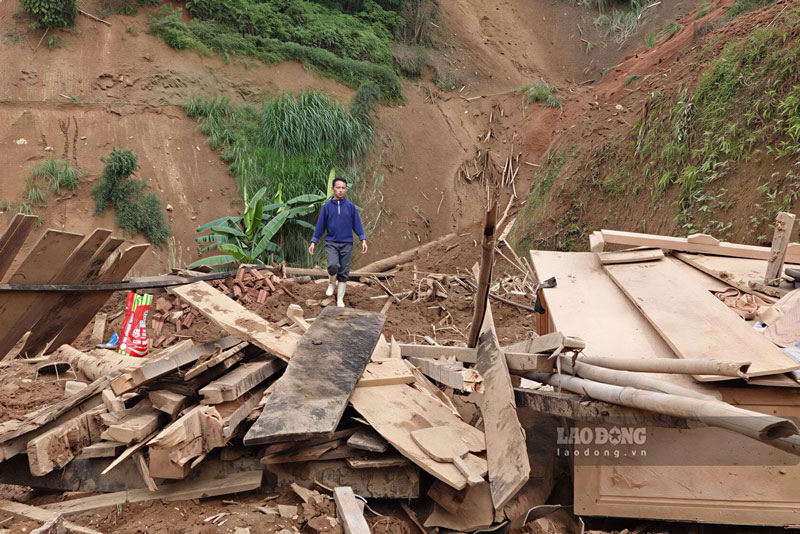
The stream of soil and rocks swept away almost everything. A lifetime of accumulation is considered lost," Mr. Chua said sadly.
Not only Mr. Chua's family, but the entire Hu Tru Lenh village has 46 affected households, including one house completely collapsed, 7 households had to be urgently relocated and dozens of other households were damaged from 30-75%.
There are families who just renovated their houses after the landslide last year, but this year they continue to face similar risks.
According to Mr. Sung A Lu - Vice Chairman of Lao Chai Commune People's Committee, if the relocation only stops at moving places without considering long-term livelihoods, it will be very difficult for people to stabilize their lives.
Many households still have to return to their old residences because they still have fields, production land and income. If resettlement is not linked to livelihoods, it is very difficult to retain people," Mr. Lu expressed.
Building resettlement areas associated with livelihoods
According to the Lao Cai Provincial Civil Defense Command, the whole province currently has 3,428 points at risk of natural disasters, affecting 23,163 households.
Of which, 2,795 points are at risk of landslides, affecting about 12,715 households; 404 points are at risk of flooding, affecting 9,301 households; and 229 points are at risk of flash floods, threatening 1,147 households.
Mr. Hang A Ky - Secretary of the Party Committee of Che Tao commune - said that every rainy season, the locality must arrange forces to be on duty at key points, closely monitor weather developments to promptly evacuate people.
Although the commune area is large, most of it is protection forest, so the land fund is very limited. The locality is actively reviewing and arranging land areas that meet the conditions to build resettlement points, bringing people out of dangerous areas," Mr. Ky said.
Leaders of the Lao Cai Provincial Department of Agriculture and Environment also stated that resettlement areas will only be truly effective when accompanied by roads, electricity, domestic water and especially production land funds so that people can feel secure and stick with them for a long time.
Along with updating the disaster risk map, the province will prioritize resources to build safe resettlement areas, associated with livelihoods and essential infrastructure for people to stabilize their long-term lives," this person shared.