
The Lo River is a left tributary of the Red River, originating from Yunnan province (China), flowing into Vietnam in Vi Xuyen commune (Tuyen Quang). Entering the dry season, the Lo River dries up to the bottom, affecting the lives of fishing villagers.
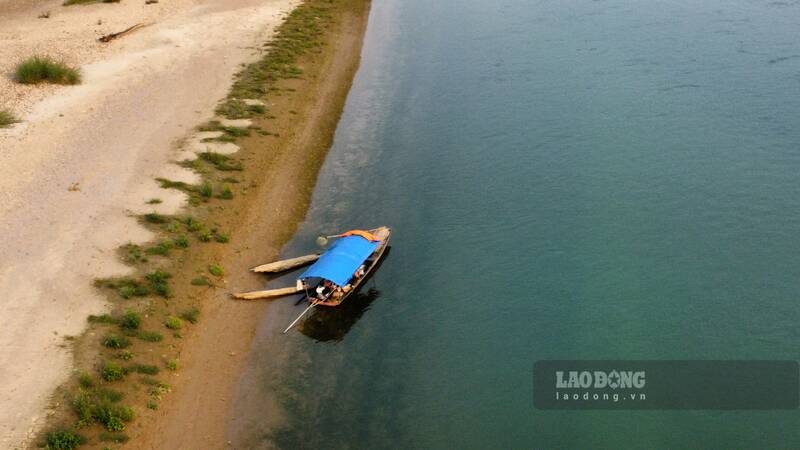
Recorded by PV in the upstream area of the Lo River (section passing through the old Ha Giang province), the water level dropped deeply, many locations revealed sand dunes. Many fishing villages had to anchor boats drifting to both banks. In some places, the water was dry and the bottom could be crossed the river. The low water level along with the amount of garbage and trees trapped after the flood made the Lo River increasingly desolate.
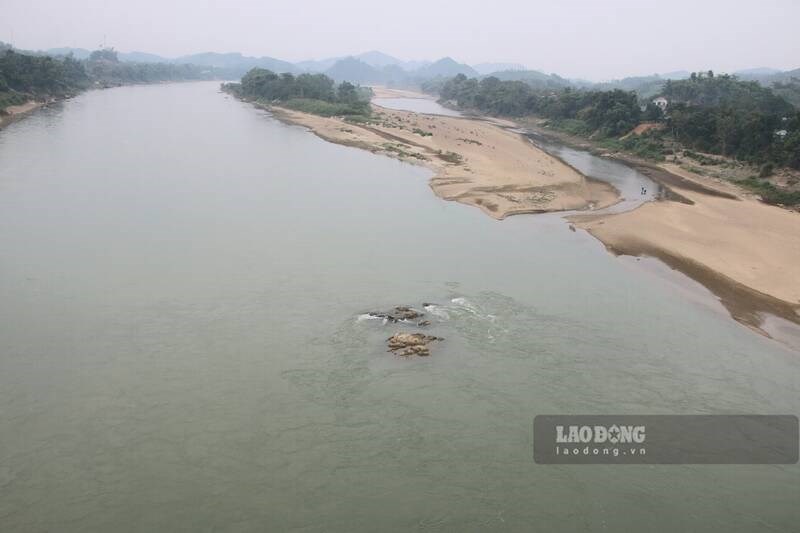
A similar situation is also recorded in the central area of Tuyen Quang province. Just entering the early dry season, the water has dried up. Many underground ice matrices are revealed when the water recedes.
The deep drop in the Lo River water affects the ecological environment of aquatic species, especially production activities and the lives of fishermen in fishing villages. Boats also face many difficulties in the process of moving.
With 5 fish cages in the middle of the Lo River, Mr. Pham Viet Hoang (Minh Xuan ward) said that these days, his whole family loses sleep and appetite. In the dry season, fishing villagers have to watch the water level to move cages and rafts.
When the water recedes, it is necessary to quickly move rafts to deep water. If the cages are not moved in time, the fish will all die. Low water levels greatly affect the livelihoods of fishermen in the fishing village, and the ecosystem for aquatic species.
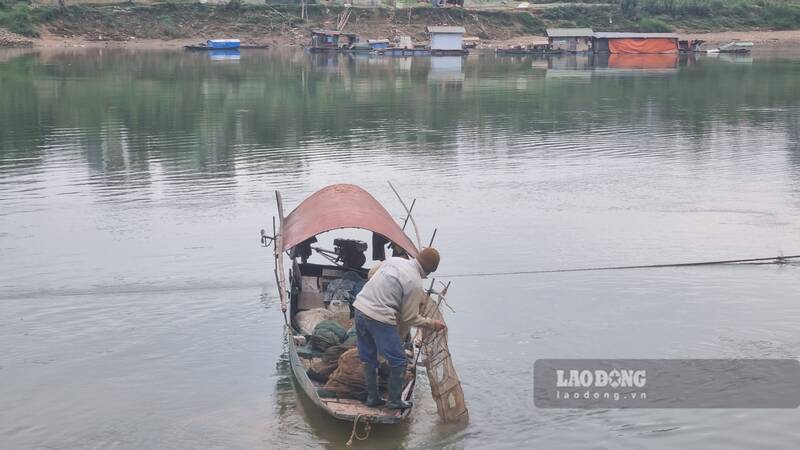
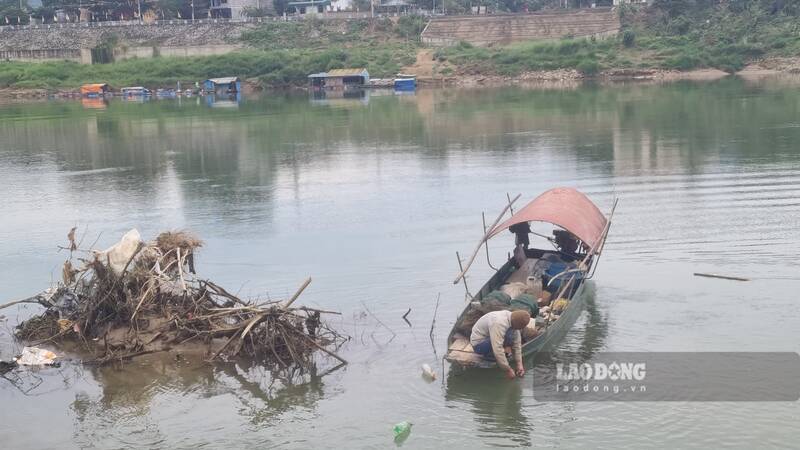
The process of moving and fishing for people is also not as good as before. The water is fluctuating erratically, many fishing village families have been empty-handed," Mr. Hoang said.
Sharing the same worry, Ms. Nguyen Thi Bich (An Tuong ward) said that river drying greatly affects the livelihoods of fishing villagers. Not only changing the living environment, the development of the aquatic ecosystem, fish farming and fishing activities of fishermen are also disrupted.
People are familiar with rivers and water, all activities and lives are associated with this place. The water level of the Lo River keeps fluctuating erratically, so it is very difficult.
In recent years, the lives of fishermen in the villages along the Lo River have been very difficult. Seafood resources are no longer as before, and farming in cages and rafts is also not very effective," Ms. Bich said.
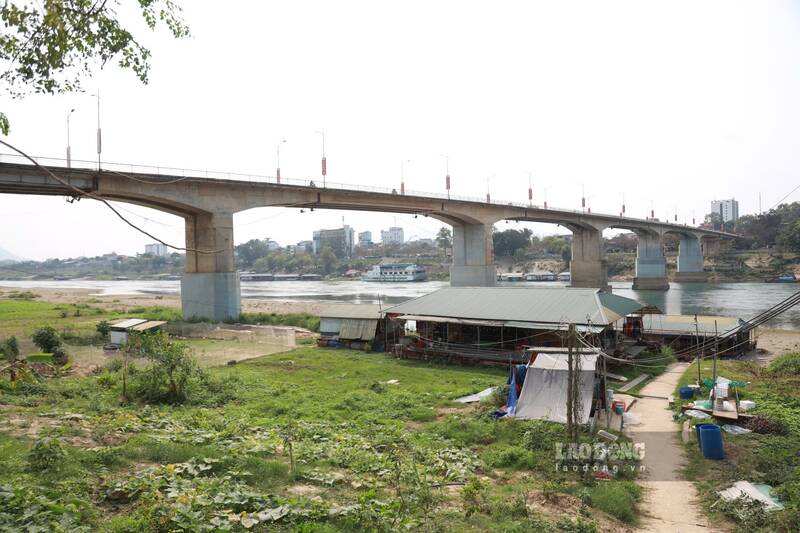
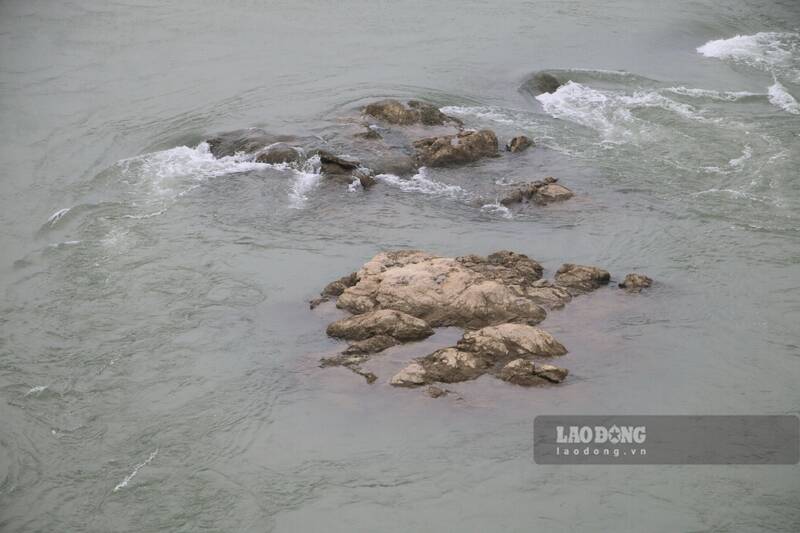
In fact, in recent years, the water level of the Lo River has tended to decrease deeply in the dry season. At the end of the dry season in 2025, the water level only reached 11.25m. This is the lowest water level in history ever recorded. 18 cm lower than the dry water level in 2023.
In the past 3 years, due to the impact of climate change, the Lo River water has fluctuated erratically. After flooding in September and October every year, it is the time when the river water drops low, maintaining dryness from December of the previous year to April of the following year.


