
Ho Chi Minh City has just officially started construction of Metro Line No. 2 (Ben Thanh - Thu Thiem section) with a total investment of more than 36,700 billion VND, expected to be completed in 2030.
The project is implemented under a BT (build - operate) contract invested by Dai Quang Minh Real Estate Investment Joint Stock Company (under THACO Group).
According to Mr. Tran Ba Duong - Chairman of THACO's Board of Directors, the Ben Thanh - Thu Thiem Metro line is designed to be completely underground with a length of about 6.2 km.
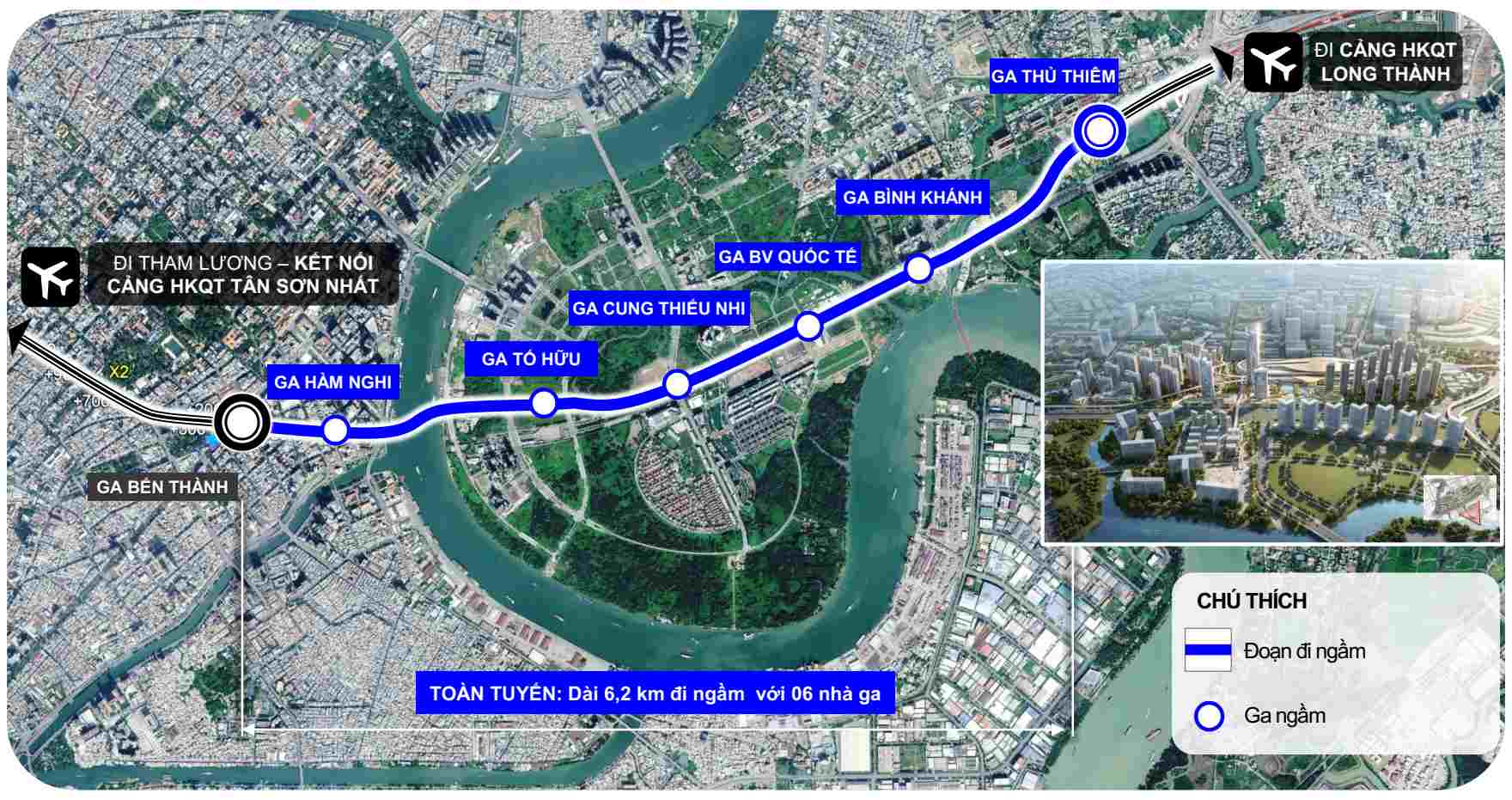
The entire route includes 6 underground stations: Ben Thanh, Ham Nghi, To Huu, Children's Palace, International Hospital, Binh Khanh and Thu Thiem central station.
In which, Ham Nghi station has a depth of up to 33 m, while the Saigon River tunnel section reaches a depth of about 41 m - the deepest level among metro lines in Ho Chi Minh City today.
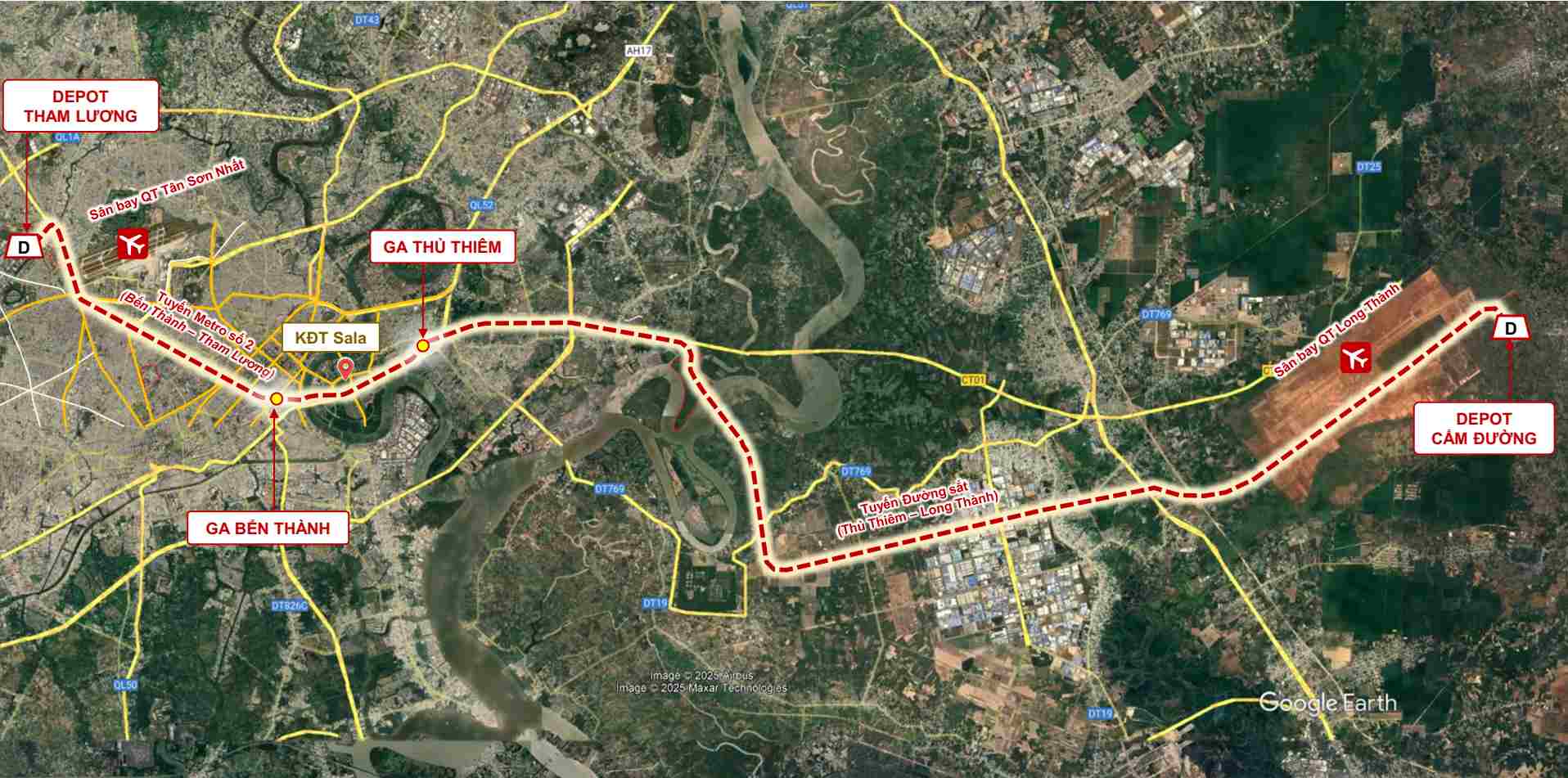
The line is also planned to be directly connected to the city's new administrative center in Thu Thiem, and also interconnected with the North-South high-speed railway and Thu Thiem - Long Thanh railway.
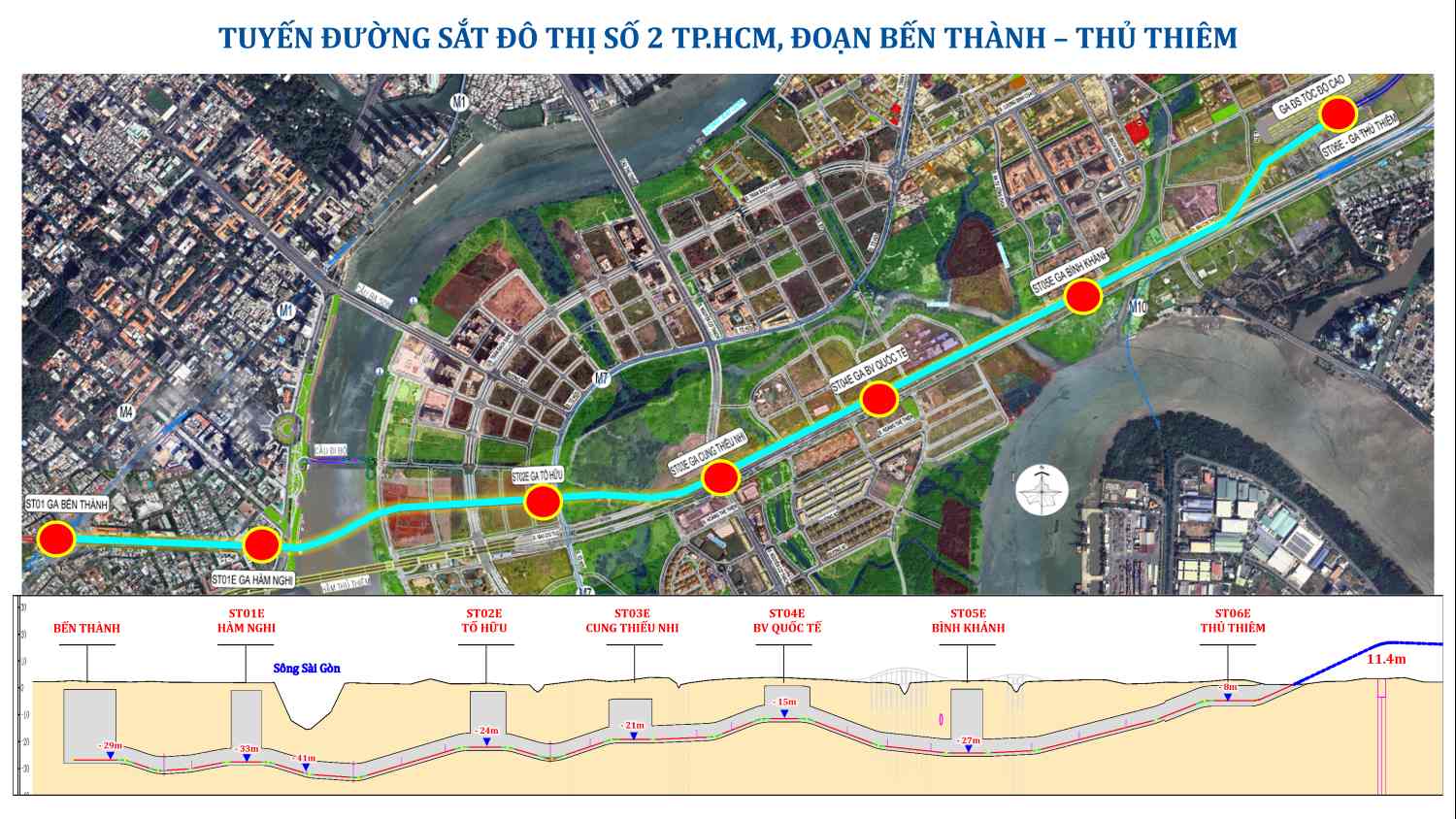
Notably, the project passes through the Thu Thiem area - where there is weak soil, complex geological and hydrological conditions due to the influence of the Saigon River system. This poses very high requirements for controlling project deformation throughout the construction and operation process.
According to the design, the transfer rate of the tunnel must be controlled to not exceed 15 mm (equivalent to 1/1.000), to ensure absolute safety for the project and surrounding areas.
To meet this requirement, advanced technical solutions have been researched and applied synchronously. In which, reinforcement of weak soil foundation is identified as a key factor. In Thu Thiem area, soil-cement pile technology (CDM) according to the deep mixing method is used.
This technology breaks down the soil structure on the spot, while mixing with cement mortar to form high-strength reinforced soil pillars, forming a stable structure surrounding and at the bottom of the tunnel as well as the stations.
For tunnel construction, THACO is responsible for operating TBM drilling machines and installing tunnel shells. In particular, for the first time in Vietnam, liquid pressure-balanced tunnel boring (SPB - TBM) technology is applied to the section crossing the Saigon River.
This technology uses a closed circulating mud solution system to create accurate balanced pressure, forming a stable "filtering layer", helping to control the risk of landslides and water intrusion. This solution is also applied to sections passing through areas with sensitive existing structures, to ensure absolute safety.
In parallel, the Ben Thanh - Thu Thiem Metro line and the Ben Thanh - Tham Luong section will apply completely automatic operation technology (GoA4). Information, signal, control and operation management systems are integrated into the Centralized Operation Center (OCC), helping to improve safety, reliability and operational efficiency.
Mr. Tran Ba Duong said that in order to serve Ho Chi Minh City urban railway projects, THACO is investing in a 320-hectare railway industry and multi-purpose mechanical complex in Ho Chi Minh City.
This complex will produce construction equipment such as TBM drilling machines, beam launching equipment, component installation; and also produce high-tech concrete components such as tunnel shells, curling tops, and elevated bridge girders.
According to Mr. Tran Ba Duong, THACO has strategically cooperated with Hyundai Rotem Group (Korea) to develop the field of locomotives and carriages. According to the agreement signed in December 2025, Hyundai Rotem will transfer technology, train human resources and provide technical support.
Including 6 locomotives and carriages manufactured and completed in Korea, 42 sets of CKD components will be assembled in Vietnam.
After that, Hyundai Rotem provides components, while the entire aluminum alloy carriage frame and some details will be produced in Ho Chi Minh City, marking the initial step in the development of the first railway industrial complex of Ho Chi Minh City and the whole country.


