
An Phu intersection
An Phu intersection is one of the most complex traffic areas in Ho Chi Minh City being invested in construction with a total investment of more than 3,400 billion VND.
The project is located at the eastern gateway, which connects the Ho Chi Minh City - Long Thanh - Dau Giay expressway with key roads such as Mai Chi Tho, Dong Van Cong, Luong Dinh Cua.
The project is designed with three floors, including 2 underpasses and 8 bridges.
The project has completed the HC1-01 underpass at the Mai Chi Tho - Dong Van Cong intersection, Ba Dat bridge and Giong Ong To 2 bridge.
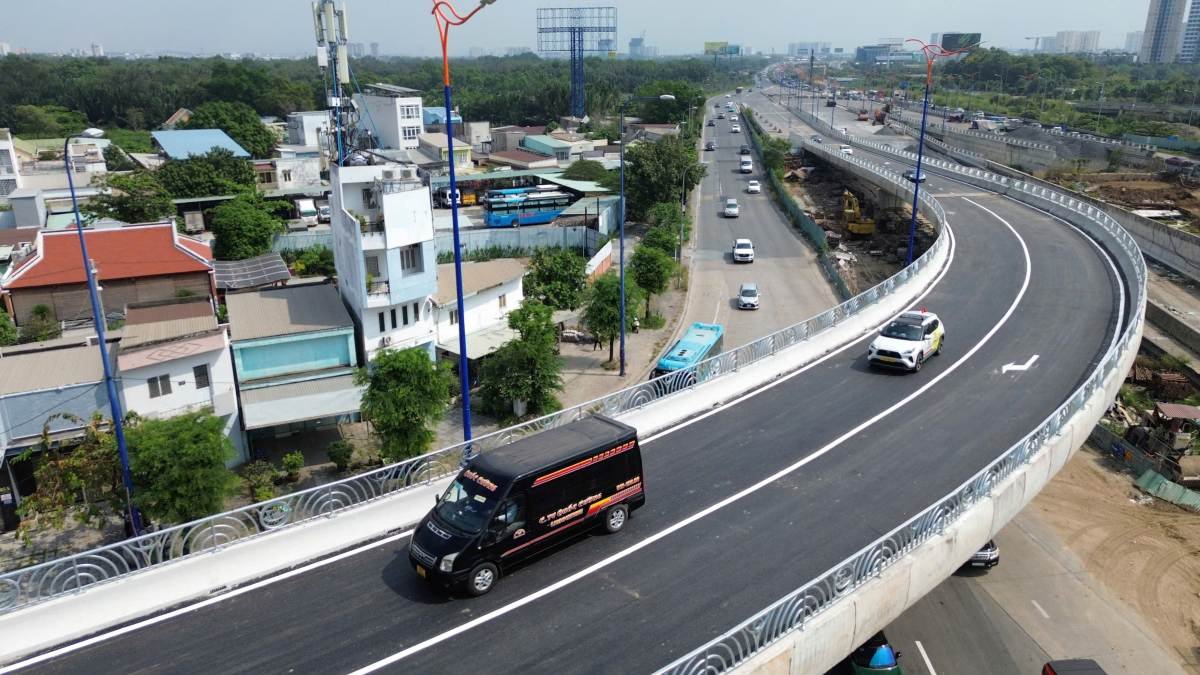
At the end of 2025, another branch of bridge N2 (turning right from the expressway to Mai Chi Tho street) was opened to traffic.
HC1-02 underpass (connecting the expressway with Mai Chi Tho in the direction of the Saigon River tunnel) will be opened to traffic before January 15, 2026.
The entire An Phu intersection will be completed in 2026, not only reducing congestion for the eastern gateway area but also increasing connectivity to seaports and Long Thanh airports.
My Thuy intersection
The My Thuy intersection project was started in 2016, including two component projects: construction with a cost of 1,826 billion VND and compensation and site clearance of more than 1,623 billion VND.
After nearly 10 years of implementation, the project has completed a number of important items such as Ky Ha 3 bridge, Ring Road 2 overpass, left turn tunnel from Ring Road 2 to Cat Lai and My Thuy 3 bridge.
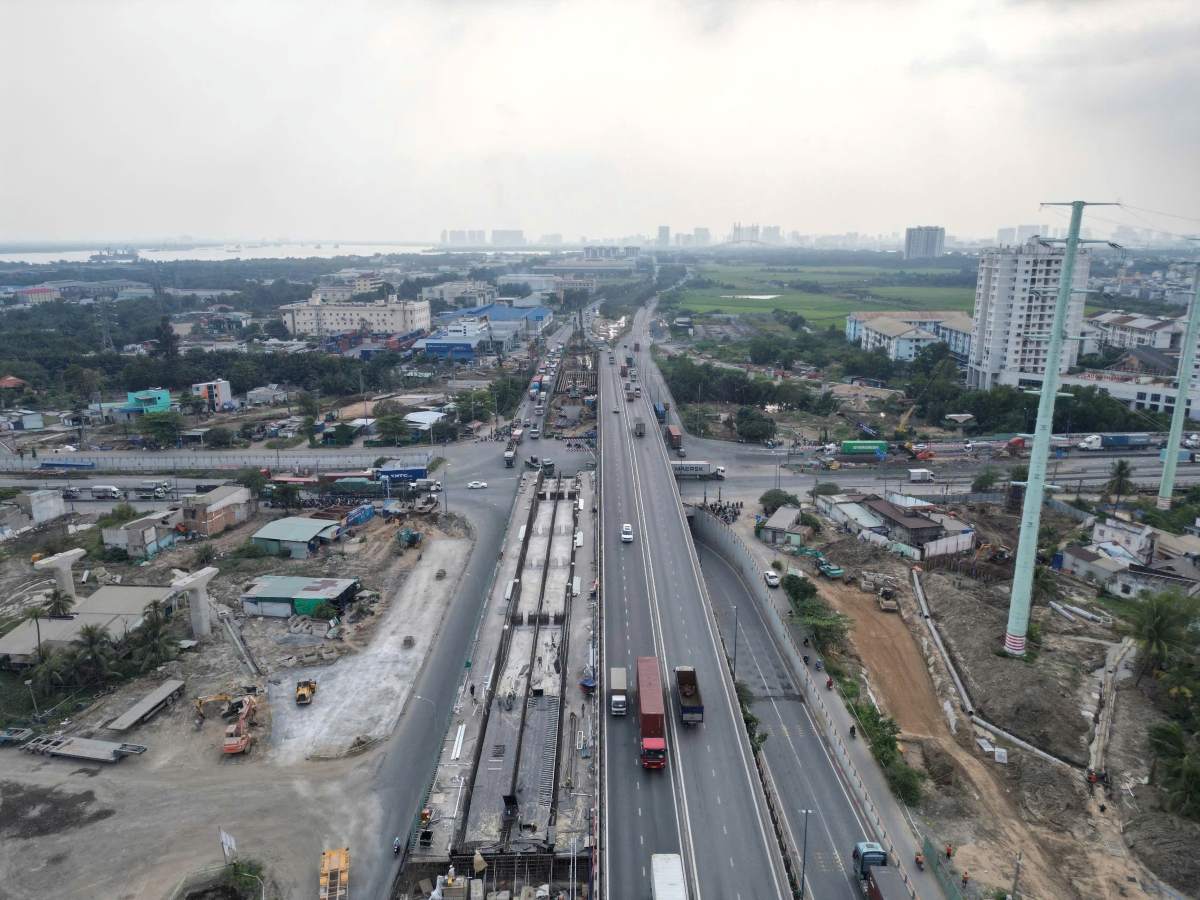
It is expected that the right branch from Dong Van Cong street to Vo Chi Cong and from Dong Van Cong to Nguyen Thi Dinh is expected to be completed before January 31, 2026. The remaining branches along with Ky Ha 4 bridge will be completed in February 2026.
When fully completed in 2026, My Thuy intersection will contribute to reducing congestion and traffic accidents in the Cat Lai port area - the port with the largest cargo volume in the country.
Ring Road 3 HCMC
Ring Road 3 has a total length of more than 90 km, passing through Ho Chi Minh City, Dong Nai and Tay Ninh (after the merger).
Previously, the project completed the My Phuoc - Tan Van section (15.3 km) and the section from DT.25B (Dong Nai) to the Ho Chi Minh City - Long Thanh - Dau Giay expressway (including Nhon Trach bridge) put into operation from August 2025.
The remaining part, more than 70 km long, with a total investment of nearly 75,400 billion VND, is being built with 4 lanes and a parallel road system (non-continuous).
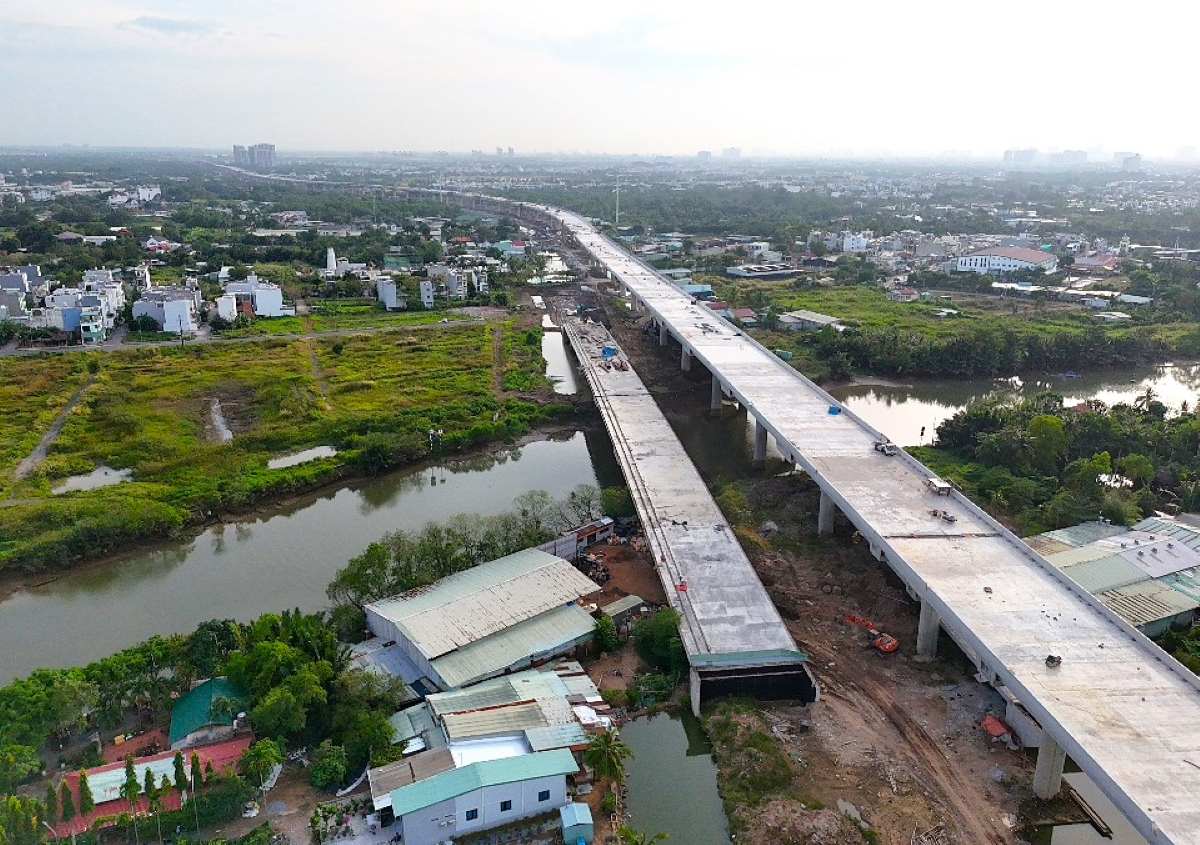
On December 19, 2025, Ring Road 3 of Ho Chi Minh City technically opened to traffic 29.2 km of highways, including: 14.7 km of elevated bridges through Thu Duc City before; 5 km through Dong Nai; 3.1 km through Binh Duong before and 6.4 km through Tay Ninh.
According to the plan, by April 30, 2026, the project will open 24.2 km of expressway and 45.9 km of technical traffic. By June 30, 2026, the entire Ring Road 3 of Ho Chi Minh City will be completed and fully opened to traffic.
When put into operation, Ring Road 3 not only reduces pressure on the inner-city transportation system of Ho Chi Minh City but also opens up a corridor for urban - industrial development, creating growth momentum for the entire Southern key economic region.
Section 3 Ring Road 2
Section 3 of Ring Road 2 was started in 2017, more than 2.7 km long, with a total investment of more than 2,700 billion VND in the BT (build - transfer) form. The site clearance project is 67 m wide, built in front of two parallel roads with 3 lanes on each side.
According to the initial plan, the project was completed in 2020. However, from March 2020, the project had only reached more than 43% of the volume, but had to be temporarily suspended due to site clearance problems and the failure to sign the BT contract adjustment appendix.
After that, the project was extended to 2026.
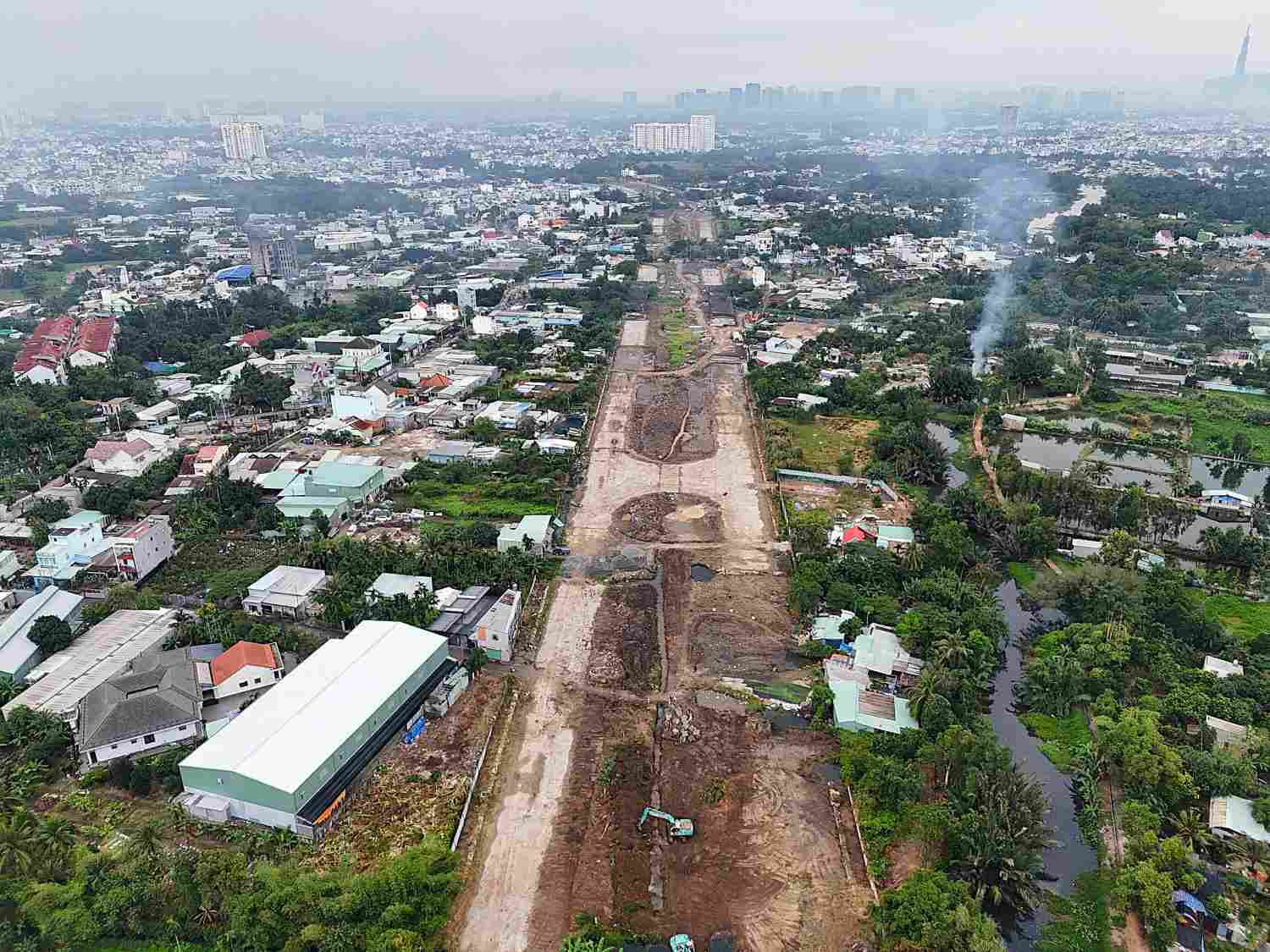
Currently, at the construction site, the investor has completed general site clearance, gathered machinery and equipment to be ready for reconstruction in 2026.
When completed, Ring Road 2 section 3 will open a new traffic direction connecting National Highway 1 with Pham Van Dong, contributing to reducing pressure on National Highway 13 in the context that this route is preparing to be expanded.


