This content is stated in the document of the Ho Chi Minh City Department of Construction sent to the Ministry of Construction on the implementation of measures to control and overcome environmental pollution in the city.
According to the Department of Construction, green transformation in the transport sector is one of the key solutions to reduce emissions, improve air quality and towards the goal of sustainable development.
The city plans to start a roadmap from public transport and state-owned vehicles, then expand to the whole society.
From 2025, all newly invested or replacement buses in Ho Chi Minh City will use electricity and green energy.
By 2030, not only buses but also cars of state agencies and units will complete the conversion to electric vehicles, green energy.
At the same time, Ho Chi Minh City aims to have at least 50% of motorbikes of technology drivers, delivery forces as well as motorbikes of civil servants and public employees using electricity by 2027, before reaching 100% by 2030.
From 2030 onwards, newly invested or replacement taxis will also be forced to switch to electricity or green energy. At the same time, Ho Chi Minh City will gradually put into operation a number of vehicles using new green fuels such as hydrogen.
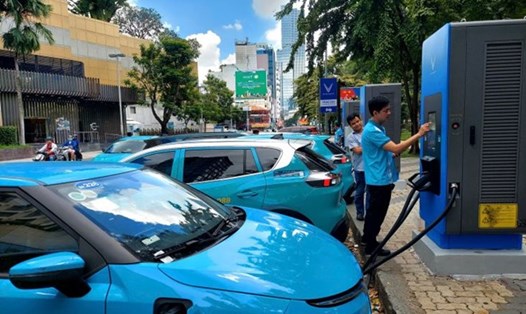
To meet the need for large-scale vehicle conversion, energy infrastructure is identified as a key factor. The city is oriented to develop a synchronous charging station network, ensuring that 100% of offices, hospitals, bus stations and parking lots have charging stations for electric cars.
Ho Chi Minh City also aims to complete at least 1,500 electric charging stations or public green energy stations for cars, while developing a system of charging stations, battery exchange stations for electric motorbikes in crowded areas such as shopping malls, apartments, schools, parking lots and bus stations.
In addition, the city will pilot the low-emission zoning in the central area, Can Gio and Con Dao special zone.
Ho Chi Minh City also applies mandatory emission inspection for all motorbikes and mopeds in circulation and gradually implements strict emission standards for road motor vehicles throughout the area.
Ho Chi Minh City continues to speed up the investment progress in building an urban railway network according to the approved plan, in which priority is given to putting metro line No. 2 (Ben Thanh - Tham Luong) into operation.
Along with that, electric bus routes, buses using green energy and environmentally friendly transportation types will be expanded, enhancing connections with urban railway stations.
The city expects that through these synchronous solutions, the assumption rate of public passenger transport will reach about 15 - 20% of people's travel needs in the coming time.