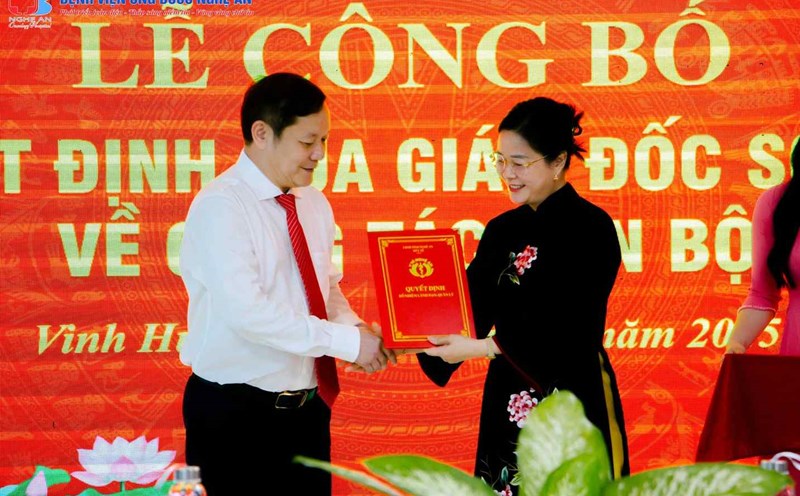
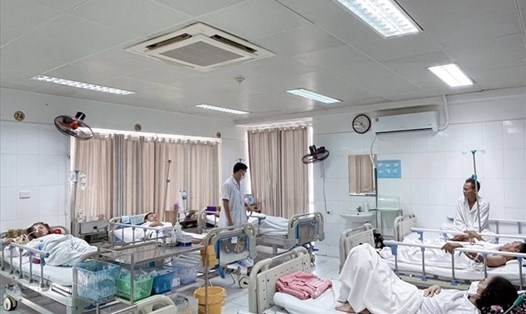
The one who doesn't want to "run out of time
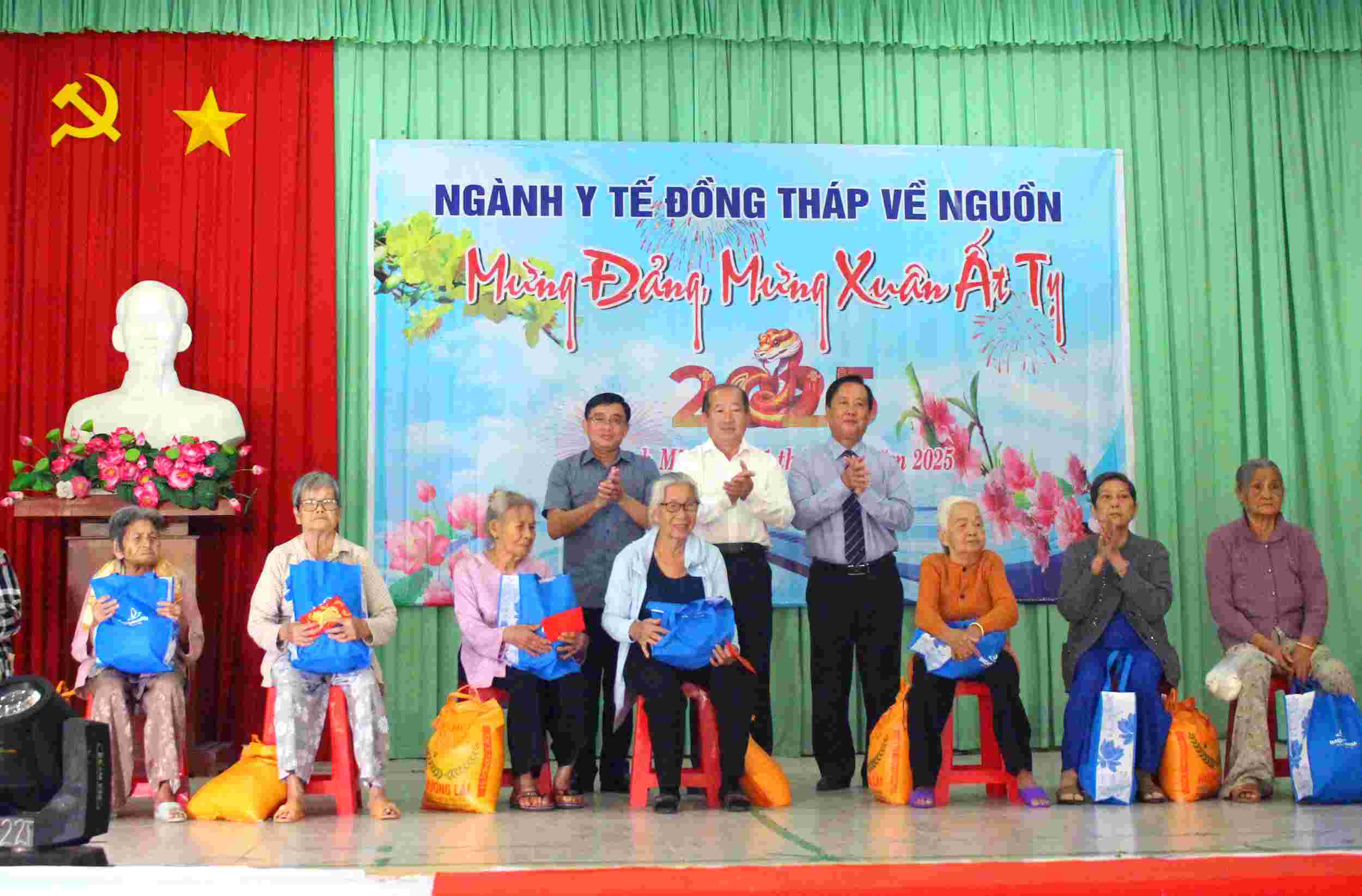
As it has become a tradition, for the past 15 years, since retiring under the regime (2011), doctor (BS) Doan Van Hong (former Director of the Department of Health of Dong Thap province) has regularly participated in "health trips to the source" of the Dong Thap Provincial Health sector in Thanh My commune - a land once known as the "heart" of Bung Bien Thap Muoi - the capital of the Southern resistance war, a place to shelter and protect cadres, soldiers and the health sector throughout the 2 resistance wars of the nation. That perseverance, for him, is not only a responsibility, but also a way to preserve gratitude. Even in some years, because of personal work that could not be delayed, he had to ask for permission to be absent. But at the last minute, when the program was about to open, he appeared again with a gentle smile: "Take advantage of solving it early to be able to visit the people".
It was during that trip that I had the opportunity to witness firsthand the doctor who refused to "run out of time". His hair was gray, his figure was slightly hunched, his steps were slow over the years, but he did not sit still. As soon as he arrived, he shook hands and smiled with everyone and then moved to the examination point, dispensing free medicine. He walked from one examination table to another, sometimes bowing down to ask a blind old man, sometimes patiently explaining to a patient about how to use the medicine.
All of this reminds me of the atmosphere of the reunion of a child returning from afar rather than a trip to the origin or a charity medical examination. Handshakes, mutual recognition eyes, old stories being recalled... create a connection that transcends all limits of medical expertise or administrative events... Senior Doctor Doan Van Hong shared: "In the years of resistance war against the US, the provincial health sector was able to stand on Thanh My land thanks to the people disregarding dangers, taking care of, protecting, and supplying food and medicine. Therefore, after the day of reunification, we thought about returning, not to help, but to show gratitude.
From personal visits, he and his colleagues built the program "Healthcare Returns to the Roots" from 1994. Not noisy, not formal, doctors come here to examine patients, dispense free medicine, and then eat a Tet meal with the people.
Trips to the source opened by Dr. Hong not only carry medicine, but also carry memories, nurturing the morality of drinking water, remembering the source for the young generation of doctors" - BS CKII Doan Tan Buu, former Director of the Department of Health, former Vice Chairman of Dong Thap Provincial People's Committee expressed.
Keeping life in the heart of the earth
Born in 1951 in Doc Binh Kieu commune (Dong Thap), in a family with rich revolutionary traditions, in 1967, young man Doan Van Hong entered the resistance zone when he was only 16 years old. Witnessing his comrades being injured, he volunteered to work as a medic, starting a journey directly facing life and death. In the secret bunkers in the bomb and bullet zone, he was not only a doctor but also a soldier, both treating wounded soldiers and protecting them from sweeps.
In 1970, while rescuing a wounded soldier with a broken femur, the enemy suddenly deployed troops, he had to take the wounded soldier to a secret bunker. In the middle of the rainy season, the bunker was damp, fearing the wound would become infected, he used his own body to prop up the patient's legs.
Also in 1970, after bringing wounded soldiers into the secret bunker, the enemy rushed in. When he discovered an enemy trampling on an old secret bunker lid, fearing exposure, he had to use his shoulder to support for many hours. In deprived conditions, he performed many surgeries under the dim light of bombs and bullets and together with his comrades creatively used fresh coconut water instead of intravenous fluid to support wounded soldiers to recover after surgery.
In February 1970, in a bloody battle to bring wounded soldiers out of the enemy's encirclement, he was hit by 7 shrapnel. Two guerrillas who went with him died, he had to both hold guns to resist, distract the enemy, and wisely bring the wounded soldiers out of the encirclement safely.
Rebuilding the medical industry from the first foundations
After the country's reunification, Dr. Doan Van Hong embarked on a new journey: rebuilding the health system in conditions of widespread deprivation. After taking over medical facilities, he volunteered to go to the Public Health School in Cho Moi to open the first nurse class after liberation, supplementing human resources.
When the administrative boundary adjustment changed, Cho Moi belonged to An Giang province, he returned to Dong Thap, took over the Medical School and opened the first training course. After 6 years of training the foundation force, he continued to study for a doctor at Ho Chi Minh City University of Medicine and Pharmacy, then internship in Czechoslovakia (1987 - 1990). The accumulated knowledge was transformed by him into a foundation for industry development. In 1994, in his position as Director of the Department of Health, he implemented many synchronous solutions. From temporary bamboo and leaf health stations, to the early 2000s, the health network covered the area; commune health stations with doctors; hospitals were upgraded; new techniques were deployed.
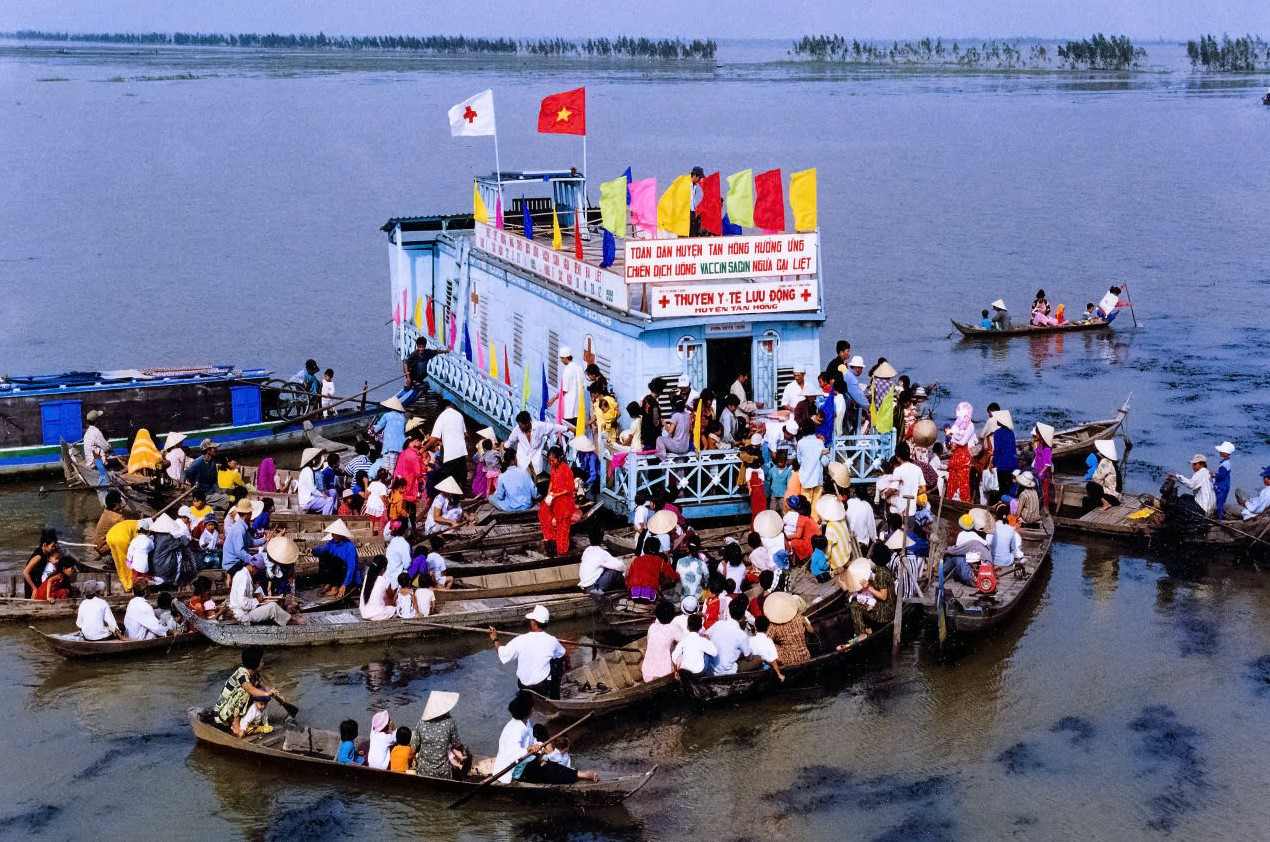
But for him, that was not the stopping point. Dong Thap was the upstream area. In the 90s, every flood season, water rose, traffic was cut off, and people had difficulty accessing medical services. From that concern, in 1997, he proposed an unprecedented model: "medical boats". Wooden boats designed to suit terrain, equipped with tools and medicine, became "mobile clinics" creeping into villages.
Doctors do not wait for patients, but proactively seek out people. Without a mechanism, without precedent, he had to persistently persuade provincial leaders. Finally, the model was approved and quickly became effective, helping people in flood-affected areas receive timely medical care. From Dong Thap, the "medical boat" was recognized and replicated throughout the country by the central health sector.
From the lifeguard in the secret tunnel to the head of the provincial health sector, from surgeries during the war to policy-level initiatives, Dr. Doan Van Hong's journey is not only a successful example of a lifetime, but also a vivid lesson about medical ethics: When there is peace and success, they still return to show gratitude to the place they were cared for; and from difficult times, they always find ways to bring medicine closest to the people.