
Never before has the heritage ecosystem faced the risk of being destroyed by climate change as it is today. With a land with a rich cultural, historical and unique architectural system like Hue, that worry is no longer in our minds but has become real, posing many challenges.
A section of Hue Imperial Citadel, next to Hoa Binh gate, running parallel to Dang Thai Than street (Phu Xuan ward, Hue city) collapsed after continuous rains and floods at the end of 2025 as a warning bell that heritage works, no matter how solid, are still fragile in the face of natural disasters.
The endurance of heritage is also limited
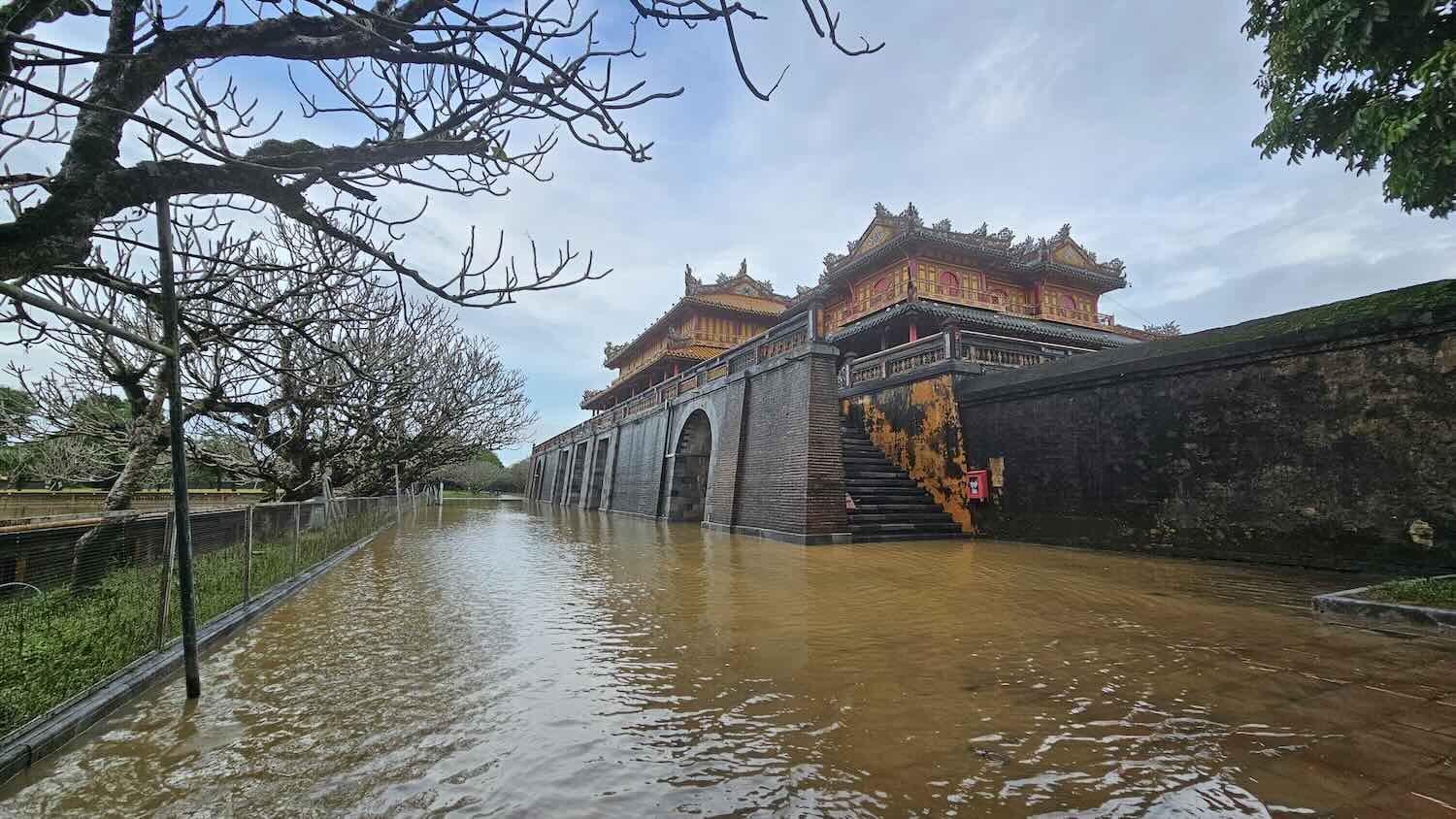
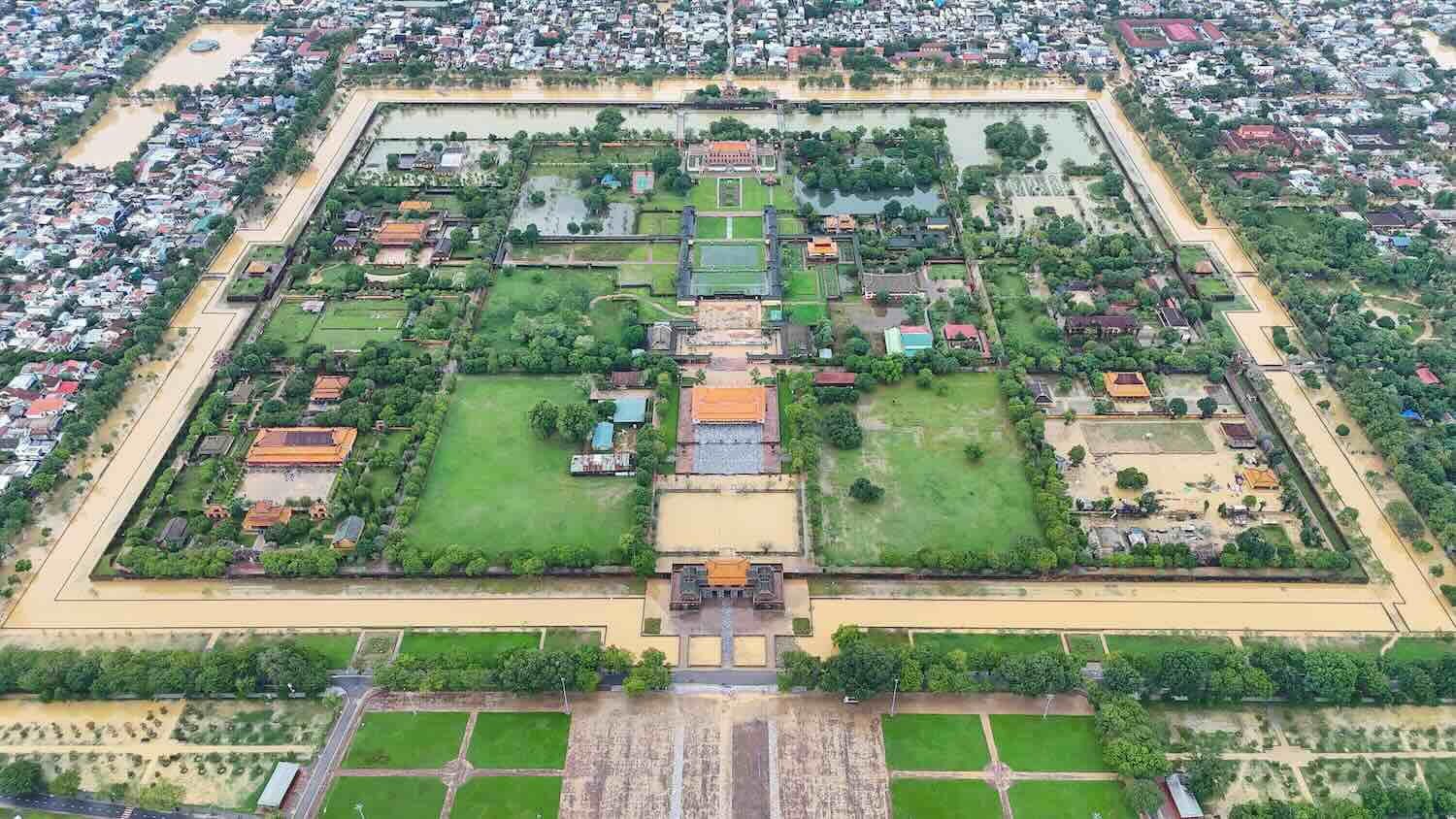
Hue City People's Committee has announced an emergency situation and decided to rebuild the collapsed wall section. However, not only Hue Imperial Citadel is affected. 4 consecutive major floods at the end of 2025 caused many works and scenic spots in the Hue heritage system to be deeply flooded.
Specifically, the courtyard inside the Imperial Citadel is flooded from 1.2 - 1.5 m; some palaces are flooded from 0.2 - 0.3 m. The courtyard of the Hue Royal Antiquities Museum is flooded from about 0.5 - 0.7 m; An Dinh Palace is flooded from 1 - 1.5 m. Gia Long, Minh Mang, and Thieu Tri mausoleums are also flooded from 1.4 - 1.7 m.
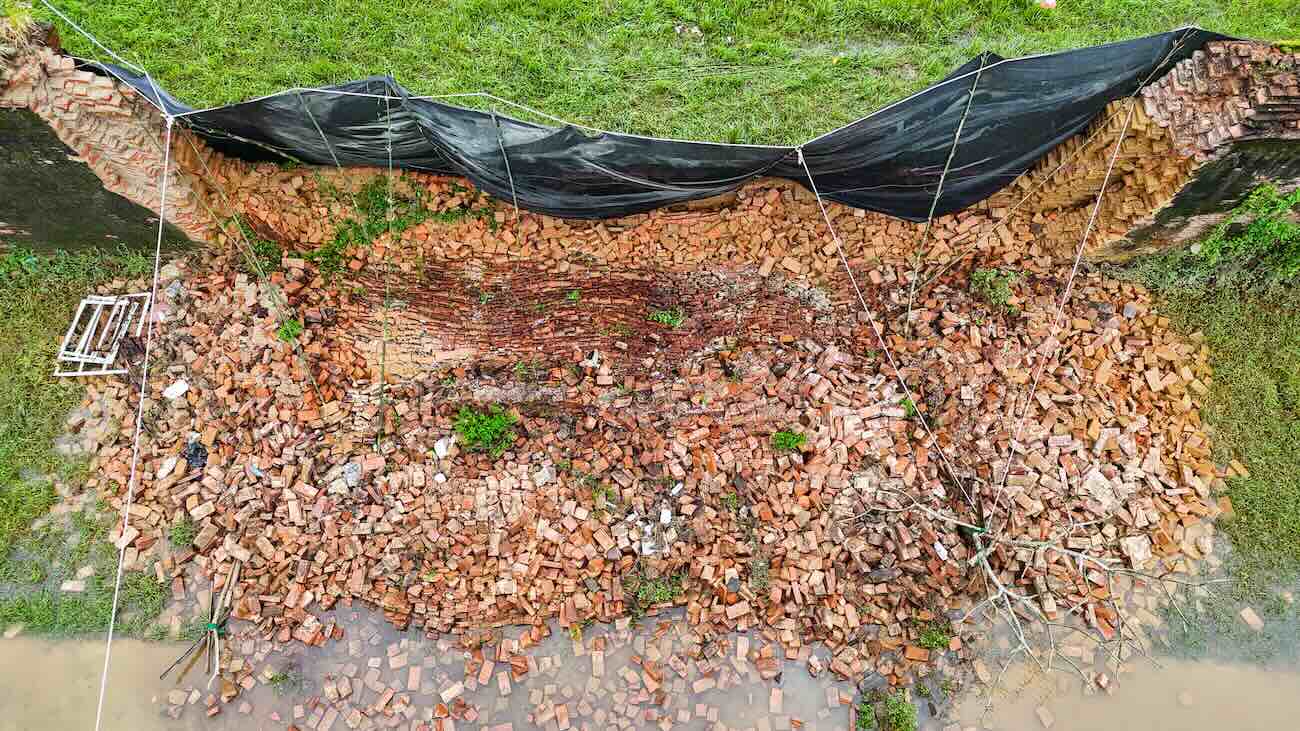
Despite proactively responding to natural disasters, damage is unavoidable. In addition to the collapse of the Imperial Citadel wall on Dang Thai Than street, Bat Trang brick foundation at some walkways, electric courtyards in the Imperial Citadel and mausoleums appeared peeling and damaged. Some sections of Ngoai Kim Thuy lake embankment continue to be eroded, with a high risk of subsidence, affecting the structure and landscape. At Tu Duc mausoleum, 2 sections of the lake embankment eroded about 15 m long. The wooden barrier system for ticket control at Minh Mang mausoleum was also swept away by water.
The story of Hue's heritage before the impact of natural disasters, especially floods, is no longer a local issue. This is also a warning about the limits of the endurance of the national heritage system before climate change. Conservation does not just stop at restoration but needs a long-term vision and a scientific and methodical response strategy.
Dr. Phan Thanh Hai - Member of the National Cultural Heritage Council, Director of the Department of Culture and Sports of Hue City, said that the collapse of a section of the Imperial Citadel is a clear warning about the limits of traditional material heritage in the face of harsh climate.
According to Mr. Hai, the incident reflects the direct impact of climate change, and also shows that traditional conservation measures are revealing limitations in the context of changing nature. It is time for a comprehensive - proactive - scientific strategy to preserve the ancient citadel wall system as a living heritage, capable of adaptation.
From international experience, he believes that it is necessary to build a risk map for Hue heritage. For the Imperial Citadel wall, priority should be given to establishing an early monitoring and warning system to detect the risk of deformation and collapse before an incident occurs, shifting from passive to proactive response.
Need a long-term strategy for Hue heritage
According to leaders of Hue City's cultural sector, in the long term, the program "Hue - Climate-adapted Heritage City" should be included in the Heritage City Development Strategy. This is not just a slogan, but a commitment to put heritage at the center of sustainable development, combining science, technology, tradition and community.
The collapse of a section of the Hue Imperial Citadel wall is a serious warning, and also an opportunity to review how we preserve heritage in the new era," Mr. Hai emphasized.
Assoc. Prof. Dr. Bui Hoai Son - Specialized Member of the National Assembly's Committee for Culture and Society, said that the degradation of Hue relics is no longer a potential danger but has become clear after each flood. Peeled walls, collapsed citadel sections, and ancient tiled roofs that cannot withstand prolonged humidity show that Hue heritage is entering a sensitive stage of its preservation life cycle.
Without overall planning and long-term vision, each upcoming rainy season will pose the risk of further losing a part of national memory. According to Mr. Son, preserving and restoring Hue's heritage in the context of climate change must be based on three pillars.
The first is the overall climate adaptation plan for the entire relic complex. Hue needs an integrated plan, in which water flow, terrain structure, tree density, drainage system, materials and even tourist behavior are calculated synchronously. It is not possible to only reinforce the city walls if the moat system is still flooded; it is impossible to replace the roof when the foundation is saturated with water. Planning must see heritage as a closely linked ecosystem, comprehensively protected. Many world heritages have succeeded with this approach - from Kyoto to Hoi An - and Hue can completely implement it.
Next, it is necessary to redesign the restoration technique in a sustainable direction. "We respect the original, but it does not mean preserving it with "the same as before" materials in the context that the climate has changed a lot compared to the Nguyen Dynasty. It is necessary to carefully study alternative materials, additives to increase durability, solutions to prevent moisture, drain water, resist rain and wind, and at the same time harmoniously combine with traditional techniques," Mr. Son analyzed.
According to the expert, Japan, Korea, and China have succeeded in integrating modern science into restoration while still preserving the soul of the heritage. This is a direction Hue can refer to.
Finally, it is necessary to establish a continuous management and monitoring mechanism. Hue needs a 24/7 monitoring system in real time, from moisture, crack, subsidence monitoring sensors to early warning systems. In particular, it is necessary to have a set of periodic monitoring standards - monthly, quarterly - so as not to wait until an incident occurs to intervene. Reality shows that prevention costs are always much lower than recovery costs.
Preserving Hue's heritage cannot just be repairing the damaged and patching the rotten, but must be a long-term strategy, proactive, integrating science, management and planning. Hue is not only a local heritage but also a spiritual asset of the whole nation. Faced with major changes in nature, it is even more necessary to be alert, persistent and invest methodically," Mr. Son emphasized.


