
Bread selling point entangled in a series of violations
On July 1st, according to a private source of Lao Dong Newspaper, functional agencies of Dien Ban ward, Da Nang discovered that Thuong banh mi establishment, in Thanh Chiem 1 block, Dien Ban ward - where many people were hospitalized and declared that they had bought banh mi before symptoms appeared - was entangled in many violations.
This establishment is determined to be doing business not in accordance with the scope, area, and location stated in the granted business license; producing and trading food without a certificate of eligibility for food safety; not implementing or not properly implementing regulations on food sample storage.
This is a new development in the case of many people suspected of poisoning after eating bread in Dien Ban that Lao Dong Newspaper has continuously reported in recent days.
According to a report by the People's Committee of Dien Ban ward, at 2:30 PM on June 15, the Inter-sectoral Steering Committee for Food Safety of the ward received information that 26 patients were hospitalized for treatment at Quang Nam Regional General Hospital. Patients had symptoms of abdominal pain, nausea, vomiting, fever, loose stools, suspected of being related to eating bread in the locality.
The investigation results recorded that from about 6:30 am to 7:30 am on June 13, Thuong's bread establishment sold goods as usual. Many people being treated at the hospital declared that they had bought bread at this establishment before symptoms appeared.
The foods recorded in the bread roll included bread, pork, sausages, pate, and spring rolls. Notably, at the time the inspection team approached the facility on June 15, food and processed ingredients sold from June 13 had been sold out. The facility also did not store food samples, making it difficult to take samples for testing to trace the cause.
Loopholes in pork sausage supply
Not only the bread selling point, through food traceability, functional agencies also discovered that Nguyen Minh Chau pork sausage supplier, in block 1, Dien Ban ward, was also involved in violations.
This is a facility that supplies pork sausage to Thuong bread shop - one of the ingredients recorded in the bread roll that many patients used before symptoms appeared.
This establishment was identified as producing and trading food without a certificate of eligibility for food safety; and at the same time, it did not comply with regulations on storing food samples" - said the representative of the inter-sectoral delegation of Dien Ban ward.
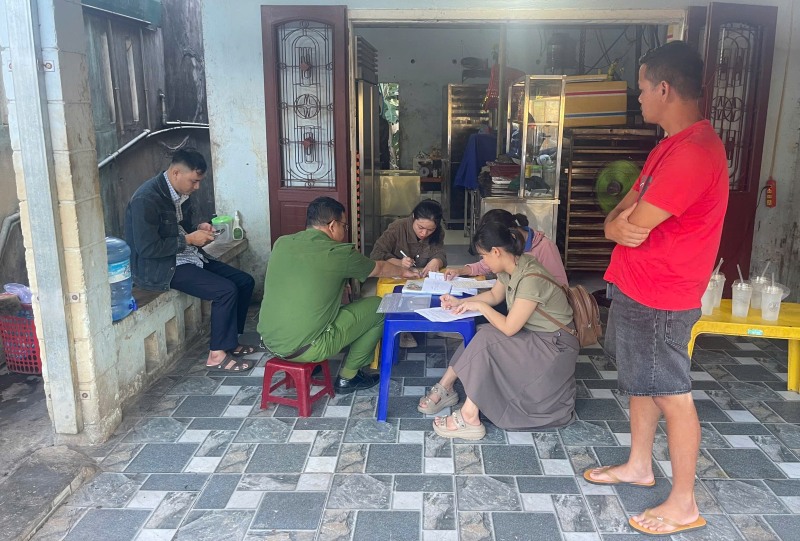
The fact that both the selling point and the supply of pork sausage do not fully meet food safety conditions shows a worrying loophole in the processed food chain. For fast-selling dishes such as bread, pate, sausage, and sausage, just a loose step can put consumers at risk.
According to Dien Ban Ward People's Committee, by the end of the investigation, functional agencies had not collected food samples, raw materials or food storage samples for testing to determine the causative agent. The test results of specimens also did not identify specific bacteria or toxins.
Therefore, functional agencies do not have sufficient scientific, epidemiological and legal grounds to conclude the type of food causing the disease, the causative agent as well as the direct causal relationship between food provided by the establishment and all suspected poisoning cases.
The incident in Dien Ban continues to raise warnings about street food safety. When both the sales establishment and the source of raw materials lack legal conditions and do not store samples, tracing the cause after a collective poisoning case is almost in a difficult situation.
Why can't the cause be concluded yet?
On June 16-17, Vinh Duc General Hospital recorded 14 cases, Quang Nam Regional General Hospital recorded 17 cases with suspected symptoms of food poisoning (through declarations of using Thuong bread).
However, through epidemiological review, these cases came for examination and treatment many days after the first case of poisoning was recorded when eating Thuong bread. Before being hospitalized, patients had used many different types of food, with inconsistent food sources.
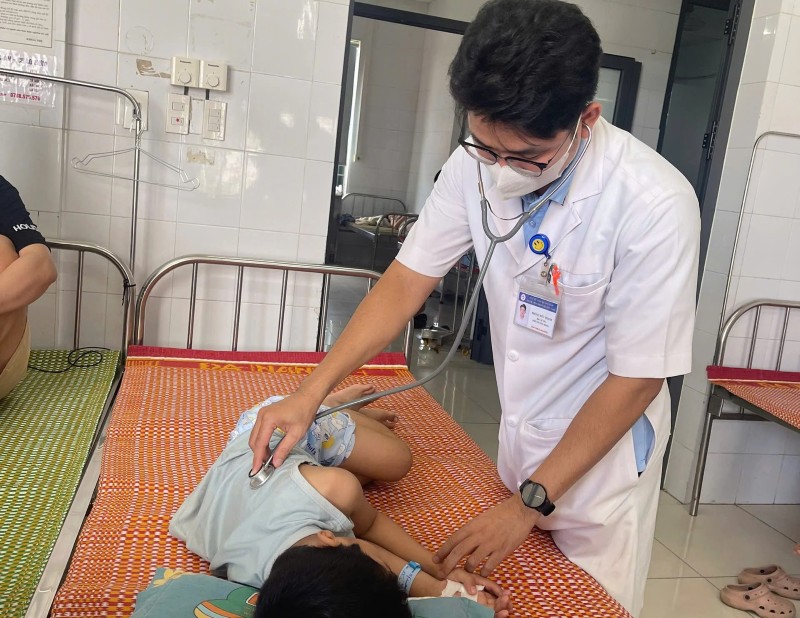
Suspected poisoning cases were identified concentrated from June 13 to 15. Cases recorded after June 15 were late arrivals for examination or supplementary declarations, so there is not enough basis to determine that they belong to the same case.
Due to the lack of food samples, raw materials or food storage samples for testing, and the results of the specimens have not yet identified specific bacteria or toxins, functional agencies do not have enough basis to conclude the type of food and the causative agent.


