
Reduce symptoms thanks to timely treatment
Seeing that her 9-year-old son had a continuous high fever and did not go down even though fever-reducing measures had been applied at home, Ms. Nguyen Thi Duyen (Binh Minh commune, Hanoi) took her child to the hospital immediately that night. After examination and necessary tests, doctors diagnosed the child with dengue fever.
Ms. Duyen said that before that, her child was in the process of getting some other vaccines, so the family planned to complete the injections before getting the dengue fever vaccine. However, before she could get vaccinated, the child got sick.
When my child had dengue fever, I realized that the disease was very complex and could affect many organs in the body. Fortunately, my family took my child to the hospital right from the initial stage, so treatment was more convenient and limited the risk of severe progression," Ms. Duyen shared.
After a day in the hospital, the baby's fever was cured, and indicators such as platelets and liver enzymes were also improved. Ms. Duyen said that after this period, the family will proactively implement mosquito prevention measures and vaccinate against dengue fever.
Dengue fever comes early, proactive disease prevention is needed
According to doctors, dengue fever can appear year-round but usually increases in the rainy season, from July to October. However, at the Department of Tropical Diseases, Hanoi Children's Hospital, this year, the epidemic tends to come earlier. Right from the end of May to the beginning of June, the department has received many children with dengue fever, in which there are many cases showing warning signs.
Master, Doctor Le Thi Van - Department of Tropical Diseases, Hanoi Children's Hospital - said that common symptoms include continuous high fever, subcutaneous bleeding, nosebleeds, bleeding gums, abdominal pain, vomiting and fatigue.
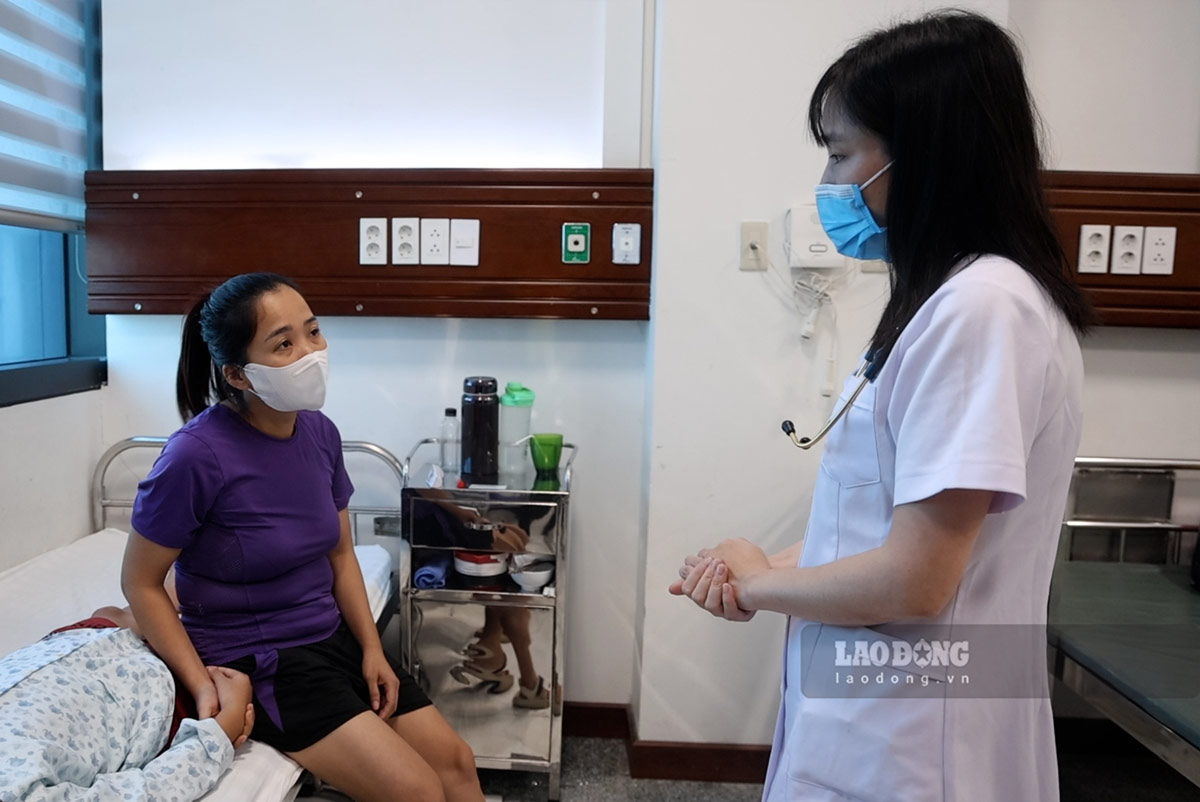
In the first 3 days, patients often have a high fever. However, the most dangerous stage is from about the third to seventh day of the disease. At this time, children often have reduced or gone out of fever, but the risk of severe progression is still very high.
Parents should not think that if the fever is gone, the disease will be cured. It is necessary to closely monitor warning signs such as child fatigue, restlessness or irritability, subcutaneous bleeding, bleeding gums, nosebleeds, bloody urine, black stools, chest pain, oliguria, cold limbs...", Dr. Van advised.
In the context of an increasing trend in the number of cases, doctors recommend that people proactively implement disease prevention measures such as killing larvae and pupae, environmental sanitation, removing water-filled containers, preventing mosquito bites and vaccinating against dengue fever.
In addition, when children develop a fever, especially in areas with epidemics or high risk, parents need to take their children to medical facilities for examination, diagnosis and timely treatment, avoiding dangerous complications.


