About 600,000 Vietnamese people are living with dementia.
On the afternoon of March 20, the National Geriatric Hospital organized a scientific conference "Strengthening care for dementia in Vietnam".
Sharing at the conference, Assoc. Prof. Dr. Nguyen Trung Anh, Director of the National Geriatric Hospital, said: "Vietnam is one of the 10 countries with the fastest population aging rate in the world. If there are no significant changes, by about 2036, Vietnam will officially become a country with an aging population.
Along with this trend, the number of people with dementia will certainly increase rapidly. This poses an urgent need for early diagnosis, timely treatment for patients, as well as support for caregivers.
Dementia is a disease that progresses silently over a long period of time. From a stage without clinical symptoms to clearer and more severe manifestations, the disease can last from 10 to 15 years. Therefore, early diagnosis, even 10-15 years before clinical symptoms, is extremely important.
In the near future, the field of dementia is expected to have breakthroughs, especially in early diagnosis. Currently, research trends around the world are towards using biomarkers in the blood - a simpler, less invasive and lower-cost method.
Currently, the National Geriatric Hospital and partners are aiming for research to apply biomarkers in the blood to detect diseases early. If successfully implemented, this will be an important step forward to help detect diseases very early, even before clinical symptoms from 10-15 years.
In Vietnam, it is estimated that about 600,000 people are living with dementia and this number is expected to continue to increase with the rate of population aging.
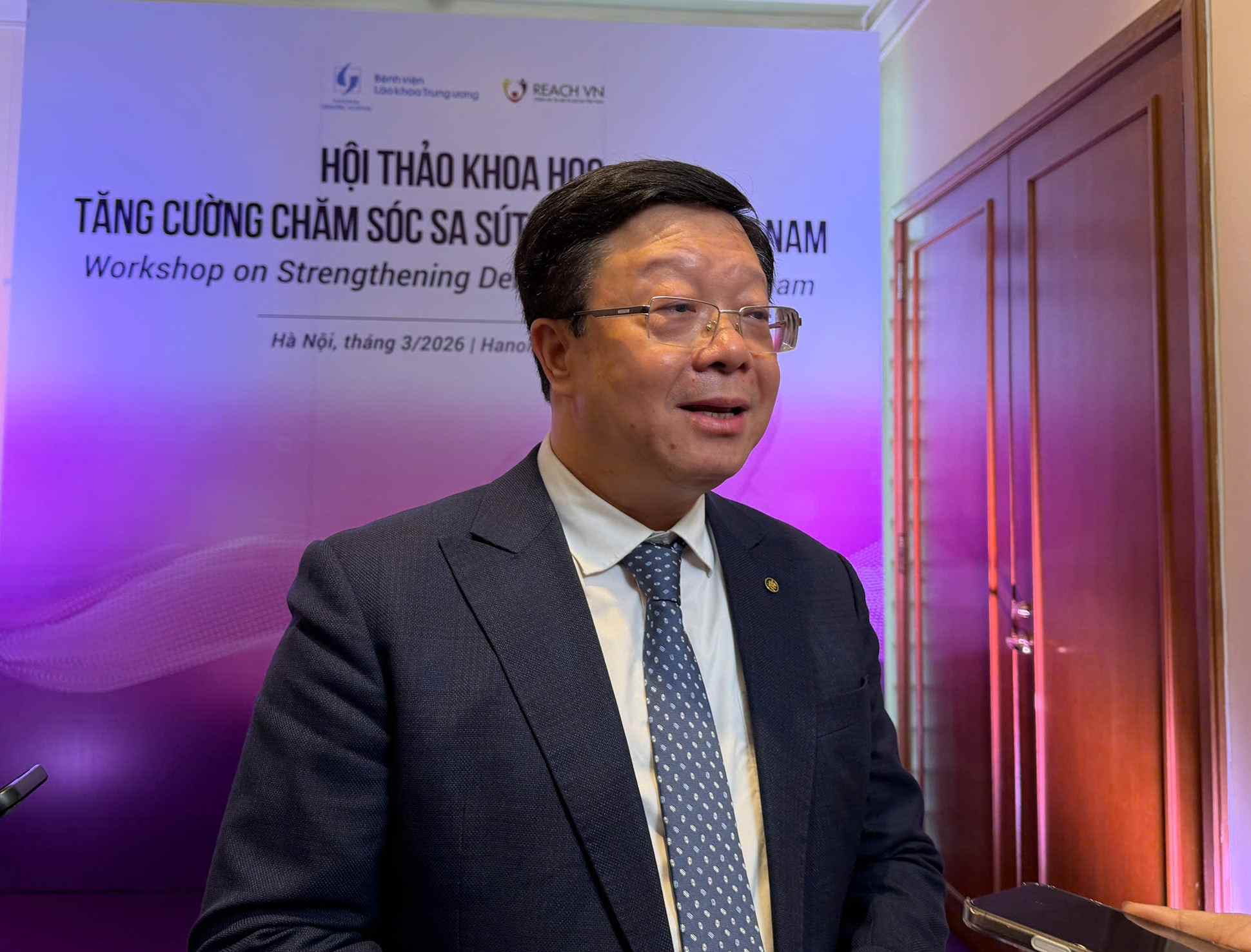
Vietnam does not have a complete system to detect patients early in the community
According to the Director of the National Geriatric Hospital, currently in major centers such as Hanoi and Ho Chi Minh City, there are specialized units that examine, detect and develop treatment and monitoring strategies for each patient as well as each group of patients. However, in general, we still do not have a complete system to detect patients in the community early.
Not only that, long-term monitoring, care and treatment are also limited. In particular, caregivers of dementia patients are facing great pressure, both physically and mentally.
Over the past time, the National Geriatric Hospital has coordinated with international partners, including researchers in the United States such as the University of California, Davis and the University of Minnesota, and experts to implement research in this field. From initial small-scale studies, experts have developed into larger studies, including R01 research.
The results show that if there are supportive interventions for caregivers, it will not only significantly reduce their burden, but also bring positive effects to patients. Specifically, patients who are cared for in supported conditions will have a better quality of life and their lifespan will also be significantly improved.
This shows the necessity of expanding research on a larger scale, applying scientific models to the community. From there, we can gradually build and develop a comprehensive care system for this special group of subjects," Associate Professor Nguyen Trung Anh said.
In parallel with research activities, the National Geriatric Hospital also focuses on developing specialized research capacity in the field of dementia. From the hospital's staff, training programs have been expanded to lower levels, and a network of young researchers has been formed nationwide.
Building this team is considered an important foundation, because any field that wants to develop sustainably needs a sufficiently strong and closely linked research system.

Dr. Nguyen Ngo Quang, Director of the Department of Science - Technology and Training, Ministry of Health, highly appreciated the 10-year effort in implementing research projects on intellectual health and dementia.
The results achieved today are proof of the enthusiasm, persistence and great contribution of many generations of scientists, especially leading experts such as Professor Pham Thang, and colleagues in the field of geriatrics over the years.
Representatives of the Ministry of Health said that academic exchanges and international experience sharing from the workshop will contribute to orienting development strategies in the coming time, especially in the field of elderly health care and dementia prevention and control.