
On July 14, senior leaders of 30 hospitals nationwide attended the Workshop "Finance, Autonomy and Hospital Performance Management" organized by the Institute of Preventive Medicine and Public Health Training, Hanoi Medical University in coordination with the Department of Medical Examination and Treatment Management - Ministry of Health and the French University of Public Health (EHESP).
Speaking at the opening, Dr. Ha Anh Duc - Director of the Department of Medical Examination and Treatment Management, Ministry of Health - said that Vietnam's health sector is entering a new stage of development, with increasingly high requirements for quality, efficiency, sustainability and adaptability.
Current guidelines and policies set out requirements for innovating hospital governance, improving the efficiency of resource use, promoting digital transformation, strengthening accountability and putting patients at the center.
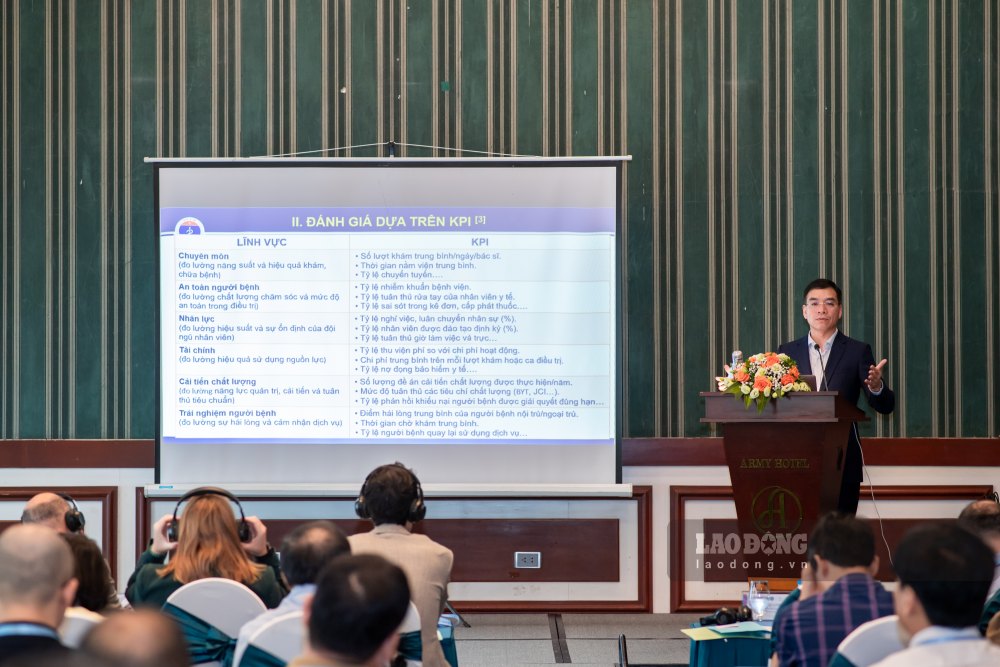
The Law on Medical Examination and Treatment and new policies are creating a legal corridor for hospitals to promote autonomy, while enhancing responsibility in management and provision of medical services.
However, according to Dr. Ha Anh Duc, autonomy is only truly effective when it comes with modern management capacity.
A successful hospital is not only a hospital with good expertise, but also a hospital that knows how to effectively use every penny of budget, every human resource, every piece of equipment and every square meter of infrastructure to create the best value for patients and society," he emphasized.
Faced with that requirement, the Ministry of Health is strongly shifting its thinking from input management to result management; from compliance assessment to operational efficiency assessment; from operation based on experience to management based on data and evidence.
The Department of Medical Examination and Treatment Management currently builds and completes advanced quality standards and continues to complete basic quality standards for hospitals.
The evaluation system aims at many aspects, including professional quality, patient safety, resource efficiency, financial efficiency, digital transformation, sustainable development and patient satisfaction.
According to the leader of the Department of Medical Examination and Treatment Management, these indicators are not intended to create an additional reporting burden but will become a tool to support hospital leaders to operate better, helping management agencies build policies based on data and create motivation for continuous improvement.

During the three working days, the trainees exchanged views with experts from the French School for Advanced Training in Health Management and Public Health (EHESP), Paris Public Hospital System (AP-HP) on health finance, activity-based payment models, budget management, public procurement, balanced scorecards, operating tables and hospital performance evaluation tools.
These are practical contents in the context that Vietnamese hospitals must both improve professional quality, ensure financial efficiency and optimal use of resources.
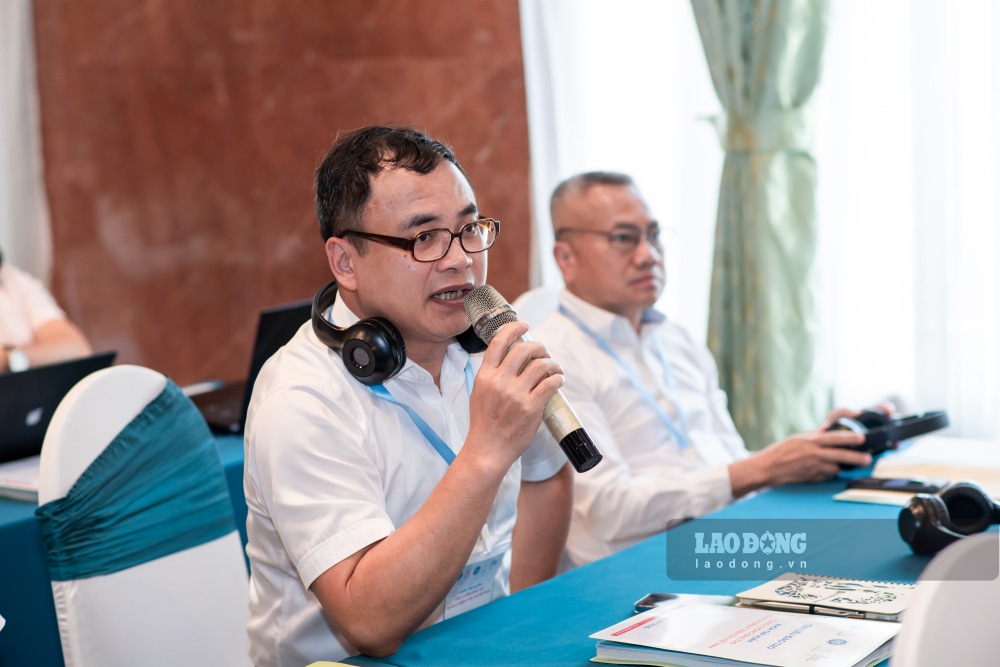
Dr. Ha Anh Duc noted that the goal is not to apply the prototype of a country's experience, but to select, adjust and apply it in accordance with the socio-economic conditions, laws and practical operations of Vietnamese hospitals.
The conference is expected to contribute to forming a network of hospital managers with a common innovative mindset, strengthening experience sharing and spreading advanced management models in the medical examination and treatment system.


