
It is necessary to ensure uniform quality between training institutions
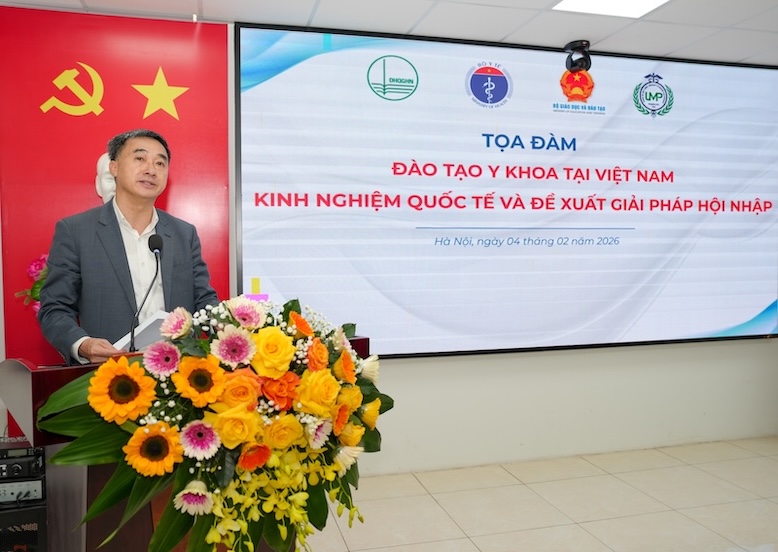
On the afternoon of February 4th, the University of Medicine and Pharmacy - Vietnam National University, Hanoi organized a seminar: "Medical training in Vietnam, international experience and integration solution proposals".
Speaking at the seminar, Prof. Dr. Tran Van Thuan - Deputy Minister of Health said: In the context that we are promoting fundamental and comprehensive innovation in education and training, the health sector is also facing stricter requirements from society.
Looking at reality, it can be seen that although Vietnam has built a wide network of medical and pharmaceutical training institutions, providing high-quality human resources for people's health care, it is clear that we still have certain gaps between domestic and international training standards.
Ensuring uniform quality between training institutions and compatibility with global practicing certificates is a big problem. Therefore, there needs to be a frank forum to discuss specific solutions and integration roadmaps, especially the development of competency assessment exams to serve practicing license issuance in a way that is both suitable for Vietnamese practice and close to world elite" - the Deputy Minister said.
Focusing on this topic is the key to raising the prestige of the country's medicine, ensuring that the future team of doctors has sufficient qualifications for deep integration and best meets the increasing expectations of society about the quality of healthcare in the new era.
The proposals and recommendations from the seminar will be an important basis for the Ministry of Health to study and improve policies on training and development of medical human resources in the coming time" - Deputy Minister of Health emphasized.
Proposing a roadmap for unified medical training nationwide
At the seminar, Professor Le Ngoc Thanh - Rector of the University of Medicine and Pharmacy, Vietnam National University, Hanoi, Chairman of the Medical Professors' Council said: Medical training today is facing strong innovation requirements to both meet the needs of medical human resources, and ensure quality and international integration capacity.
Practice in Vietnam shows that the medical training system is still scattered, input and output standards are not uniform, while the training time and models between institutions and levels of education have not been standardized.
International experience from the US, France, and Japan shows that doctor training needs to be designed according to a clear roadmap, closely linking university, postgraduate and residency training, and applying national exams to unify competency assessment and serve as a basis for specialized streaming.
On that basis, building a multi-stage training roadmap, combining foundation - professional - inpatient training with supervision, along with a national exam and "matching" mechanism (announcement of results "matching" the doctor's specialized aspirations with hospital targets, ensuring fairness and based on exam score capacity), is considered an important direction to improve the quality of medical training, ensuring that the team of doctors is both professionally solid and meets the professional requirements in the context of integration.
The solution for reforming medical training proposed by Professor Le Ngoc Thanh is to build a unified, articulated and approaching international standard training roadmap, divided into three clear stages:
Phase 1 is medical bachelor's training in the first 3 years, focusing on equipping a foundation of natural sciences, biomedicine and basic medicine, helping learners form scientific thinking and solid foundational knowledge.
Phase 2 lasts from the 4th year to the 6th year, which is the medical professional training phase, focusing on pathology, diagnosis, clinical skills and preparation for the national exam, playing the role of "gateway" for unified capacity assessment nationwide.
Phase 3 is inpatient training according to specialties from 3–6 years, in which doctors are deeply trained and practice under supervision, ensuring practical capacity before practicing independently.
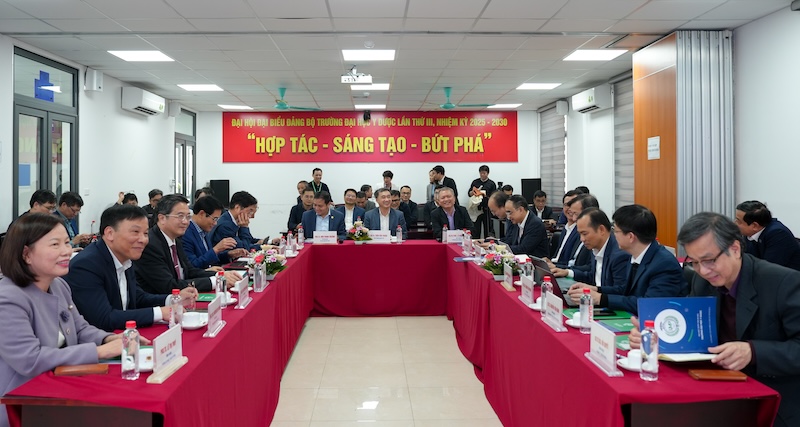
According to Professor Thanh, the highlight of this roadmap is the organization of a unified national exam, with comprehensive assessment content, as a basis for ranking and allocating specialties and dormitory locations according to a transparent "matching" mechanism.
This approach not only contributes to improving the quality of doctor training, but also creates fairness, standardizes output and increases the integration capacity of the Vietnamese medical training system.


