
On March 6th, news from Can Tho City General Hospital said that doctors had successfully saved a patient infected with a Type B meningococcal "killer".
Accordingly, at 6:55 am on February 21, 2026, the Emergency Resuscitation Department of the Hospital received patient N.B. T. (47 years old, Vinh Long province) in critical condition. The day before, the patient had symptoms of high fever, lethargy and body aches.
Upon admission, the patient fell into severe infectious shock syndrome: infectious and toxic face, dry lips, dirty tongue, rapid and deep breathing 32l/p, deep drop in blood pressure, light and rapid pulse, lethargic consciousness and bruised skin.
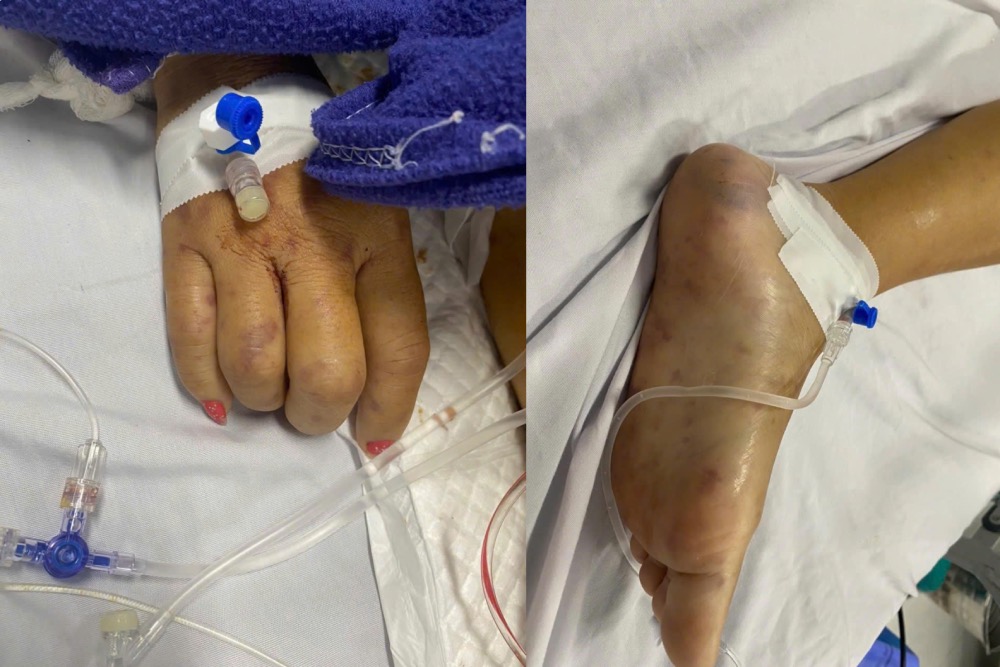
When identifying the disease, doctors isolated the patient in a separate room, performed emergency treatment such as: endotracheal intubation to support respiration, fluid resuscitation, vasopressure, antibiotic treatment aimed at meningococcus and also streptococcus suis agents, and performed tests to diagnose disease complications. Along with that, they consulted with an infectious disease specialist, Can Tho CDC and took samples to send to the Paster Institute for diagnostic testing to identify the causative agent.
Test results showed that the patient had multiple organ failure complications, blood clotting disorders, and severe metabolic acidosis that were life-threatening. The patient received blood transfusions to regulate blood clotting disorders and continuous blood filtration.
The Pasteur Institute of Ho Chi Minh City sent results confirming that the patient was positive for Type B meningococcus, consistent with the initial clinical diagnosis.
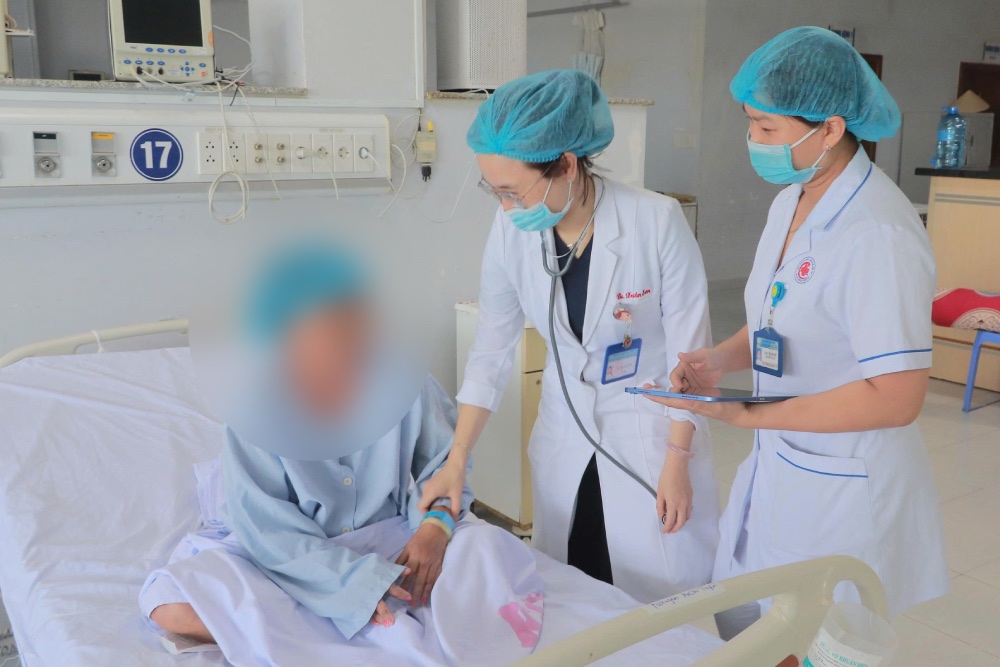
After 12 days of intensive treatment and care, the patient responded well to treatment, improved dramatically and blood filtration and endotracheal intubation were stopped.
Currently, the patient is completely awake, can be exposed, and breathes oxygen through a nasal tube, vital signs are stable.
According to doctors, meningococcal infection is an acute respiratory infectious disease with very diverse clinical manifestations. The severe clinical picture with a high mortality rate is spontaneous sepsis as in the above patient.
The disease occurs suddenly and progresses rapidly to endotoxin shock, cardiovascular collapse, acute kidney failure, and blood clotting disorders, often progressing critically, even dying rapidly in the first 1-2 days if not diagnosed and treated actively.


