
House prices increase by 10-15% per year, some places up to 30%
In the context of the real estate market recovering, a paradox is increasingly revealed: project supply is increasing, transactions are bustling again, but workers - the group with the largest housing demand - still find it difficult to access an apartment suitable for their income.
Sharing with Lao Dong reporters, a representative of the Ministry of Construction said that in 2025, housing prices, especially apartments, will continue to increase.
In recent years, apartment prices, townhouses, villas and land plots have all tended to increase continuously, with an average increase of about 10-15% per year; exceptionally, there was a period of up to 30% increase.
This is a price increase rate far exceeding the average income increase of workers.
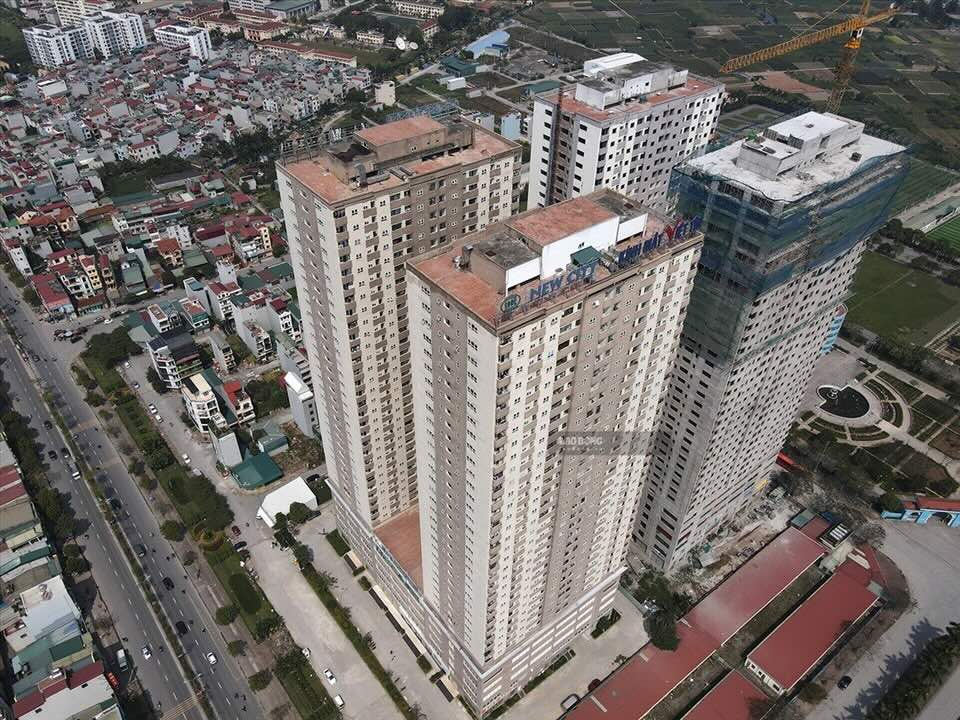
Reality in big cities shows that a commercial apartment with a moderate area is currently often offered for sale for several billion VND.
With a common salary of 10-15 million VND/month for young workers and civil servants, accumulating enough counterpart funds to borrow to buy houses is almost an "unsolved problem". Many young families have to accept long-term rent, living far from the center, or living together to reduce costs.
Supply deviates to the mid-range - high-end segment
One of the reasons why apartment prices are "high" is that the product structure in the market is unbalanced. The Ministry of Construction frankly pointed out that the current supply mainly focuses on the high-end and mid-range segments, while there is a serious shortage of affordable housing suitable for the affordability of the majority of people, especially industrial park workers and low-income people.
By the end of 2025, the whole country had 3,297 housing and urban area projects with a scale of nearly 5.9 million units. Of which, commercial housing accounted for more than 5.2 million units, while social housing was only about 657 thousand units, equivalent to 62% of the target of the Project of 1 million social housing apartments for the period 2021-2030. This difference shows that the market still "favors" high-yield products, instead of focusing on solving real housing needs.
Inventory increases, but not housing for low-income people
Another paradox is that real estate inventory is still high. According to data reported by 22/34 localities, in the third quarter of 2025, there are still about 26,717 units and land plots in inventory, of which apartments alone are 6,323 units.
However, most of this inventory belongs to the mid-range - high-end segment, difficult to reach for workers with average - low incomes because the selling price exceeds the ability to pay.
The fact that many projects are legally hindered and slow to implement also increases costs and pushes selling prices up. The Ministry of Construction warns that this situation causes waste of social resources and increases pressure on housing prices.


