
The recent inspection conclusion on Hanoi approving many urban area and housing projects with a scale of 10ha or more but not allocating 20% land fund for social housing (NƠXH) development once again shows the large gap between the goal of housing security and the actual operation of the real estate market.
In the period 2011 - 2022, the Hanoi People's Committee approved 8 projects from 10ha or more without allocating 20% land fund for social housing; in addition, there were 4 projects licensed to pay money equivalent to the 20% land fund value, but by the time of inspection, the city had not yet allocated a replacement land fund. The Government Inspectorate also pointed out 3 projects that did not allocate enough land fund according to regulations.
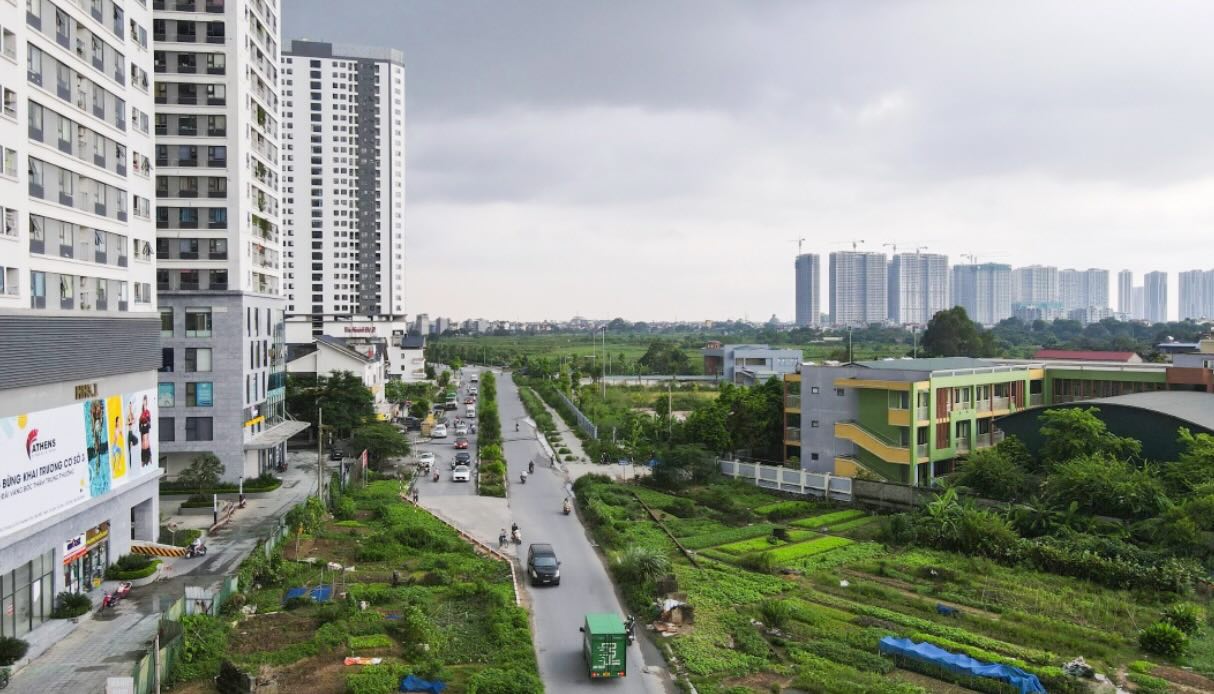
First of all, the most obvious reason is the profit problem. In the context of increasing land costs, infrastructure investment, loan interest and legal procedures, most businesses tend to focus resources on the high-end segment - where the profit margin is better, the rate of capital recovery is faster, and it is easier to "carry" increasingly expensive input costs.
Meanwhile, social housing or affordable housing requires controlled selling prices, stricter investment procedures, limited buyers and lower financial efficiency.
Market data has clearly reflected the trend of leaning towards the high-end segment. According to the Vietnam Association of Realtors, in 2025 the entire market had about 128,000 new products on sale, which is the highest level in the 2019 - 2025 period, but the supply structure is still seriously imbalanced. Most of the new supply is high-end apartments and low-rise products with high value.
Meanwhile, commercial apartments priced under 50 million VND/m2 have almost disappeared from the market in major cities. This is a signal that business capital is flowing strongly into the highly profitable segment.
Mr. Pham Duc Toan - General Director of EZ Real Estate Joint Stock Company - said that the market in recent times has focused on two segments: social housing for low-income people and high-end commercial housing, while housing for the middle-income group is almost vacant.
According to Mr. Toan, this is a group with very large demand but falls into the market gap: not meeting the conditions to buy social housing, and the price of commercial housing exceeds the affordability. To attract businesses to the affordable housing segment, the prerequisite is to have clean land funds with reasonable costs, along with land use fee reduction policies, tax incentives and strong enough credit support.
The second reason is that although there are legal regulations, there are still "doors" for replacing social housing arrangement obligations with other options.
According to current regulations in Decree 100/2024/ND-CP, in special type, type I, II and III urban areas, provincial-level People's Committees when approving investment policies must decide whether investors allocate 20% of the total residential land area within the project to build social housing. However, the decree also allows in some cases, localities to consider allocating land funds in other locations outside the project area or approve investors to pay money equivalent to the value of the land fund that has invested in technical infrastructure to build social housing. In other words, the obligation of 20% of the land fund is not always implemented immediately in the project.
The problem lies in the fact that when allowing exchange with other land funds or money, the responsibility of local management agencies increases greatly. If there is no separate monitoring, no urging, and no timely allocation of replacement land, the social housing land fund in reality will shrink.
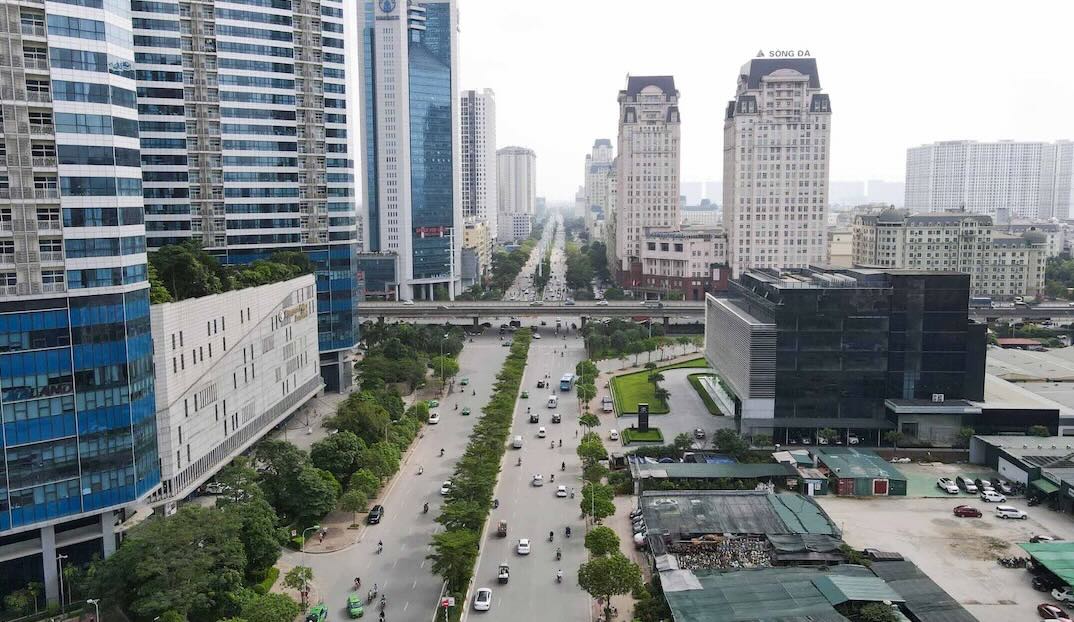
The third reason is that social housing businesses have not really received commensurate support to feel secure in pursuing this segment. Speaking at the seminar "Real estate credit, how to control for development" on April 17, Mr. Le Huu Nghia - Director of Le Thanh Company - said that his company has a 2,000 billion VND project that has completed the foundation but has to "freeze" because it cannot borrow capital.
According to Mr. Nghia, although the credit package of 145,000 billion VND is designed for social housing and worker housing, when businesses approach banks to borrow at preferential interest rates of 6.1%, they are refused because banks believe that deposit interest rates are high, lending at that level will be loss-making. Even businesses accepting loans at commercial housing interest rates are not approved because they are worried about the wrong lenders.


