
After Hanoi approved many large-scale urban and housing projects but did not allocate land funds for social housing development, the handling of implemented projects is attracting special public attention.
Dr. Tran Xuan Luong - real estate expert, National Economics University, said that in the previous period, most projects, especially projects located in the central area, many investors often chose the option of paying money instead of reserving land funds for social housing development.
The main reason is the limited land fund in the inner city. Allocating 20% of the land area in the project to build social housing may make the profit efficiency not high, and at the same time affect the synchronicity and brand of the project.
From that reality, the problem posed is not only to explain why many projects have not allocated 20% land fund for social housing, but more importantly, how to handle projects that have been implemented to ensure harmony of interests.
From a legal perspective, Lawyer Le Hang - TAT Law Firm believes that the handling of projects should be based on the principle of specific classification of each case, and at the same time tighten the obligation to develop social housing right from the initial approval stage.
Difficult to handle deployed projects
According to Lawyer Le Hang, a reality that cannot be ignored is that many projects have been implemented, even products have been sold or buyer rights have been formed. In that context, requesting additional social housing land funds is no longer a simple issue.
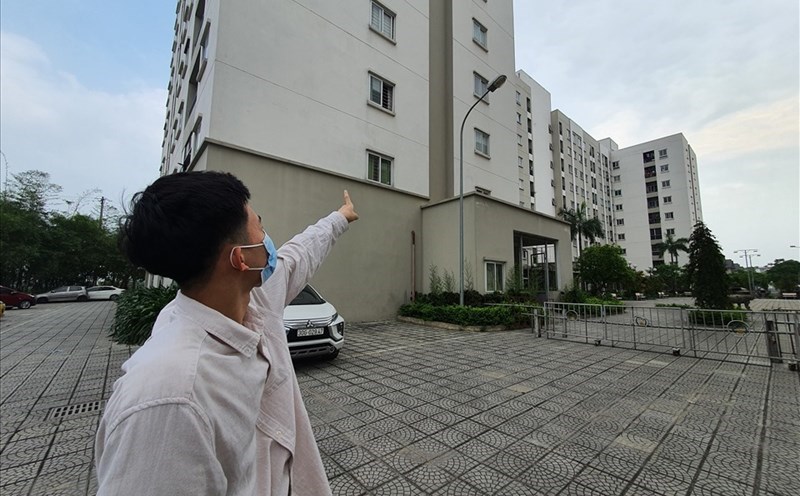
This lawyer said that if planning is adjusted to supplement social housing, it may lead to a series of changes in construction density, population size, technical infrastructure and financial obligations. At the same time, the rights of third parties may also be affected, leading to complex legal disputes.
Therefore, the appropriate approach is not to handle it simultaneously, but to classify it. Some projects are legally transferred; some projects show signs of violation; some projects fulfill alternative obligations but are ineffective. Each group needs a different handling mechanism, instead of applying a common criterion.
Lock obligations from the beginning, instead of editing from the end
From a policy perspective, the core issue is not in handling the projects that have occurred, but in how to prevent them from recurring in the future.
According to analysis by TAT Law Firm, social housing obligations need to be "locked" right from three points: planning, investment policy approval and project approval.
First of all, the local housing development program must clearly define needs, land funds and specific allocations by area. If it only stops at the overall goal without being associated with a specific space, then when implementing the project, it will be very difficult to require investors to fulfill their obligations.

Next, at the investment policy approval step, the project dossier must clearly state: whether or not there are social housing obligations, if there are, where to arrange them, at what rate and according to what progress. If this step is ignored, it is almost impossible to overcome when the project has been implemented.
Finally, it is necessary to strictly control the mechanism for implementing alternative obligations. Lawyer Le Hang noted that if not controlled well, a situation may arise where obligations only exist on paper, while the actual supply of social housing is not created at the right time and in the right area with demand.
Balancing benefits, but not leaving policies "on paper
An important point emphasized by Lawyer Le Hang - TAT Law Firm is that it is not advisable to approach in an extreme direction, pushing all obligations to businesses. The State needs to design a transparent mechanism, businesses need to have the ability to forecast costs and obligations, and people need to be guaranteed access to social housing.
However, if incentives are not linked to specific implementation responsibilities, policies are very likely to be "deviated". Businesses may receive land, tax or credit incentives, but the implementation of social housing is slow, reduced in scale, or not in accordance with commitments.
Therefore, according to TAT Law Firm's point of view, incentives need to be linked to the progress and results of implementation. When obligations are clearly defined from the beginning, controlled in the implementation process and bound by specific responsibilities, social housing will no longer be a "forgotten" part in large projects.


