
Many challenges
Ho Chi Minh City sets a target to complete the relocation of 20,000 houses along rivers, canals, and ditches by the end of 2030 to improve the quality of life of people, improve the environment, combat flooding and urban embellishment.
However, according to the Ho Chi Minh City Department of Construction, this goal is facing many challenges, from capital sources, compensation mechanisms to the resettlement problem and people's consensus.
According to calculations, to synchronously implement projects to renovate canals, compensate, support and resettle about 20,000 households, Ho Chi Minh City needs capital of up to 170,000 billion VND.
The compensation and site clearance mechanism is still the biggest "bottleneck". Most houses on and along canals and ditches have complex land law, stretching through many stages, not clearly regulated in previous legal documents.
Therefore, many cases are only partially supported, do not have enough capacity to buy commercial housing, do not meet the conditions for land compensation, so they are not arranged for resettlement, and do not have enough resources to find new accommodation themselves. This makes it very difficult to mobilize people to hand over land.
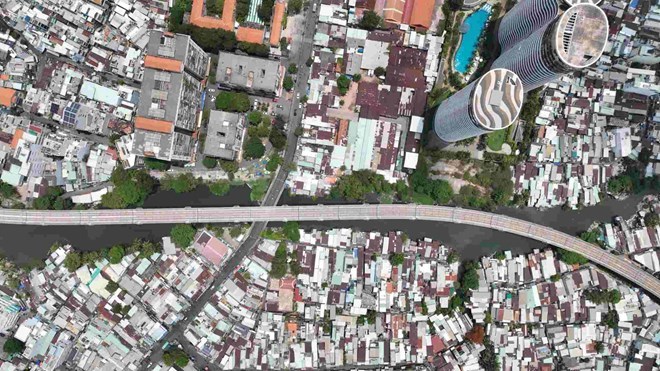
In addition to legal and financial factors, people's psychology is also a significant challenge. Many households have lived along rivers and canals for decades, attached to the residential area for a long time. Despite facing pollution, flooding, and landslide risks, a part of the population still does not want to relocate because they are worried about disrupting their lives.
Notably, most residents along canals and ditches have low incomes, are self-employed or have unstable occupations.
Moving to a new place of residence makes them worried about their jobs, livelihoods as well as access to essential services such as schools, markets, and medical facilities. Without a synchronous solution on social security, reaching consensus is not easy.
Although the City advocates prioritizing resettlement on the spot or near the old residence, clean land funds, especially in the central area, are increasingly scarce, pushing up investment costs in resettlement areas.
Lessons from the Nhieu Loc - Thi Nghe canal
Looking back at the past, the Nhieu Loc - Thi Nghe canal renovation project is considered a bright spot in the renovation of canals and ditches in Ho Chi Minh City for more than 20 years.
Once a "dead canal" heavily polluted, with thousands of makeshift houses on both banks, the project has been implemented with a total investment of about 8,600 billion VND, from the state budget and international funding.
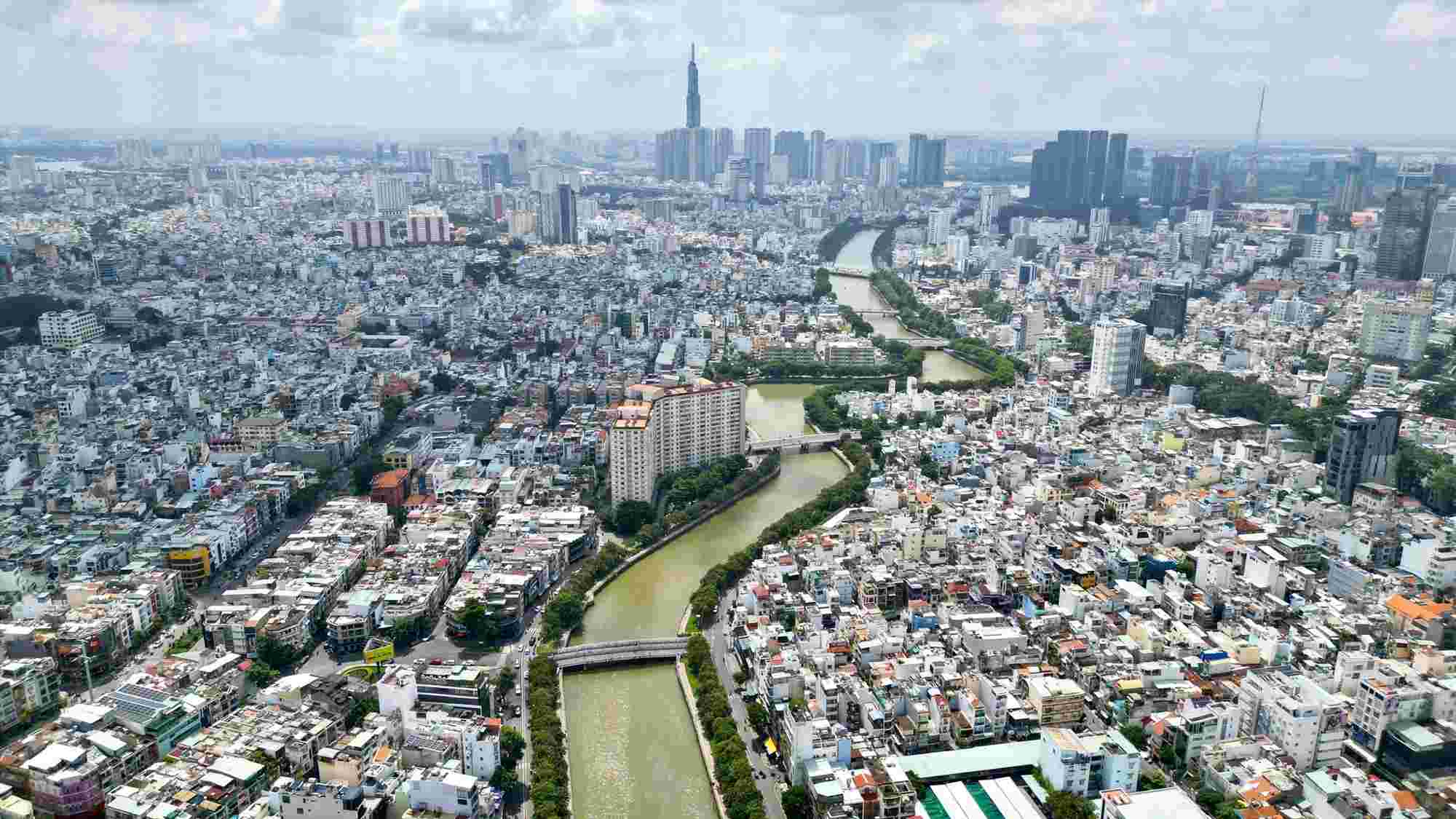
Dr. Nguyen Minh Hoa - Vice Chairman of the Ho Chi Minh City Planning Association, who participated in the socio-cultural assessment of the project, said that at that time, Ho Chi Minh City simultaneously resettled more than 7,000 households with 35,000 people, which can be considered the largest relocation in the reconstruction of Ho Chi Minh City after 1990.
At that time, most people living on and along canals and ditches were poor, many cases did not have sufficient legal documents. Local authorities were also confused in developing policies, once proposing only resettlement for people with household registration in Ho Chi Minh City but it was not feasible.
The city must actively mobilize and seek capital from the central government and foreign sponsorship organizations to build resettlement apartments. However, when implemented, many people did not want to move into apartments due to concerns about lack of livelihoods. Later, 60-70% of people left apartments due to inappropriate locations.
People always want to resettle on the spot, but currently this is very difficult because Ho Chi Minh City does not have many land funds left" - Dr. Nguyen Minh Hoa assessed and said that to avoid repeating old mistakes, the City needs to prepare more carefully, get expert opinions and especially create consensus from the people.
Need more choices and accompanying social security policies
According to Dr. Nguyen Minh Hoa, for households that do not meet resettlement conditions, Ho Chi Minh City should consider building houses for rent, supporting house rent for a certain period of time so that people can stabilize their lives and find jobs again. At the same time, it can support cases that need to return to their hometowns to live.

From an economic perspective, Dr. Tran Quang Thang - Director of the Institute of Economics and Management of Ho Chi Minh City, a delegate of the Ho Chi Minh City People's Council, said that relocating 20,000 houses in the next 5 years is a very big challenge, requiring the City to mobilize diverse resources.
According to Mr. Thang, Ho Chi Minh City needs to study issuing project bonds, attracting foreign investment capital, calling on private enterprises to participate in public-private partnership projects, and at the same time effectively exploiting land funds after relocation to create revenue to compensate for costs.
In particular, the use of public land, especially vacant land areas to build resettlement areas, will both meet people's aspirations for on-site resettlement, reduce waste, and bring higher economic efficiency.
In addition, the City needs to provide many compensation plans such as cash, resettlement land or resettlement housing; ensuring the determination of the value of recovered assets is fair, transparent, and accurately reflects the actual value.
In parallel, there are financial support policies, vocational training, and job creation so that people can soon stabilize their lives after relocation.


