
According to the Global Real Estate Transparency Index (GRETI) 2026 report of JLL (global commercial real estate investment and service management company), Vietnam ranked 50/88 countries and territories, with a score of 3.15, continuing to belong to the "Semi-Transparent" group.
Vietnam is also in the top 10 markets with the strongest score improvement globally in the 2024-2026 period, along with Poland, Thailand, Australia, Qatar, South Korea, India, Saudi Arabia, Dubai and Abu Dhabi.
The index assesses 88 markets globally based on 256 criteria, spanning six categories: Market performance measurement (25%), legal and regulatory (23.5%), market platform (16.5%), transaction process (15%), listed enterprise governance (10%) and sustainable development (10%).
This is considered a guiding principle for investors, lending institutions and real estate leasing businesses around the world, because the level of transparency of a market directly affects investment risks and opportunities.
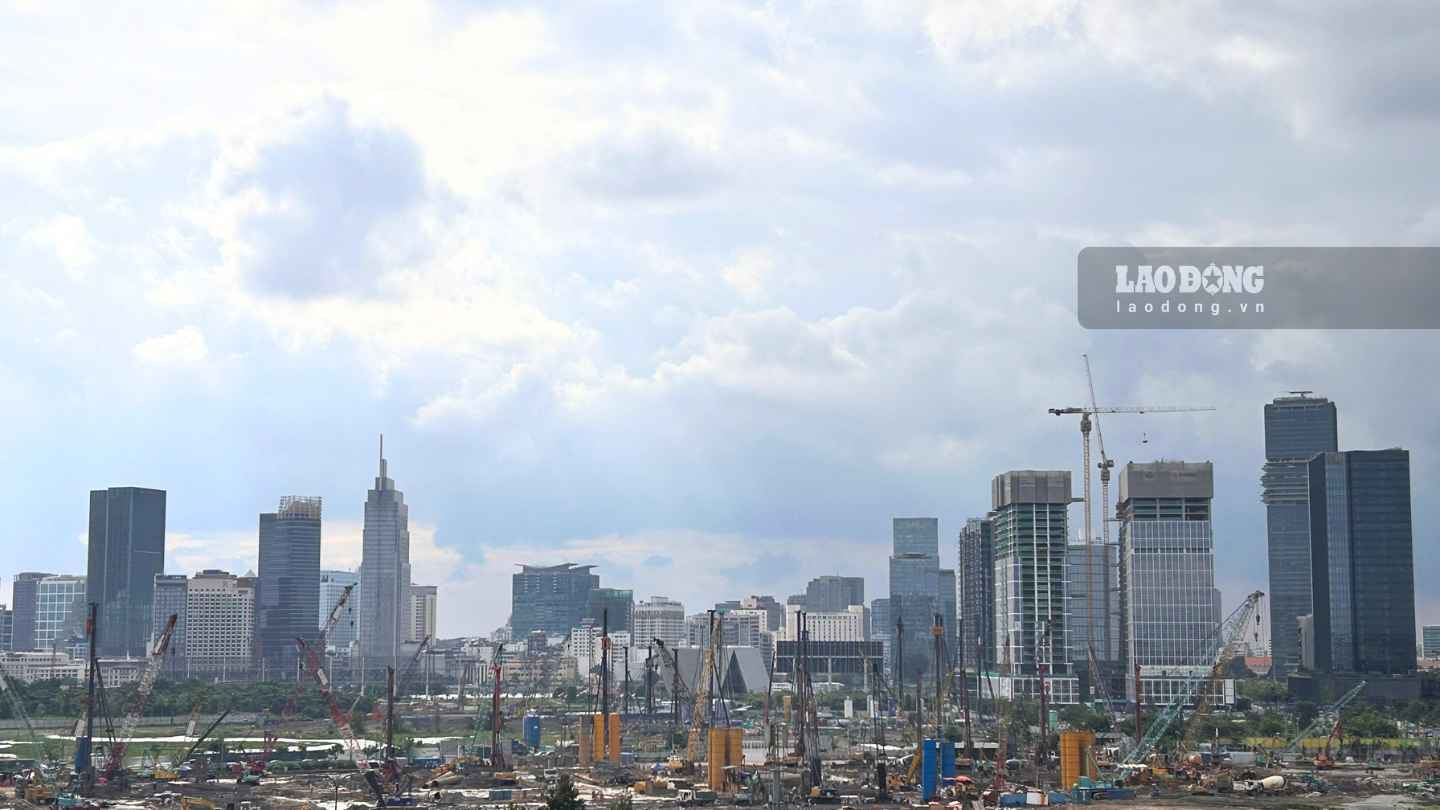
According to JLL, Asia-Pacific improved the most, accounting for half of the top 10 most progressive markets. Cross-border capital inflows into the region recovered strongly in the past 12 months.
The "high transparency" and "transparency" groups attract more than 98% of global commercial real estate investment capital, of which the "high transparency" group accounts for about 81%. The "transparent selling" group accounts for only about 1.3%, showing that the investment attraction potential is still large. This is also a condition for Vietnam to continue attracting international capital into real estate.
Before 2020, Vietnam belonged to the "low transparency" group. From 2020, Vietnam switched to the "transparent selling" group. 2024 is considered a "foundation stage" focusing on completing the legal framework: the revised Land Law, Housing Law and Real Estate Business Law take effect together; the new Price Law requires appraisers to have practicing certificates and price audit traces that can be verified; at the same time, regulations on real estate transactions must be carried out through the banking system.
In 2026, Decree 357 on information systems, housing databases and real estate markets takes effect, aiming to complete the national land database by the end of the year.
Vietnam's entry into the top 10 markets with the best transparency improvement globally at GRETI 2026 is the sweet fruit after a long and persistent journey. From 2012 to now, we have witnessed the market step through a young stage to shape a much stronger foundation, thanks to persistent legal reform efforts.
In particular, the synchronous wave of innovation from 2025 - from perfecting the legal framework, clearing administrative procedures to economic orientations - has brought the first positive results, as evidenced by the continuous increase in total registered FDI capital. This is the clearest proof that Vietnam still maintains its position as one of the most attractive destinations in the Asia-Pacific region" - Ms. Le Thi Huyen Trang, General Director of JLL Vietnam, said.
JLL believes that the roadmap to bring Vietnam closer to the transparent market group will continue to revolve around six pillars: completing the digitization of land records; completing a unified national real estate registration system; applying international pricing standards (IPMS); publishing data on the commercial real estate credit market; promoting green building certification associated with overall planning and a clear database; and strengthening information disclosure requirements for listed companies.


