
World Cup value increases
In 24 years, the copyright value of the World Cup in Vietnam has increased many times. In 2002, Vietnam Television (VTV) owned the World Cup copyright at 1 million USD. 8 years later at the 2010 World Cup, this number reached 2.7 million USD.
The value of owning the broadcasting rights of the biggest football tournament on the planet has not stopped. In 2014, Vietnamese broadcasters had to spend 7 million USD to serve viewers watching matches in Brazil. 4 years later, for the first time in history, VTV spent more than 10 million USD to get World Cup rights.
At that time, Vietnamese fans also had to wait until close to the time of the tournament to receive good news from the national television station.
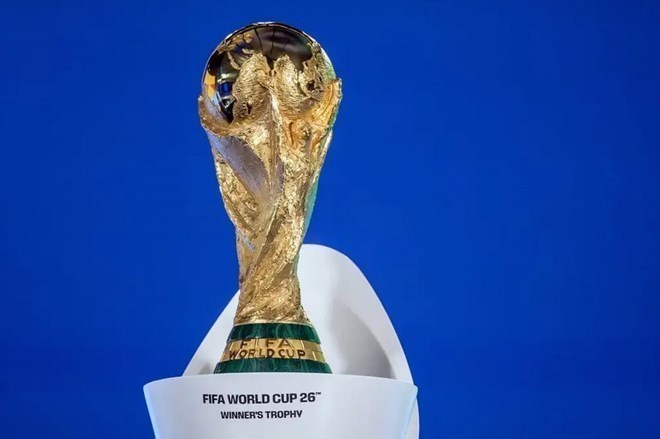
The story of 2022 took place similarly. After continuous negotiations with the distributor, VTV and fans also "breasted a sigh of relief", when reaching an agreement to have the World Cup at the threshold of 13-15 million USD.
Learning from the experience of the tournament in Qatar, towards the 2026 World Cup, VTV soon sought sponsorship resources to bring back copyrights from many months before the tournament started.
In parallel with public announcements, VTV is also proactively building more than 10 companion programs to maximize resources and use resources on 4 platforms (television, radio, internet, mobile) right now.
This is also an affirmation of the experience of negotiating and exploiting the biggest tournament on the planet from VTV.
Cooperation with resources
In the last 3 World Cups (including 2026), VTV's copyright purchase formula was clearly formed. The national television station does not go "on its own" in negotiations to own broadcasting rights.
Instead, finding resources with financial support from large businesses and banks in Vietnam is a way for broadcasters to be more smooth in negotiating to buy copyrights with previous distribution partners or the current FIFA itself.
In 2018, Vingroup sponsored 5 million USD to help VTV buy the World Cup copyright. In addition, this group also spent an additional 1 million USD specifically for advertising.
In addition, Viettel also "contributes capital" to VTV to buy the 2018 World Cup copyright. This unit also exploits it to broadcast on the network operator's infrastructure, on the internet and mobile. These are very practical supports to help VTV complete the deal that cost too much ink from the press.
4 years later, VPBank sponsored 100 billion VND for VTV to negotiate and buy the World Cup copyright in Qatar.
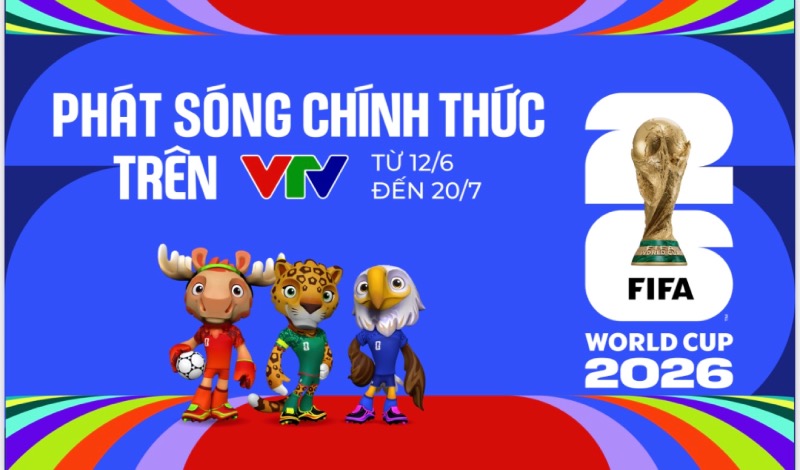
And at the 2026 World Cup, 3 "big guys" including Vingroup, Techcombank and VPBank are linked and support VTV in owning copyrights with a price range of 15 million USD.
Obviously, from absolute monopoly, the model of sharing and socializing resources is a suitable step in the current context in buying sports television rights in Vietnam.
Through this, the maturity of the Vietnamese media market is also clearly reflected. Cooperation and joint exploitation of the platform has become an urgent and correct direction for many media and press units today.
The story of Vietnam also takes place similarly in Indonesia. According to Sportcal, TVRI broadcasts the entire tournament for free according to the Government's direction to serve a large number of people. Of course, to be able to do that, TVRI also needs to seek support from philanthropists.
Unlike Vietnam or Indonesia, Thailand, Malaysia, Myanmar, Laos and Brunei have not bought the World Cup 2026 copyright.
In Malaysia, the copyright price is considered the main barrier preventing negotiations from making a breakthrough.
Meanwhile, in Thailand, no television unit has been confirmed to own broadcasting rights as of mid-April. According to Thairath newspaper, the main reason is that the price offered by FIFA is too high compared to the affordability of television stations.
In addition, the media management agency of Thailand has abolished the regulation requiring free World Cup broadcasting.
Malaysia is also in a similar situation. According to the New Straits Times, the copyright price offered by FIFA of nearly 50 million USD is a major barrier that prolongs negotiations. To date, no unit has accepted this price, raising the possibility that this country will not have live World Cup broadcasts.


