
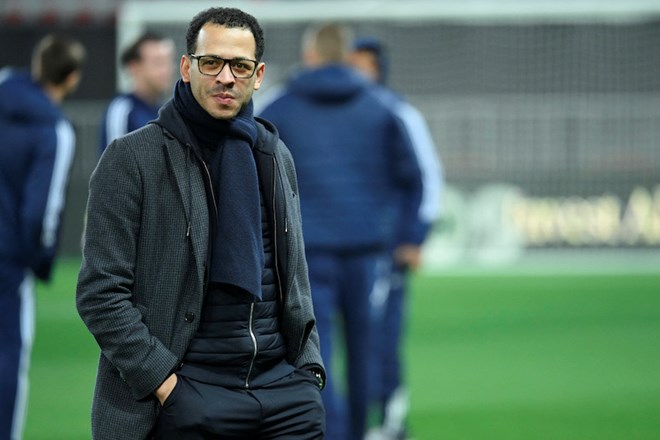
Liam Rosenior will certainly face a huge challenge when he is appointed to replace Enzo Maresca at Chelsea. He has almost no experience in the Premier League, not to mention leading one of the top clubs in the league.
However, as soon as he set foot in Cobham, Rosenior had to start handling the crisis in the context of overloaded workload and The Blues' season showing signs of shaking right at the time he took office.
The English captain will enter the first real test when Chelsea visits London to meet Charlton in the third round of the FA Cup. However, this match is just a warm-up for an even more tense phase, because he is almost not allowed to make mistakes from the first step.
Rosenior takes over Chelsea in the context that the team has just fallen to eighth place after the defeat to Fulham. The notable reality is that they are currently closer to Tottenham (14th) than Liverpool (4th) in the rankings. In the Champions League, a place in the round of 16 is also not guaranteed, and the road ahead is still arduous.

Disciplinary issues
If Rosenior had not had time to "feel" all of Chelsea's discipline on the day of his appointment, then that reality must have become very clear when he watched the new team from the Craven Cottage stands.
In just the 22nd minute, Marc Cucurella - one of the most experienced players in the current squad - was put in a difficult position because of a long pass. He could not use his fitness to overcome the small striker Harry Wilson of Fulham, and then pull the opponent down blatantly. That red card is Chelsea's seventh red card this season - or eighth if including the red card Maresca received in the match against Liverpool.
Rosenior's predecessor always flatly denied that the team has discipline problems, even though unnecessary yellow cards are also a prolonged hot spot. Interim coach Calum McFarlane also continued to maintain a similar stance, despite the fact that Cucurella's demotion directly contributed to the heavy defeat in the London derby.
What is expected is which approach Rosenior will choose in front of the media. He will continue to "cool down" with calm words, or frankly admit to laying the groundwork for a rectification.
No matter how publicly speaking, behind the scenes, The Blues clearly need specific measures to improve their playing behavior and decision-making ability on the field. In a team that aims to compete for titles, discipline is not only attitude, but also the variable that determines the outcome.
Improve home form
The more worrying problem for Chelsea this season lies at Stamford Bridge. The Blues have only won 4/10 home matches in the Premier League season 2025-2026. Most recently, they lost to Bournemouth in the last match under Maresca, followed by another home defeat to Aston Villa.
That achievement only ranks Chelsea 13th in the home field performance rankings of the tournament. This is a position that is clearly not commensurate with the standards of the team that once considered Stamford Bridge like a fortress. The Jose Mourinho era turned this stadium into an almost inviolable base, with a 60-and-77-match unbeaten streak at home over two terms, has now receded.
It is worth mentioning that this is not just a story of expertise. The atmosphere in the stands also became a variable that directly impacted the performance. The aftertaste of difficulties since Boehly-Clearlake took over, coupled with the feeling of unstable management, made Stamford Bridge potentially transition to a tense state if things did not go as expected.
The groans, the outburst of disappointment from the stands easily erode the confidence of the players on the field. With a young squad, the pressure from the fans themselves makes the fighting spirit a big challenge.
Therefore, Rosenior's problem is dualistic. On the one hand, he needs to quickly rebuild trust with the tired and reactive fans at Stamford Bridge. On the other hand, he must rebuild the home field image as an uncomfortable destination for all opponents - through improving performance, stability and results, instead of just relying on slogans or traditional expectations.


