
Arsenal just won 2-1 against Chelsea, but in the dressing room after the match, coach Mikel Arteta did not only talk about the joy of victory. He praised his players for overcoming a difficult match, but also gently reminded that Arsenal did not control the last 15 minutes of the match as desired.
That may just be a small detail of the London derby, but it reflects a bigger problem in the Premier League title race this season.
Usually, the Premier League championship races often put great pressure on the leading team. narrow victories and continuous tense battles easily make the leading team exhausted both physically and mentally.
However, this season, even the chasing team like Manchester City did not have many easy wins. 4 out of the last 5 matches of the team led by Pep Guardiola had to wait until the final minutes to be decided, except for the 3-0 victory over Fulham.
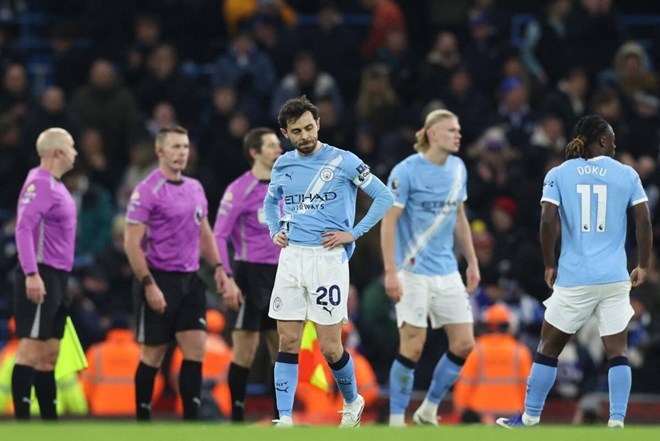
The big difference lies in psychology. Man City is the chasing team and they are used to it. For Guardiola and his students, the goal is simply to keep the distance and wait for an opportunity.
This season is showing signs similar to the 1990s Premier League period, when the gap between teams was not too large and the results were often unpredictable.
The long winning streak has become rare, while large gap wins have also decreased sharply. Up to this point, the league has only had 6 wins with a gap of 4 goals or more.
That makes many matches tense to the last minute - just like Arsenal and Man City are experiencing.
In addition to psychological factors, the dense schedule also creates significant physical pressure. Teams no longer have many opportunities to relax in the final minutes of the match or rotate squads.
In the match against Chelsea, Declan Rice and Viktor Gyokeres both had to leave the field in the second half. But the question is how long Arsenal can rotate key players when the season enters a decisive stage?
In the past decade, Premier League champions have often achieved almost perfect performance at the end of the season. A typical example is the 2018-2019 season, when Man City and Liverpool almost did not drop a point in the sprint stage.
Even in the 2023-2024 season, Arsenal and Man City only dropped a total of 7 points in the final stage of the season.
Another important factor is the order of matches. Many Arsenal fans believe that they could have won the 2023-2024 season if they had not been affected by the Champions League, especially after the 0-2 defeat to Aston Villa right after the tense quarter-final match with Bayern Munich.
This season, the situation is somewhat reversed. While Arsenal has a relatively favorable schedule, Man City faces a series of dense and difficult matches, including confrontations with Real Madrid, Chelsea, Bayern Munich and Arsenal.
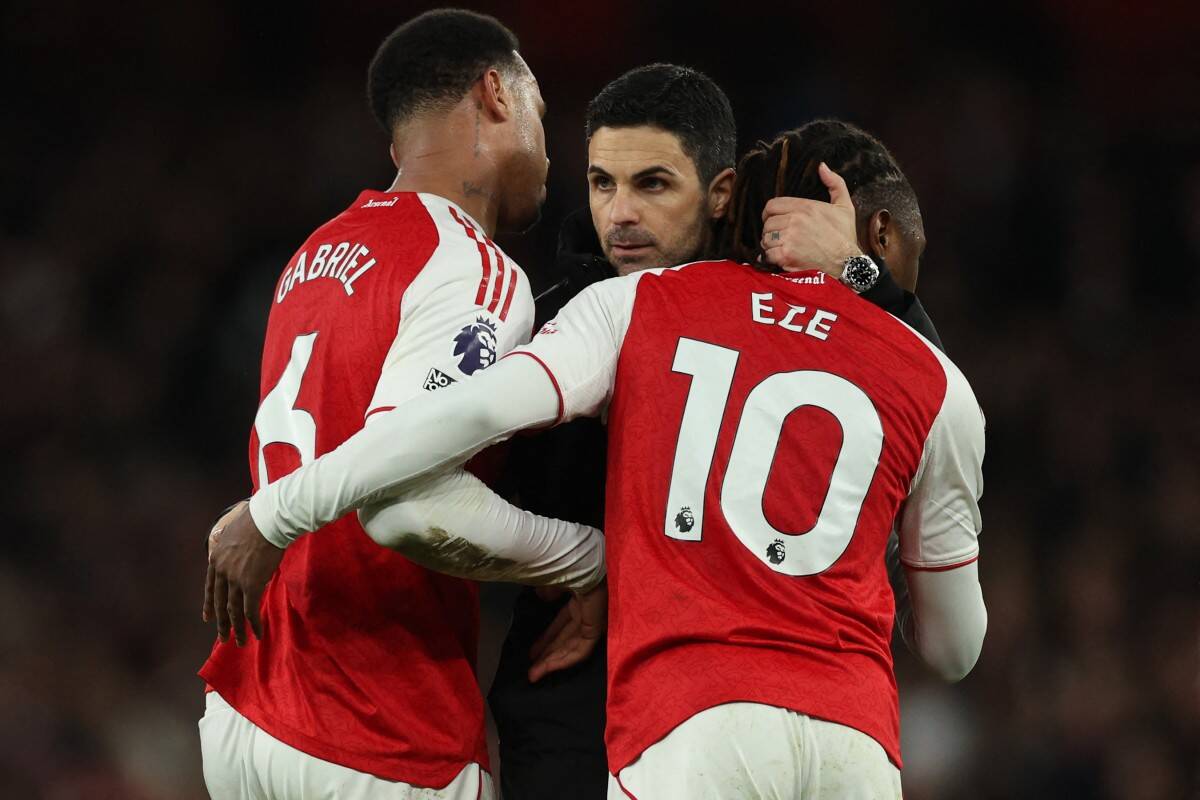
However, Man City has also significantly strengthened its forces by recruiting Antoine Semenyo and Marc Guehi.
With a dense schedule and not too large gap between teams, the possibility of slipping in the late season is very high. Major tactical decisions may appear. Should Arsenal keep Kai Havertz in the Premier League? How does Guardiola manage Rodri and Erling Haaland's playing time?
That is also why Arteta emphasized the last 15 minutes of the match against Chelsea. In a tense championship race like this season, small details can decide everything.
Especially when there are only 10 rounds left, the Premier League 2025-2026 may bring a surprising scenario - like the unpredictable seasons of the 1990s.


