
Winter insomnia not only disrupts the circadian rhythm, mood and energy levels, but also affects hormones that help the body regulate sleep.
Within the framework of the Fall Back into Great Sleep campaign, Yahoo!Health has exchanged with experts to explain the causes of insomnia in winter.
What is winter insomnia?
Insomnia is a condition that makes it difficult to fall asleep or maintain sleep, making you feel tired and restless the next day. For some people, this condition is more pronounced in winter.
Dr. Gareth Nye - lecturer in biomedical science at the University of Salford - said: "Winter insomnia is a change in sensory signals from the external environment compared to the normal physiological rhythm of the body.
According to him, this phenomenon may be related to clock decalation, colder temperatures and earlier evenings.
In fact, winter insomnia is more common than many people think. The increase in searches on Google during the cold months shows that many people are struggling with this situation.
According to Dr. Bhavini Shah (LloydsPharmacy Online Doctor), there are about 247,000 searches for the keyword "insomnia" (insomnia) on Google each month, of which December often records a sharp increase due to stress and disrupted living habits during the festival season.
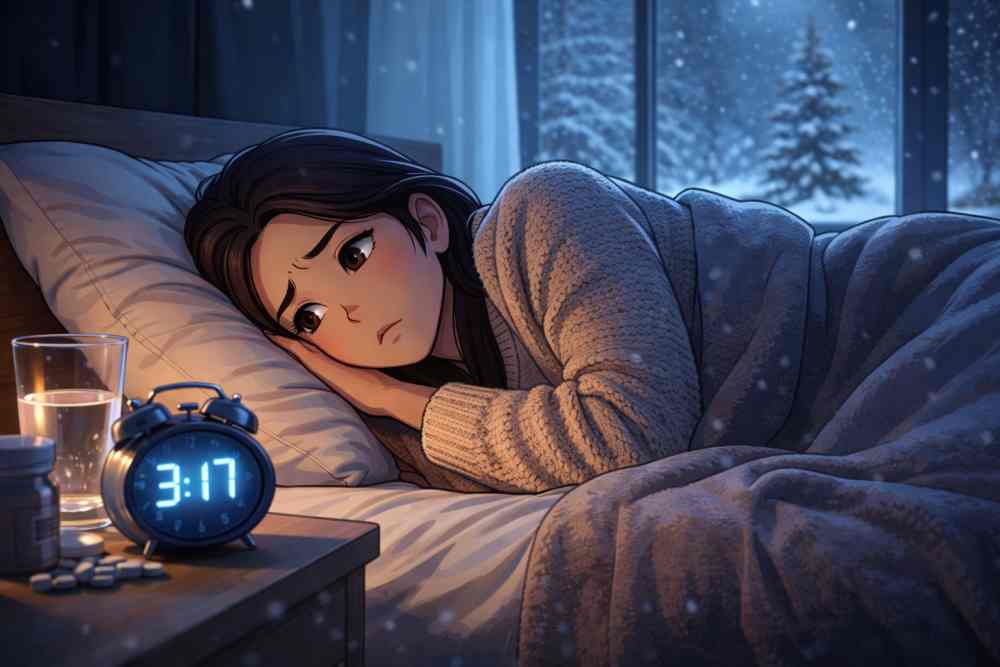
3 most common causes of insomnia in winter
Lack of daylight
Shorter days and reduced exposure to light, especially in autumn and winter, can significantly affect sleep, circadian rhythm, and melatonin production," Dr. Nye said.
Melatonin is a hormone that signals the body that it is time to fall asleep and this hormone increases naturally in the dark. “When we have to wake up in dark conditions due to shorter days, the body becomes out of sync with the natural rhythm and always tries to return to normal,” he explained.
That is also the reason why many people feel sleepier and more sluggish during the day in autumn - winter, due to increased melatonin levels due to lack of light. This situation lasts throughout the day, making it difficult for people to fall asleep at night.
Adjusting the timer
Twice a year, when the clock is adjusted or reversed by an hour, many people notice their sleep is disrupted. In the UK, the clock reverses by an hour at 2 am on Sunday, October 26; while in the US it is 2 am on November 2.
Dr. Nye explained: "Your body is used to staying awake and sleeping at certain times of the day, and it has started preparing for that many hours in advance." When the clock changes, plus lack of daylight, the body easily falls into a state of dissynchronization, making going to bed more difficult.
Difficult to regulate temperature
Changes in temperature - whether due to the bedroom being too cold, too warm or due to the material of blankets and nightgowns - can also disrupt sleep and increase the risk of winter insomnia.
According to Dr. Nye, cool room temperatures are often beneficial for sleep, but "sudden cooldowns can cause tremors, discomfort and disrupt sleep.
Studies also show that changes in temperature during sleep increase the number of wakes, while reducing REM sleep and deep sleep.


