
According to Anphabe Company, in the context of the volatile labor market in 2026, building attractiveness to human resources and talents cannot be based solely on feelings or empty slogans. Anphabe's analysis shows that businesses outside the top 100 best places to work in Vietnam only have 7% chance of competing to be selected by candidates when placed on the scale with competitors.
So how can a business - whether it is a "newcomer" or an organization wanting to reposition - be targeted by talents and break through the ranking to be named in the top 100 best places to work in Vietnam? Below is a 4-step strategic roadmap drawn from practice by Anphabe.
Step 1: Brand "health" check - measurement instead of guesswork
The biggest mistake of HR directors is to start doing communications without knowing where they are on the talent map. To break through, the first and most decisive step is to measure and evaluate.
Accordingly, businesses need a comprehensive "health check" to answer the core questions: What is the image of the employer brand in the eyes of employees currently like; what information (scandal) risks are businesses facing in the market that are not yet controlled; where is the rate of candidate loss in the recruitment stages?
Anphabe's survey of more than 70,000 working people shows that whether the business is new or old is not important, what is important is that the business dares to face real data to know the strengths, weaknesses and "blind spots" of its own organization.
Step 2: Locate core value areas
Don't try to be a perfect environment for everyone. Be the best environment for the "right person".
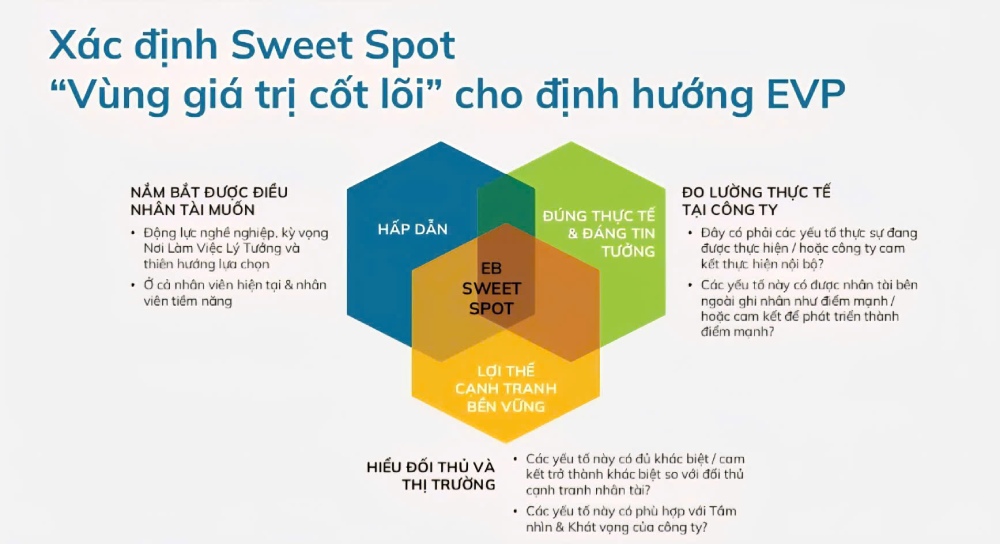
Anphabe calls this location "Sweet Spot" - the intersection of 3 decisive factors:
What talents desire: You must understand what your target group of talents wants. Is their taste an open environment, a flexible regime, or an inspiring leadership?
Internal bright spot: What are you doing very well in your home? These must be practical, attractive materials that outsiders may not know about.
Competitive advantage: What is your differentiating point compared to direct competitors in the talent market?
Only when the recruitment message delves deeper into this "Sweet Spot" area, can businesses create a commitment strong enough to convince candidates.
Step 3: Communication "right - accurate - enough
The third step requires a methodical communication strategy with the principle: Distribute the right message, through the right channel, to the right audience.
Anphabe's tracking data shows that current candidates use a variety of information sources. Social networking sites are holding a very high percentage in supporting job seekers to update on job opportunities, even surpassing the company's official website.
Notably, users are not only stopping at Facebook, they are looking for work environment information on many other platforms. Professional, creative and continuous presence on these digital "touch points" is the fastest way for your brand to stick to the minds of candidates.
Step 4: Verify the promise and optimize the experience
Businesses cannot commit to a "happy, open working environment" but let candidates go through a cold, disrespectful interview process. All brand promises must be proven by consistent actions to improve the experience of both candidates and current employees. When internal employees feel satisfied and proud, they will automatically become the most reputable brand ambassadors, creating a more natural and stronger spread than any expensive advertising campaign.


