
Supplementing skills and knowledge for grassroots officials
On September 23, Nam Phuoc Commune Trade Union organized professional training on negotiation and signing of collective labor agreements (TƯLĐTT) for officials of affiliated grassroots trade unions, focusing on handling real-life situations so that Trade Union officials can apply them at the unit.
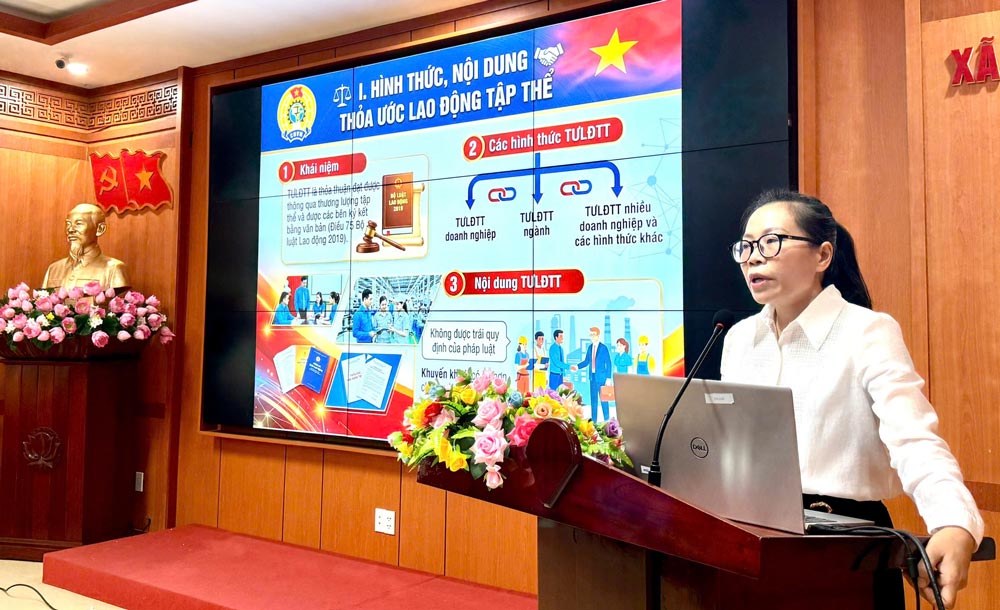
This is a topic in the 2026 professional training program of Nam Phuoc Commune Trade Union, aiming to update legal regulations, supplement knowledge and skills for grassroots trade union officials, contributing to improving the capacity to represent, care for, and protect the legitimate and lawful rights and interests of union members and workers.
Directly imparting the topic was Ms. Le Thi Ngoc Oanh - Deputy Head of the Trade Union Affairs Committee, Da Nang City Labor Federation.
Not only conveying regulations, the reporter focused on clarifying the issues that grassroots trade union officials often encounter in practice such as: distinguishing collective bargaining from dialogue at the workplace, employee conferences and implementation of democracy regulations; identifying units implementing collective labor agreements; the role of trade union organizations in representing, proposing and negotiating benefits for employees.
The principles, contents and negotiation procedures are specified by hypothetical situations associated with operations at the grassroots level. Practical issues such as salaries, bonuses, allowances, salary increases, meals; working hours, rest hours, overtime; job security; occupational safety and health; operating conditions of employee representative organizations... are brought up for analysis and exchange.
Specifying nghiệp vụ procedures
Ms. Lam Thi Vy - Chairwoman of Nam Phuoc Commune Trade Union said: The special point of this training session is that reporters also provide specific guidance from the stage of preparing for negotiation, collecting information, selecting proposed content, organizing negotiation sessions to making minutes, drafting, collecting employee opinions and completing collective labor agreements.
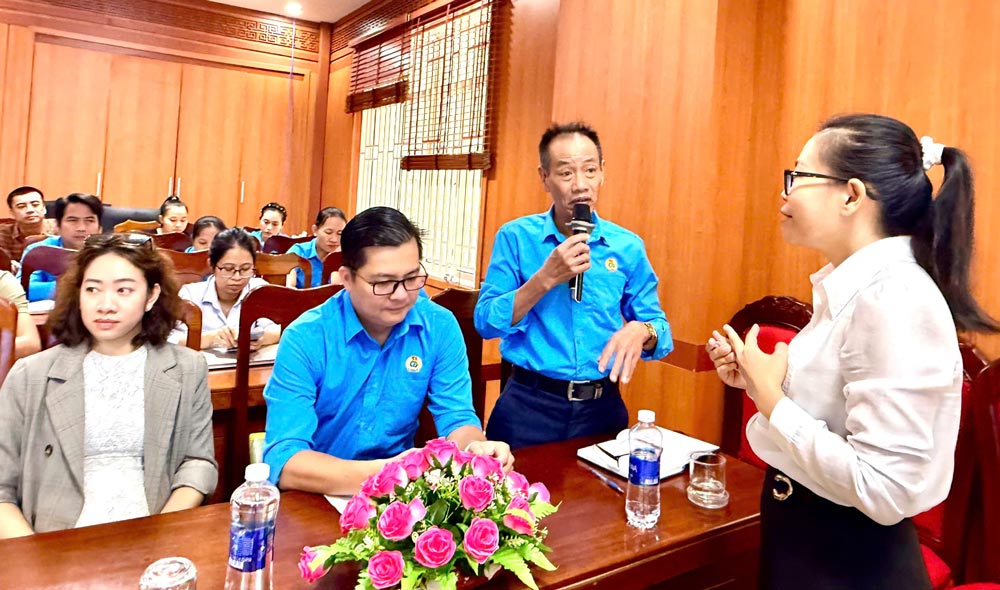
The training content closely follows the requirements of improving negotiation skills, signing and supervising the implementation of collective labor agreements at the grassroots level. In particular, the attraction of the training session is clearly shown through the concentration and positive interaction of grassroots trade union officials.
Throughout the topic, delegates focused on monitoring, actively exchanging, asking questions and bringing situations and problems from their own units for reporters to analyze and remove.
Through this, professional regulations and procedures are concretized into issues close to Trade Union activities at the grassroots level, helping officials to understand, remember and be more convenient when applying to reality.
With practical experience and specific and easy-to-understand communication methods, the reporter has helped grassroots trade union officials systemize knowledge, better understand the process and skills of dialogue, negotiation, and building collective labor agreements, especially how to choose content that is close to the needs and rights of workers to propose and negotiate with employers.
Through training, grassroots trade union officials are supplemented with more knowledge and professional skills to proactively apply at their units, gradually improving the quality of dialogue, negotiation and collective labor agreements; thereby better promoting the representative role of the Trade Union organization in caring for and protecting the legitimate and lawful rights and interests of union members and workers.


