
The conference aims to improve the capacity of the staff working in information and propaganda work of the Thanh Hoa Provincial Trade Union and a number of Ninh Binh Provincial Trade Union officials.
The conference was chaired by Mr. Ngo Duy Hieu - Vice President of the Vietnam General Confederation of Labor and directly conveyed many strategic-oriented contents.
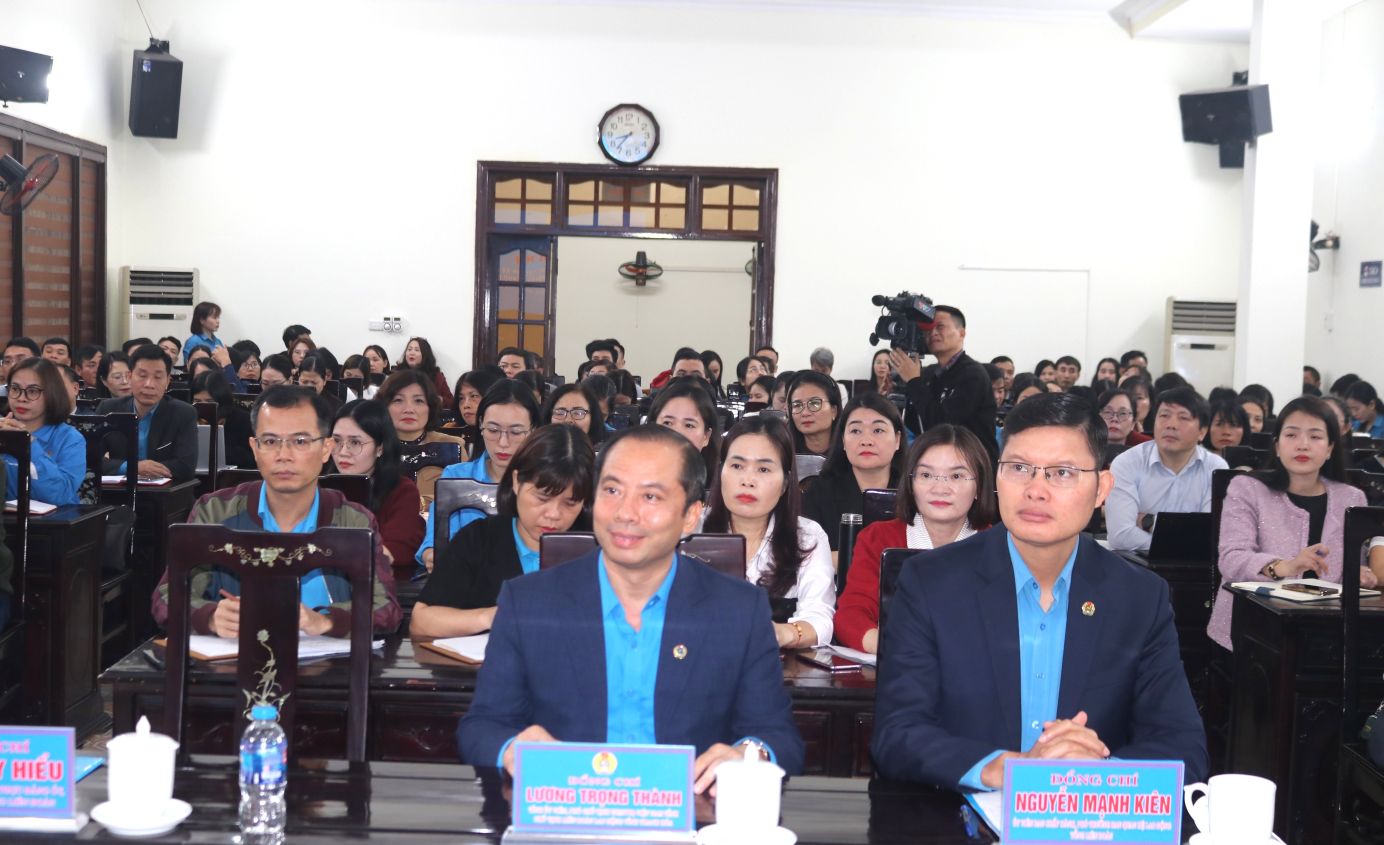
The conference was attended by nearly 300 union officials, who are the force that directly grasps the thoughts of workers, conveys policies and contributes to maintaining stable labor relations at the grassroots level.
In his opening speech, Vice President Ngo Duy Hieu emphasized that trade union communication is not only a simple propaganda task, but also an important component of social governance, ensuring that workers have access to accurate and timely information.
Vice Chairman Ngo Duy Hieu cited: "There are collective work stoppages that break out because workers lack information, but there are also cases that are resolved immediately because the union provides information on time and properly".
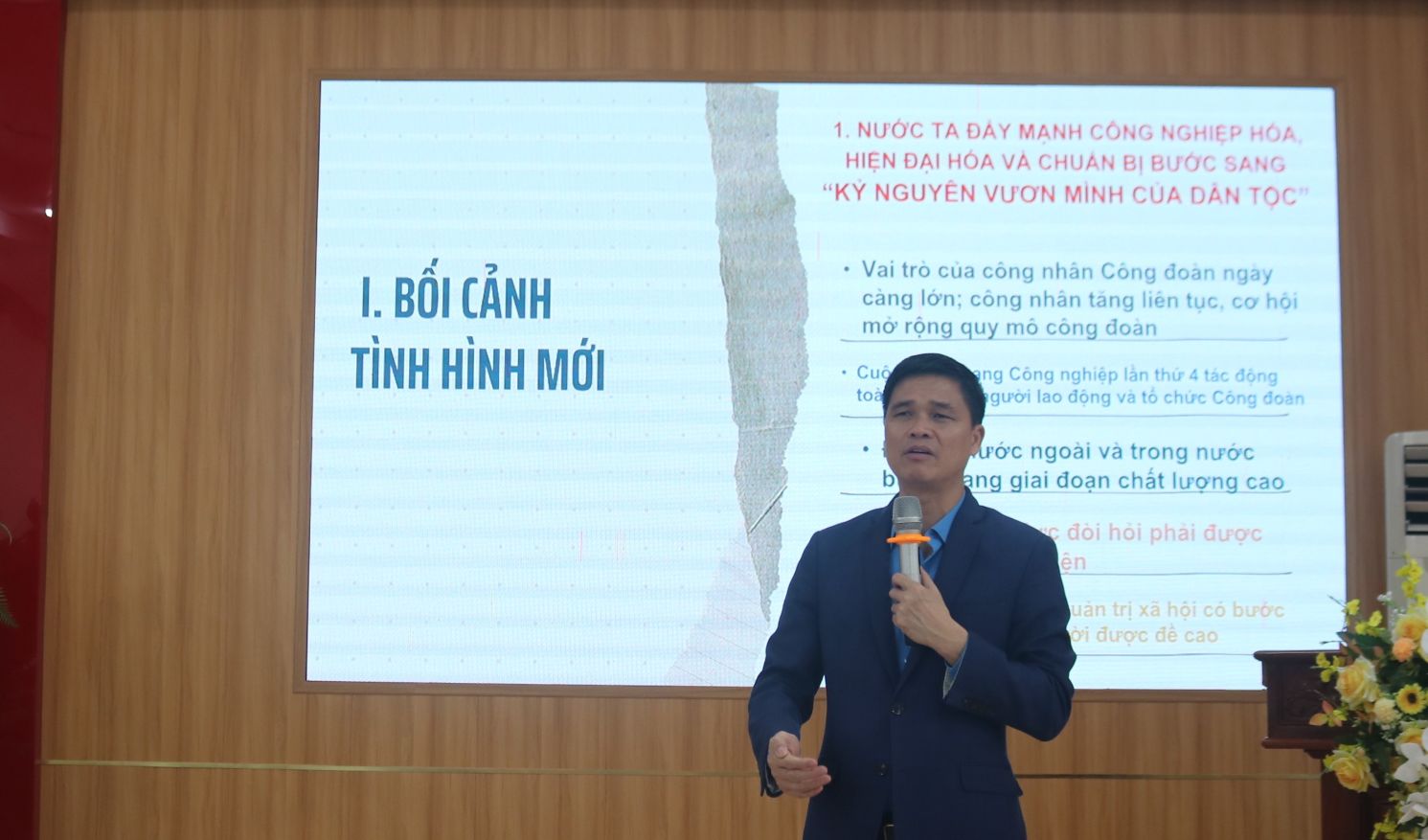
According to Mr. Hieu, in the context of a rapid increase in the number of workers, the scale of the trade union is constantly expanding, and the pressure on the propaganda staff is increasing. "There are more new jobs, but there are no more people. To do the job, union officials must be aware of improving their capacity, applying technology to do the job faster and more effectively," he emphasized.
At the conference, Vice President Ngo Duy Hieu presented the topic "New situation and issues facing Vietnam Trade Union", pointing out five groups of factors with far-reaching impacts.
Accordingly, Vietnam is entering a period of accelerating industrialization and modernization, preparing to enter the "era of national growth", requiring the role of workers and trade unions to grow.
The fourth industrial revolution has a comprehensive impact on employment, skills, income and labor structure, requiring trade unions to support workers to adapt.
In terms of extensive international integration, Vietnam has participated in the global supply chain, leading to requirements for compliance with international labor standards and the risk of being affected by distorted and enticing information.
The lives of a part of the working class are still difficult: unstable jobs, low income, prolonged overtime, lack of conditions to take care of their families, face the risk of poverty and no pensions when they are old.
The legal system is still inadequate, while violations of labor laws by some enterprises still occur; business owners do not truly respect the rights of employees.
Mr. Ngo Duy Hieu clearly analyzed: The above factors not only affect workers' lives but also change the thinking and methods of operation of the trade union organization.
"Union must look straight at challenges to innovate, otherwise it will fall behind workers and businesses" - Mr. Hieu commented.
Based on the new context, Vice President of the Vietnam General Confederation of Labor Ngo Duy Hieu clearly analyzed the key issues that Vietnam Trade Unions are facing at present, including the thinking and vision on trade union activities that need to be appropriately innovated. Trade union cadres are still lacking and weak, especially trade union cadres in enterprises; political awareness, class awareness; The implementation of labor law policies; Compliance with the law and professional awareness of employees and employers...
Mr. Ngo Duy Hieu also spent a lot of time analyzing the role of information and propaganda in improving representative capacity and strengthening the trust of union members.
The message at the training clearly states that grassroots union officials must know how to listen to workers, grasp public opinion early, classify information and convey messages at the right time and to the right target.
This conference is considered an important training session, helping the team of Thanh Hoa and Ninh Binh trade union officials improve their thinking, skills and communication skills, meeting the requirements in the period when trade unions are strongly innovating in both organization and methods of operation.


