Mr. Pham Trong Nhan - Vice Chairman of the Ho Chi Minh City Labor Federation - said that the Ho Chi Minh City Labor Federation currently manages nearly 24,000 grassroots trade unions with about 2.4 million union members.
Over the past time, the Ho Chi Minh City Labor Federation has focused on directing trade union levels in the city to gradually improve the quality of dialogue, negotiation, signing and implementation of collective labor agreements with many contents that are more beneficial to workers than the provisions of law. The legal advice system, the core of which is the Legal Consulting Center, regularly guides and provides legal support to union members and workers, consults, resolves disputes and protects legitimate rights in court according to legal regulations.
Caring activities for union members and workers in difficult circumstances continue to be maintained effectively through annual programs, Tet Nguyen Dan peak periods, and Workers' Month.
The Ho Chi Minh City Labor Federation has signed a strategic cooperation agreement with construction units on coordinating the implementation of social housing construction for workers and laborers with a scale of 100,000 units in the period 2026 - 2030 with a total estimated investment of over 15,000 billion VND from 100% enterprise capital; signed a strategic cooperation program in health care for about 30,000 workers and laborers...
Mr. Pham Trong Nhan also expressed that the Ho Chi Minh City Labor Federation and the Singapore National Trade Union continue to have cooperation and exchanges to further develop trade union activities of both sides.
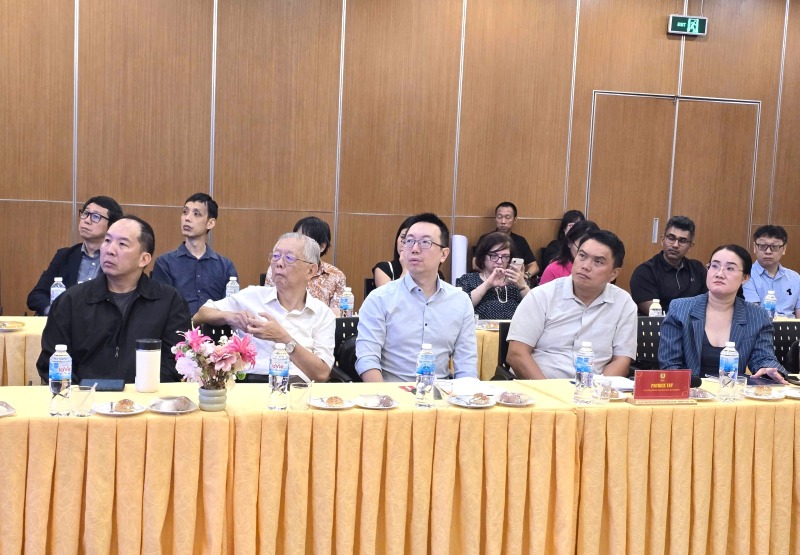
Mr. Patrick Tay - Assistant Secretary General of the Singapore National Trade Union - said that Singapore has undergone a process of economic and labor force transformation. From labor-intensive industries to a knowledge-based economy, and is continuing to adapt to new challenges such as the aging labor force, slowing labor growth, and rapid development of technologies such as artificial intelligence. These changes bring many opportunities, but also create many disadvantages for workers.
Singapore's approach is a trilateral relationship between trade unions, the Government and employers, helping trade unions better coordinate in policy making, supporting businesses and ensuring the rights of workers in the process of economic development.
According to Mr. Patrick Tay, for trade union activities to be good, it is necessary to harmonize diverse needs and aspirations. Supporting workers and creating conditions for businesses to develop must always go hand in hand. Trade unions aim to help each worker become better, each job become better and better connect workers with better jobs.
Mr. Patrick Tay believes that when industries change, workers will need to re-learn skills and take on new roles. Trade union organizations must also innovate to continue to be suitable and effectively support workers.
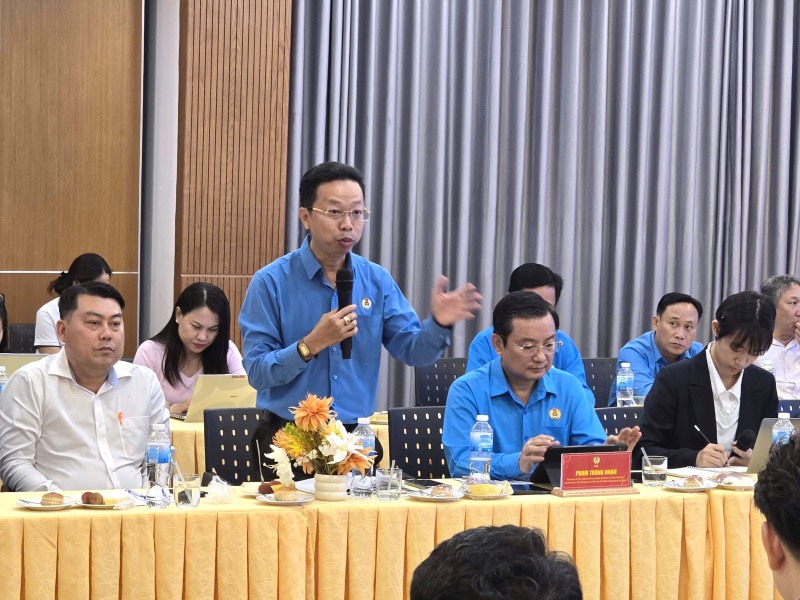
At the working session, the two sides also exchanged more information on the application of artificial intelligence in union member management, trade union activities, attracting young workers to join trade unions, supporting students before participating in the labor market, and policies to build social housing for workers...