
Only 26.89% of students proactively participate in short-term courses outside of school
The Hanoi Employment Service Center has just issued a bulletin " Job picture for students in Hanoi".
The newsletter is built based on survey data from more than 3,000 students in the third quarter of 2025, showing that 71.87% of students have worked part-time; 45.11% have participated in official internships. Of the students who have completed the internship, 56.9% have 3 months or more of experience.
Regarding the spirit of proactive learning, 84.28% were confident in their ability to self-study and update new knowledge from an average level or higher; 26.89% proactively attended short-term courses outside of school.
Regarding investment in additional capacity, 38.47% have IT certificates; 10.79% have foreign language certificates.
According to the survey on basic soft skills, 83.87% were confident in their teamwork skills from average or higher; 83.87% were confident in their time management skills from average or higher; 92.9% were confident in their persuasiveness from average or higher.
Foreign language is quite good because up to 55.43% of respondents have an average English proficiency or higher.
Regarding limitations, the survey shows the alarming reality of practical skills. Many students lack serious internship experience (54.89% of students have never participated in an official internship). 71.47% self-assessed their skills in using specialized tools/sources as only average or below.
Not to mention, the majority of students rarely participate in practical projects with about 70% having never participated in scientific research, academic competitions or startup projects; lacking a real-life collaboration environment.
Students' ability to cope with pressure and manage emotions is also a "missing point": indirect data/thematic: 10.77% of students have difficulty balancing study and extra work or are worried during interviews, showing that their ability to face pressure needs improvement; students also lack experience in handling large workloads, urgent deadlines, or negative feedback.
Regarding discipline and perseverance in work: The transition from a relatively flexible learning environment to a highly disciplined working environment (work hours, processes) is a challenge.
In addition, although basic communication skills are good, students' behavior in the office environment (email, meetings, reports, listening...) still needs to be standardized and more professional.
Specific requirements from employers
Analyzing the actual requirements and demands from employers in recent job fairs, the Hanoi Employment Service Center recommends some requirements from employers for new graduates and young workers.
Most employers today no longer focus on scores or titles of degrees, but highly appreciate practical working ability, businesses prioritize practical working capacity over qualifications. New graduates are expected to be able to quickly get into the rhythm of work, understand basic processes, master professional tools and avoid "disappointment" when handling specific tasks. Internship experience, learning projects associated with businesses, or having participated in practical activities are considered clear advantages.
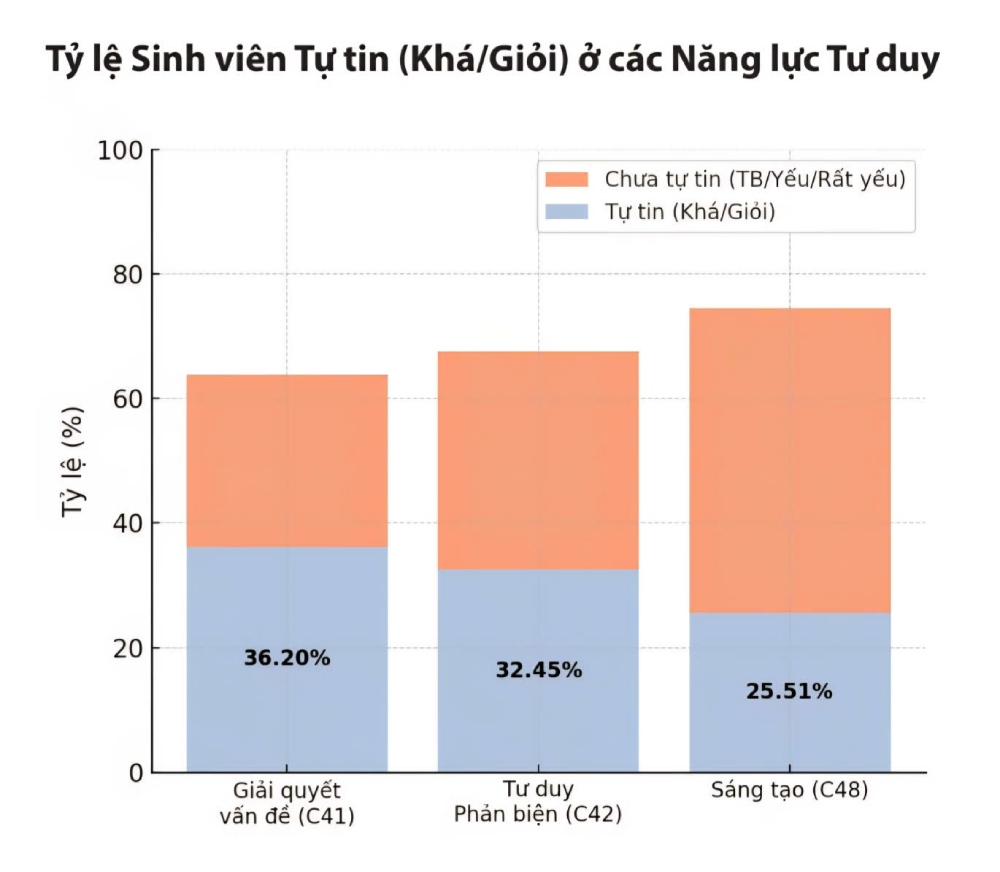
Employers require students to have problem-solving thinking, critical thinking and self-study ability - abilities that help workers adapt to changes in work. Therefore, thinking skills and professional attitude are decisive factors. In addition, professional attitudes such as sense of responsibility, discipline, proactive learning, and readiness to receive feedback are considered no less, even more important, than hard skills in the initial stage of work.
In the context of digital transformation and deep integration, new graduates are expected to have basic digital skills, know how to exploit data, and use technology platforms for work. Foreign languages, especially specialized English, are becoming an increasingly popular requirement. More importantly, businesses are looking for young workers who are able to adapt quickly and are ready to learn new skills when technology and business models change.
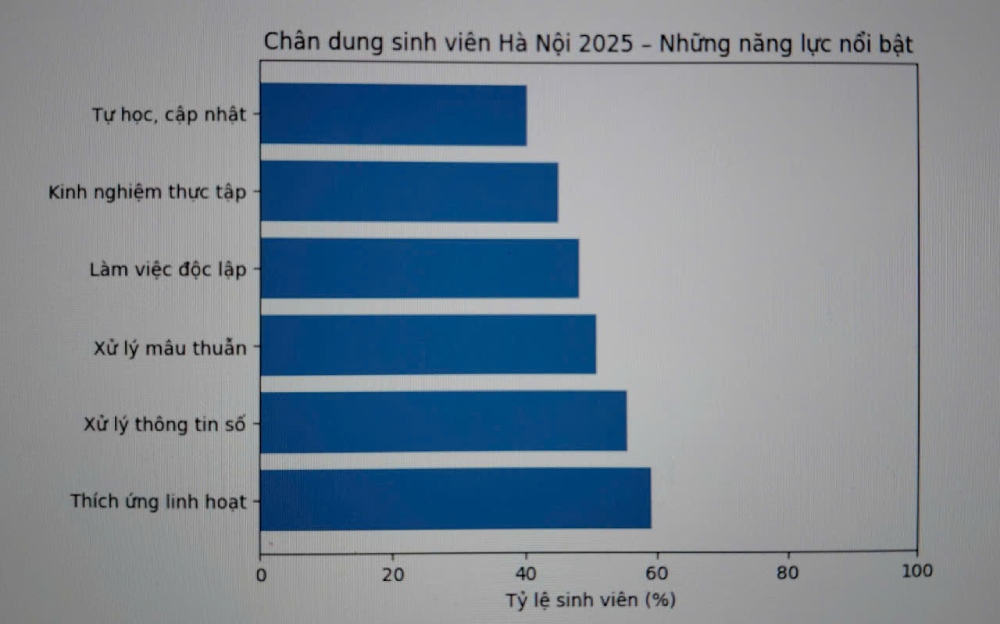
According to the survey, regarding flexible adaptation: 59.24% of students are confident of being "good" or "very good" in their ability to adapt quickly to new tools/working environment.
Digital information processing skills: 55.58% of students are confident of being "good" or "very good" in the ability to search and evaluate the reliability of information.
Conflict handling capacity: 50.94% of students are confident of being "good" or "very good" in their ability to handle conflicts in groups.
Independent working ability: 48.39% of students are confident of being good or very good in their independent working ability without continuous supervision.
practical experience: 45.11% of students have proactively searched and participated in official internships (real data, no self-assessment)
Self-study ability, updated: 40.20%, students are confident in their " quite" or "good" self-study ability and update new knowledge and skills.


