
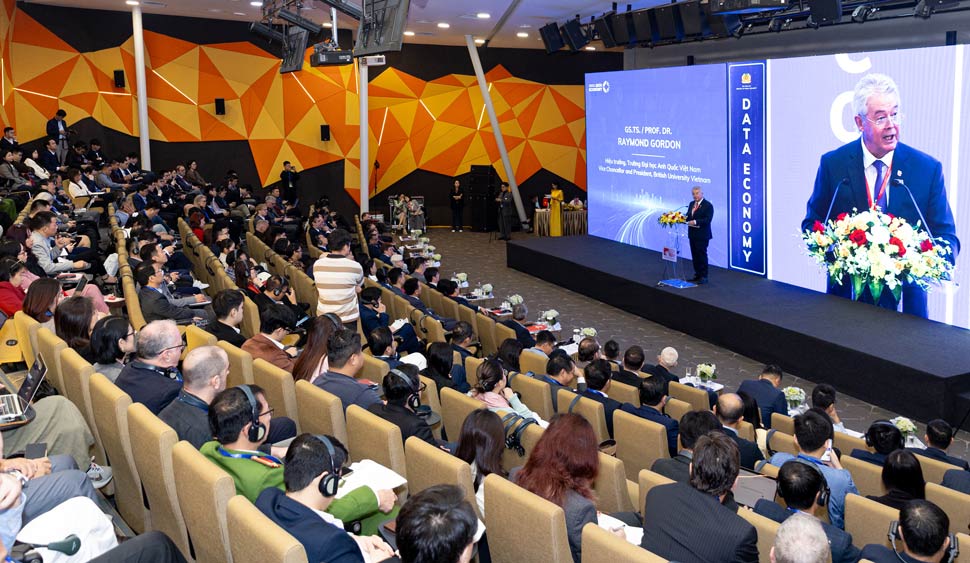
Three global approaches to AI and data economy
In the paper "AI-applied Data Economy: Strategic options for Vietnam" at the International Conference on Data Economy with the theme "New ideology - New policy - New opportunities" organized by the Ministry of Public Security, Associate Professor. Ali Al-Dulaimi - Head of the Faculty of Technology and Computer Science (Vietnam National University) said that there are currently three main AI development models in the world.
The first model is market-led, with the central role of large technology corporations. The second model puts the State in a coordinating position, investing in infrastructure and managing centrally. The third model takes the people as the center, emphasizing rights protection, building trust and a clear legal framework.
According to Associate Professor. Ali Al-Dulaimi, Vietnam does not need to choose to create an existing model. With a young population, rapid digital transformation and the ability to adjust policies flexibly, Vietnam has the conditions to form a model combining the role of the State, the innovation capacity of the private sector and the mechanism to protect the people, in order to take advantage of the strengths and limit the risks of each model.
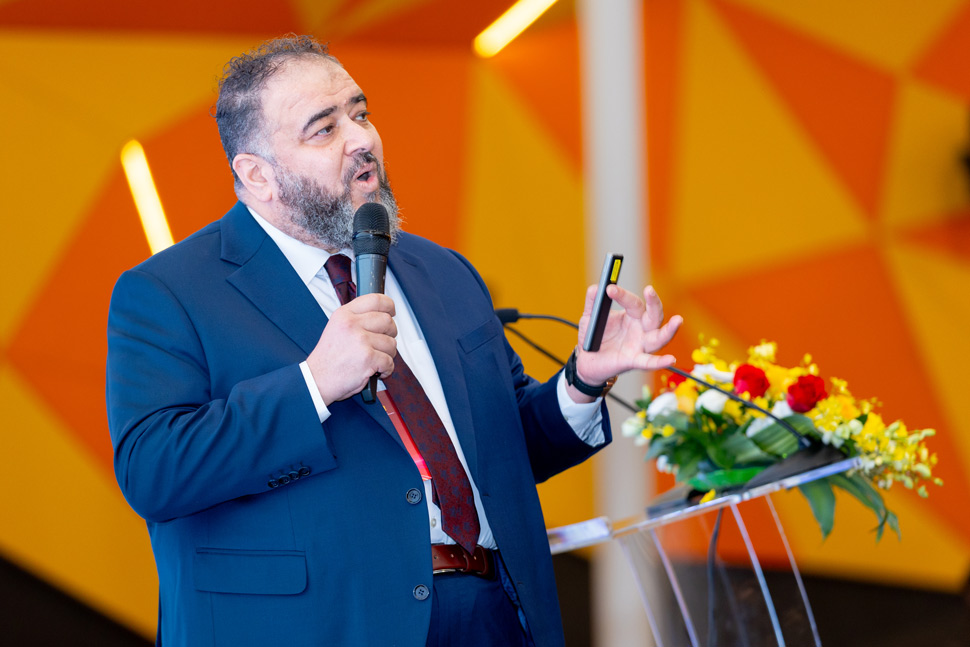
Data - AI - value and belief problem
The paper emphasized the core relationship between data, AI and economic value. Data is considered a strategic resource, AI is a tool to exploit and convert data into productivity, innovation and new wealth. However, value is only created when data is well managed and responsibly used.
Associate Professor. Ali Al-Dulaimi believes that applying AI in data economy comes with many challenges. These include issues of privacy and data sovereignty; the risk of deviation in automated decision-making and dependence on foreign AI platforms.
He also noted the energy and environmental impacts of large-scale AI models. In that context, trust is identified as the decisive factor for the success of every model.
From international experience, the discussion believes that a clear legal framework, based on the level of risk and having a suitable testing mechanism will help AI become both a growth driver and a long-term safety and benefit guarantee.
According to Associate Professor. Ali Al-Dulaimi said that strategic decisions related to data and AI in the coming time will have a long-term impact, shaping the development future of the Vietnamese economy for many generations.
In addition to Associate Professor's speech. Ali Al-Dulaimi, the workshop also included many presentations from international and domestic experts focusing on analyzing the role of the data economy in national digital development; global prospects of the data economy; measuring data value; building a set of data economic indexes and orienting national action programs;... Thereby, contributing to clarifying theoretical foundations and suggesting approaches for data economic development in the coming period.
On December 13, within the framework of the International Conference on Data Economics organized by the Ministry of Public Security, the National Data Association in coordination with the University of British Vietnam and prestigious universities in the UK officially signed a Memorandum of Understanding on Comprehensive Cooperation. This event marks an important milestone in promoting international cooperation in the field of data economy.
The signing ceremony was attended by 5 units including: National Data Society; University of London; London School of Economics and Politics (LSE); City St George's University (under the University of London); and the University of England Vietnam (BUV).


