
People who used to live on "American Time
10 pm in Manila, Philippines. As many families prepare to go to bed, Paul Ponce begins a new working day. As a switchboard operator, he serves customers in the US, which has just entered the morning.
Thanks to this job, Ponce can send his 4 children to private schools and have enough financial capacity to think about owning a private house. That is also a familiar story for millions of people working in the service outsourcing industry in the Philippines and India.
For more than 2 decades, Western companies have shifted jobs such as customer care, data entry, accounting, document processing or programming to countries with lower labor costs. In return, millions of young people have stable job opportunities and decent incomes.
But jobs that were once easy to transfer abroad are also the most easily automated jobs.
Ponce said that his company has put AI tools into customer support. Previously, many requests would be transferred to employees for processing. Now, part can be resolved from the beginning by an automated system.
I have heard many friends in the industry talk about losing their jobs, especially in the area of customer support via chat," he said.
Worry is not just in the office
In Bengaluru, the technology capital of India, similar worries are also appearing.
For many years, Western companies have hired Indian programmers to develop software at lower costs. But the emergence of AI tools capable of supporting code writing is changing the market.
Signs of shift have appeared. Some technology companies are cutting staff, recruitment rates are slowing down, and more and more employees are concerned that their jobs may be affected.
Ravi, a young programmer in Bengaluru, was once highly appreciated by the company. But that did not help him avoid the payroll cut.
What makes Ravi worried is not only about unemployment. His younger sister is about to get married, and the family is still living in a rented house. The financial plan that the whole family has built for many years suddenly becomes precarious.
According to a representative of a trade union in the information technology sector in India, many businesses do not publicly admit personnel cuts related to AI. Instead, workers are often informed that their work performance does not meet requirements or is no longer suitable for the company's new needs. This makes many people feel insecure, because they do not know whether they are competing with colleagues or with an algorithm.
In the Philippines, Ivan Peregrina also experienced a similar shock. His job is to evaluate the quality of customer care calls. As AI tools are increasingly being used to support call analysis and checking, the demand for positions like him is starting to decrease.
The irony is that the data and experience accumulated from human work are being used to train AI systems.
The impact of this change does not stop at night shift offices. When the income of the BPO workforce is affected, many businesses that depend on them are also affected.
Paradox of the labor market
Stories like Ravi or Ivan make many people believe that AI is taking away jobs. But the reality is more complicated.
While some repetitive positions are shrinking, many businesses in the service outsourcing industry continue to recruit people for new jobs or positions that require higher skills.
The paradox is that dismissal and recruitment are happening at the same time in the labor market.
The picture is therefore not entirely gray. According to the World Economic Forum (WEF), by 2030, new technologies could cause about 92 million jobs to disappear globally but at the same time create about 170 million new jobs.
The problem is that these new opportunities require other skills. The gap between old and new jobs is becoming a major challenge for millions of people.
Many new positions have emerged, from AI operations experts to jobs related to AI quality control and ethics. However, for those who have been used to working night shifts for many years, learning more skills is not always easy. Training courses require time, cost and adaptability.
However, that is still the most mentioned path.
Paul Ponce heard friends talk about going abroad to work or switching to another field. And he chose a simpler direction: Studying further.
I want to upgrade myself so that I can survive when AI appears," he said.
Ponce's story is probably also the common mood of many people working in the AI era. What worries them is not only how technology will change the labor market, but whether they will have time to change before that happens?
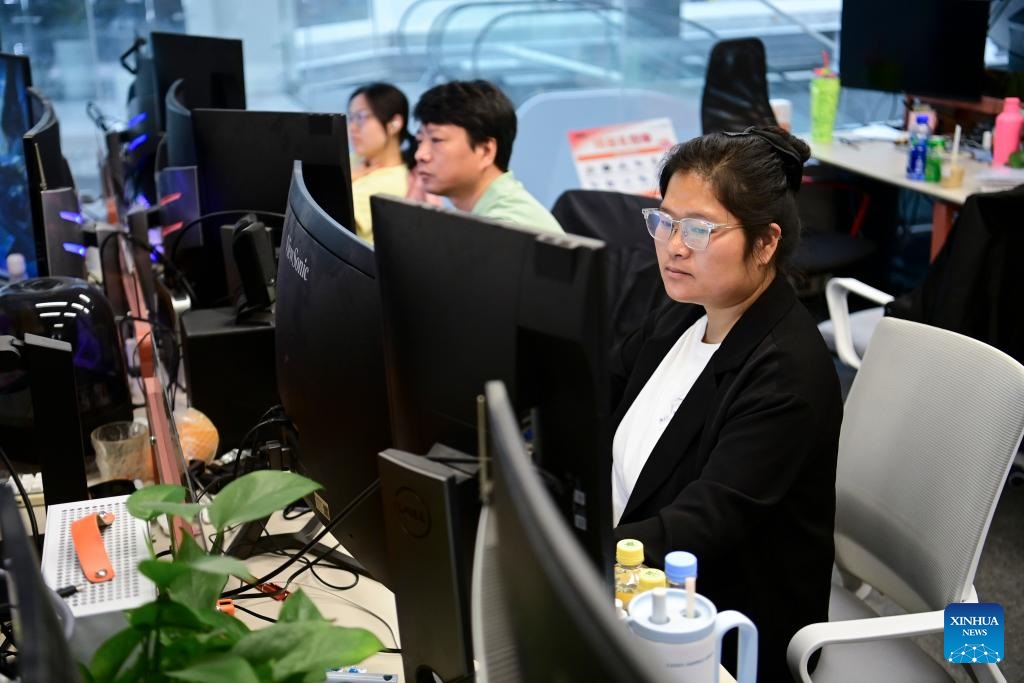
BPO industry
BPO (Business Process Outsourcing) is a form of business outsourcing tasks such as customer care, data entry, accounting, human resources or information technology. In the past 2 decades, this industry has grown strongly in the Philippines and India, creating millions of jobs and becoming one of the important growth drivers of the two economies.
Has AI completely replaced humans yet?
The current answer is no. Many businesses say that AI still needs humans to monitor, handle complex situations and communicate with customers. Issues of accuracy, data security and emotional understanding are still significant limitations. However, experts believe that AI will continue to take on more and more repetitive jobs in the coming years.


