
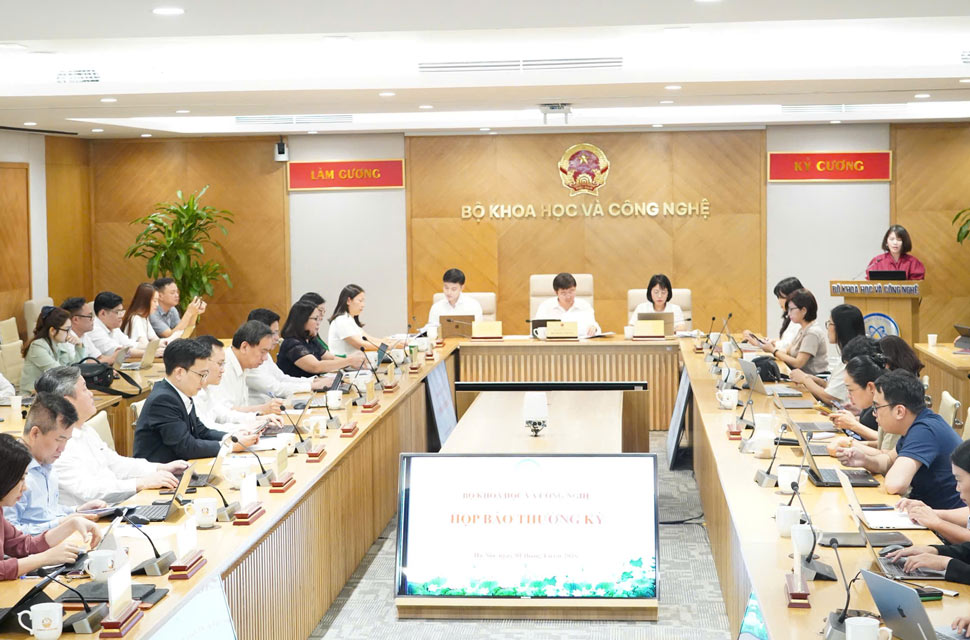
On April 1st, the Ministry of Science and Technology held a regular press conference for March. According to information at the press conference, revenue of the entire science and technology industry reached 516.817 billion VND, an increase of 17% compared to the same period in 2025. The contribution to GDP is estimated at 133.486 billion VND, a growth of 28%.
These figures show the clear shift of the sector from administrative management model to development creation, in the spirit of Resolution 57-NQ/TW of the Politburo. After a year of implementing the consolidation and streamlining of the apparatus, the sector's contribution to GDP also recorded growth of about 35%.
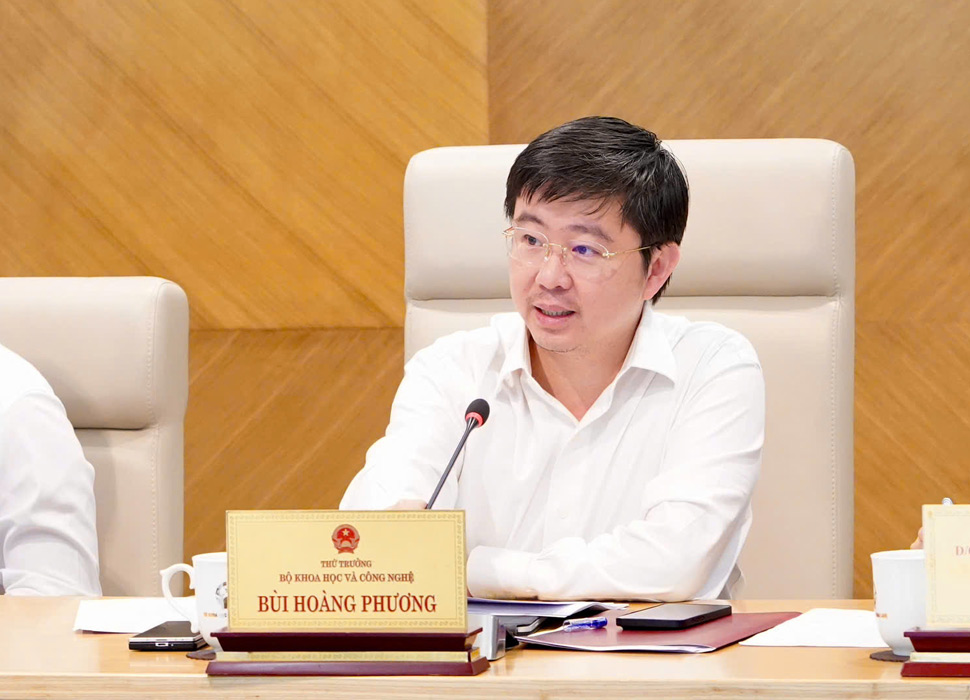
According to Deputy Minister of Science and Technology Bui Hoang Phuong, the results achieved are not only from research activities but also thanks to promoting commercialization and technology application. Businesses are increasingly playing a central role in the innovation ecosystem, instead of just being policy beneficiaries.
A noteworthy point in March is the acceleration of completing the legal corridor for new technology fields. The Ministry of Science and Technology has advised the Government and the Prime Minister to issue 6 important documents, including 2 decrees and 4 decisions, related to atomic energy, the National Technology Innovation Fund, science and technology development plans, digital transformation and the implementation of the Law on Artificial Intelligence.
In addition, the Minister of Science and Technology also issued 2 circulars and 3 decisions, including the National Artificial Intelligence Ethics Framework and the ICT Architecture Framework for Smart City Development 2.0 version.
The completion of these policies is assessed as creating the "backbone" of institutions for a new stage of development, especially in the context that artificial intelligence and digital technology are becoming the main driving forces of the economy's growth.
Notably, from April 1, 2026, the amended regulations in the Law on Intellectual Property and the Law on Technology Transfer officially take effect. This is expected to remove bottlenecks in bringing research results to the market, promoting the commercialization of science and technology products.
In March, the Ministry of Science and Technology also implemented many important tasks such as ensuring telecommunications infrastructure to serve the election of National Assembly deputies of the 16th term, assessing one year after the merger of the apparatus and implementing a program to develop strategic technology products.
Stepping into April 2026, the Ministry will continue to focus on implementing Resolution 57, which prioritizes completing the list of strategic technologies, establishing an inter-sectoral working group and building a specific financial mechanism for this field.
Along with that, the goal is to complete 100% of the guiding documents for the implementation of laws passed by the National Assembly in 2025, expected to submit 2 decrees, 1 decision and issue 3 circulars to the Government and the Prime Minister.


