
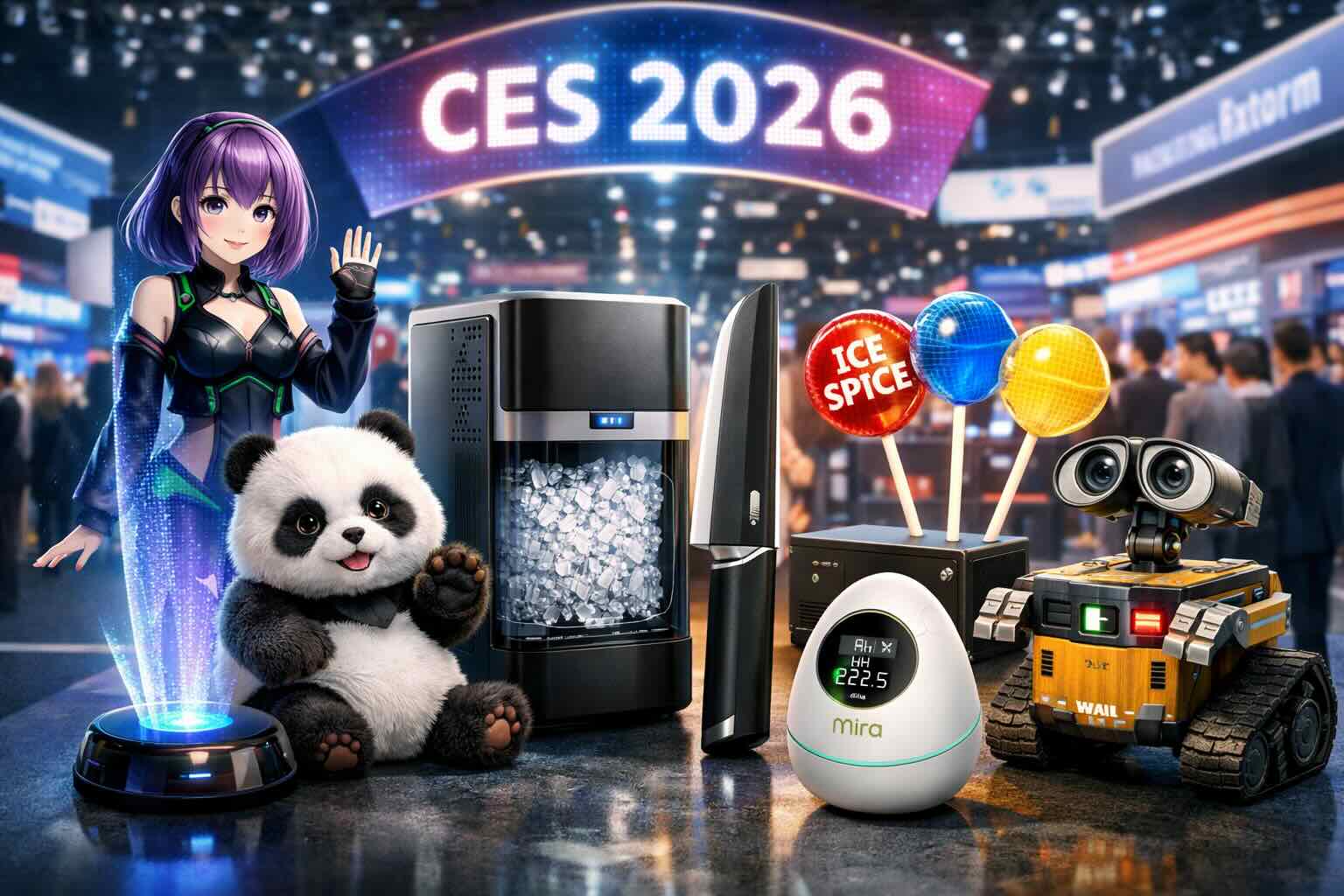
CES 2026 is the world's largest consumer electronics exhibition, gathering thousands of technology businesses, global corporations and innovative startups from many countries. The event is a place to introduce the latest technology trends in the fields of artificial intelligence, smart devices, robots, healthcare, entertainment and consumer technology. At the same time, it reflects how technology is gradually shaping life, production and the future of society.
Despite gathering many large corporations launching new technologies, CES 2026 still attracts the most attention with strange and unique devices, raising many curiosities about how humans will live with technology in the future.
One of the notable ideas is Razer's AVA. From an AI trainer for gamers, AVA was developed into a 5.5-inch 3D virtual assistant for desk, both supporting gaming and helping to organize work, increase productivity and even personal consulting.
Users can choose many different avatars with eye movements, facial expressions and lip joints that are quite realistic. The unusual point of AVA is not in its ability to support games or work, but in the fact that it is always "present" on the desk, observing the eyes, expressions and even the user's screen. A digital assistant in the shape of an animated character, constantly following you, raising questions about the privacy boundary between humans and AI.
In the healthcare segment, An'An - an AI robot panda of Mind with Heart Robotics, is designed for the elderly. The robot responds to touch operations, memorizes voice, habits and preferences to increasingly personalize interactions. An'An provides spiritual support, daily reminders and helps caregivers monitor health status, aiming to reduce feelings of loneliness in the elderly.
An'An is not just a healthcare robot, but designed as an emotional pet. It memorizes voices, habits, and different reactions with each person, gradually forming a spiritual bond. The fact that a robot takes on the role of comforting and making friends for the elderly makes many people both feel lovely and strange.
Another product that surprised many people is GoveeLife's nearly 500 USD table ice cutter. Although the price is high, instead of solving complex problems, this ice cutter only uses artificial intelligence to reduce noise during operation.
Seattle Ultrasonics brings an ultrasonic kitchen knife with its blade vibrating more than 30,000 times per second. Thanks to vibration, the knife cuts food much easier than traditional knives. However, the price of $399 is still too high for a knife that only vibrates when cutting.
CES 2026 also witnessed "unbearable" entertainment ideas, such as Lollipop Star's music-playing candy. The product transmits sound through bone conduction when users suck on candy, combining fruit flavors and artists' music.
Finally, Mira's Ultra4 egg-shaped hormone monitoring device. Just a urine sample, the machine will analyze four reproductive hormones, helping users track the time of conception and early recognize some health problems. This device received much attention when bringing hormone analysis, which is only available in the clinic, right into the family bathroom.
The above products may not be immediately popular, but they clearly reflect one thing: CES is not only a place to showcase advanced technology, but also a playground for bold ideas, ready to challenge how people perceive technology devices in daily life.


