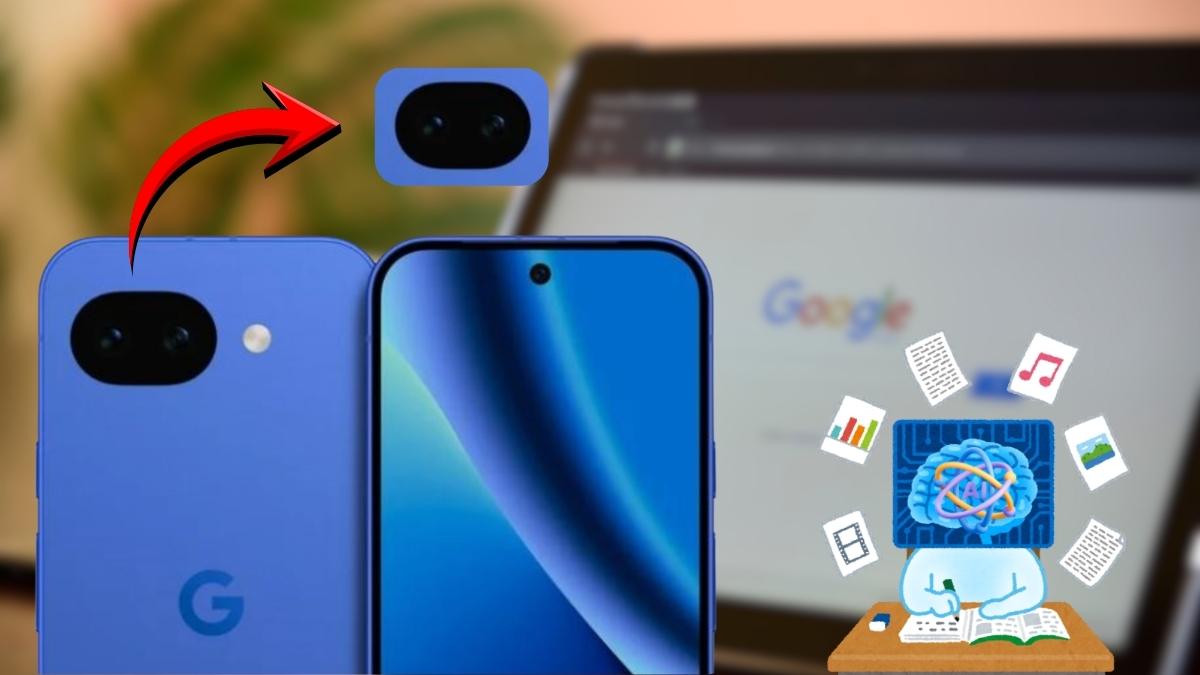
Unlike the trend of increasing the size of the camera cluster, Google Pixel 10a chooses a completely flat design, eliminating the protruding camera part. This change makes the device more stable when placed on the surface and improves the daily usage experience, but is not a core upgrade.
A more notable point lies in the performance and artificial intelligence. The device continues to use the Google Tensor G4 chip, similar to the previous generation, making the performance almost unchanged. With 8GB of RAM, the device does not support the updated version of Gemini Nano, the AI platform being promoted by Google on higher lines.
The incompatibility with the new AI system makes Pixel 10a lack a series of features such as notification summaries, notes and direct call translations or smart context suggestions on the application. These are tools that are gradually becoming the standard on high-end smartphones.
This difference shows Google's clear stratification strategy, when AI features are no longer widely popularized but become factors that create a gap between segments.
From an experience perspective, Pixel 10a still maintains familiar strengths such as a 5-100 mAh battery for long usage time, a 3,000 nit bright screen and a compact design. However, these improvements are mainly for perfection, not making a big difference compared to Pixel 9a.
In the context of AI increasingly playing a central role on mobile devices, the fact that a new model does not upgrade the processing platform and is limited in features may affect user decisions. Pixel 10a is therefore suitable for customer groups that prioritize price and basic needs, rather than new technology experiences.