

From April 1, 2026, the amended Law on Intellectual Property 2025 officially takes effect, adding many new regulations to increase the responsibility of digital platforms and expand enforcement tools. This is considered an important institutional step in the context of increasingly complex copyright infringement in cyberspace.
One of the notable contents is the overcoming of legal "loopholes" in handling online intellectual property infringement acts, which have existed for a long time.
Talking to Lao Dong Newspaper, Mr. Nguyen Hoang Giang - Deputy Director of the Intellectual Property Office (Ministry of Science and Technology) said that this amended law has significantly changed the approach in management and protection of rights. If previously regulations mainly focused on a number of intermediary entities providing technical infrastructure, now the scope of regulation has expanded, covering both digital platforms directly operating, exploiting and distributing content.
Accordingly, legal liability does not only apply to units providing data connection, transmission or storage services, but is also placed directly on platforms such as social networks, e-commerce platforms and online content sharing systems.
These are environments where users directly post and spread digital content, and are also places where more and more copyright infringement, illegal copying or distribution of goods and services infringing intellectual property rights arise.
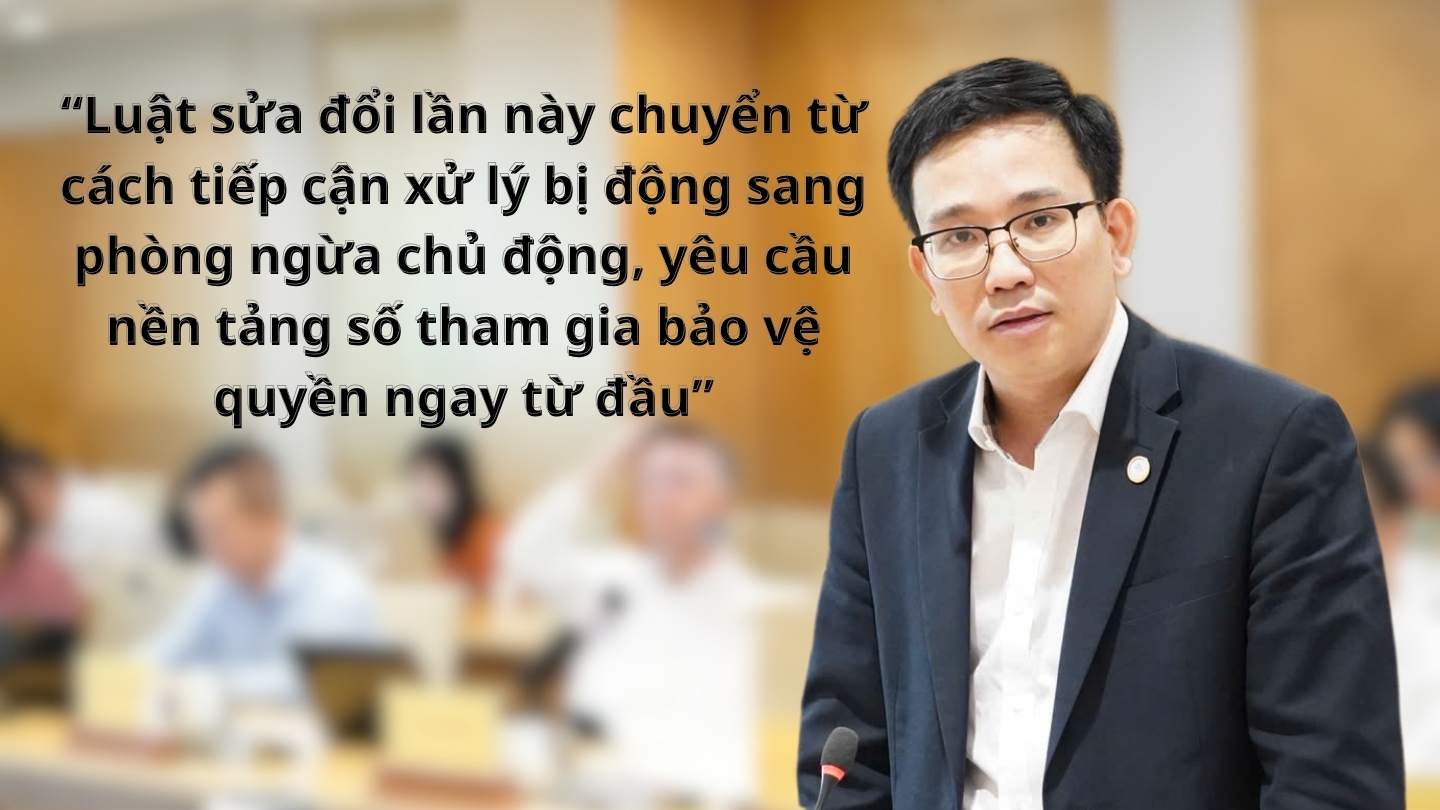
A noteworthy new point is that the law does not stop at requiring reactions when there are complaints, but sets an obligation to be proactive for platforms in preventing violations. Operating entities must implement appropriate rights protection measures, strengthen control and prevent infringing acts from the beginning.
This approach shows a shift from passive handling to proactive prevention, suitable for the characteristics of the digital environment when a violating content can spread very quickly and widely.
In parallel with that, the law also strengthens enforcement tools by expanding jurisdiction for the Court. The adjudicating body is given more power to quickly handle violations in the online environment.
In case of necessity, the Court may request the removal, hiding or blocking access to infringing content. Some temporary emergency measures may also be applied such as disabling accounts, websites or related applications.
This regulation is considered to have great practical significance. If there is no timely intervention mechanism, the content of violations may continue to spread and cause prolonged damage before a final ruling is made.
Along with that, the administrative sanctioning system is being further improved through the amendment and supplementation of relevant decrees to ensure synchronization in implementation and improve deterrence effectiveness.
However, the big challenge still lies in handling cross-border platforms, when servers and legal entities are not located in Vietnam. According to management agencies, intellectual property legal tools alone are not enough to thoroughly handle this group of subjects.
Management will require an overall approach, combining civil, administrative, and criminal law along with regulations on e-commerce, network security, and digital platform management.
This amended law also initially mentions the new issue of protection of rights to products using artificial intelligence. The government is assigned to provide detailed guidance on the establishment of rights to objects created from or supported by AI.
This is considered a timely step as AI is increasingly deeply involved in creative activities, from text and images to digital content products serving commerce.
Overall, the law taking effect from the beginning of April is not only aimed at handling existing violations, but also towards building a more transparent, fair and safe digital environment for creative activities.
When the responsibility of the platform is clearly defined, intervention tools are strengthened and the legal corridor continues to be improved, the rights of creative businesses, rights holders and users will be protected more effectively. This is also an important foundation for the development of the digital economy and the creative ecosystem in Vietnam.


