
From phones to real-life traps
In just a short period from the end of 2025 to the beginning of 2026, public opinion was continuously shocked by a series of "online kidnapping" cases directly targeting minors.
In January 2026, Nghe An police force had to urgently block the North-South train to rescue a female student (born in 2010, from Quang Ninh) who was in a state of extreme panic. She cut off all contact with her family, boarded the train to go to Ho Chi Minh City at the seduction of a "friend she met online".
A haunting case must be mentioned is the case in Phu Tho at the end of 2025. A young woman was threatened by a thief impersonating a police officer calling via Zalo related to a drug line. She was manipulated to the point of taking a taxi to a strange motel, taking off her clothes, shouting to stage a kidnapping under the control of a scammer through the screen. Sensitive footage was immediately sent back to her family to extort money.
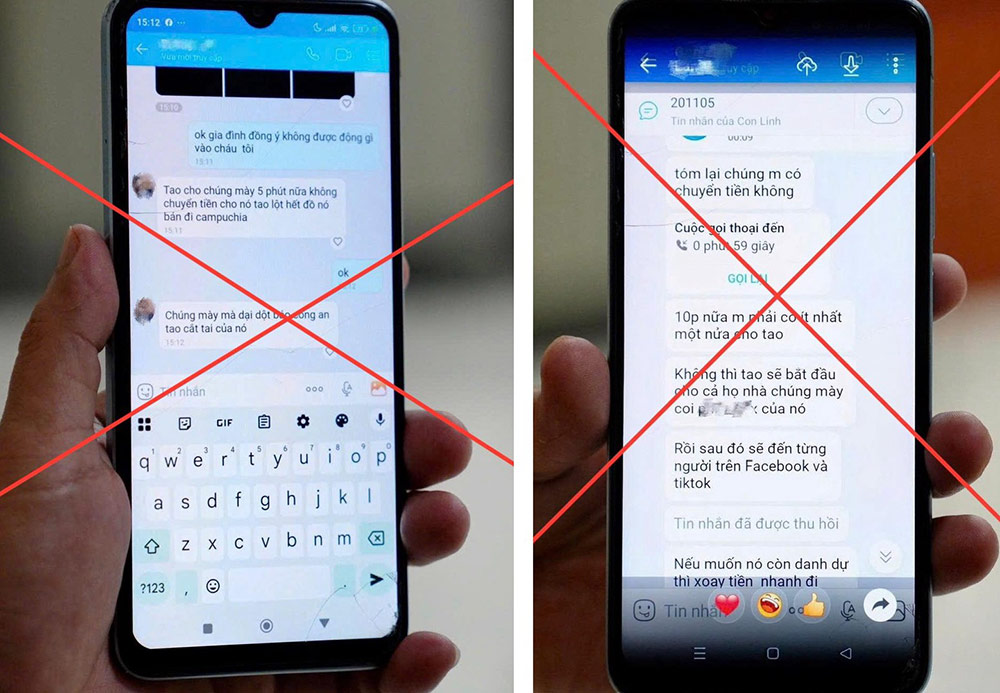
The common point is that victims are all threatened and completely psychologically manipulated through smartphone screens. Looking back from a family perspective, the seeds of these painful tragedies often begin with the habit of entrusting technology devices to children without the companionship of parents. Right at the stage of the most strong psychological and physiological changes, the void in the family creates a fatal loophole for bad guys to take advantage.
According to the Vietnam Children's Cyber Protection Club, 40% of children feel unsafe, more than 70% have had unwanted experiences when using the Internet. About 1% (approximately more than 94,000) of Internet users aged 12-17 in Vietnam are victims of exploitation and sexual abuse online...
Statistics from the United Nations Children's Fund (UNICEF) show that 74% of children and adolescents in Vietnam believe that they are at risk of sexual abuse or being exploited online. The age of children abused online is increasingly younger.
Space in the family
Behind children who indulge in social networks is the void in the family. When there is a lack of real care and sharing from parents, children easily find the virtual world - a place with countless attractive content and quick interaction capabilities.

Aware of this, many parents have changed their approach. Ms. Thanh Huong (36 years old, Hanoi) said that her family does not choose extreme prohibition, but manages the use of electronic devices by her three children in a proactive and companion direction.
When starting to use a smartphone, children must comply with clear regulations: each social networking application is only allowed to be used for a maximum of 30 minutes per day. If you want to use more, you must send a request and clearly state the purpose," the mother of three shared.
All accounts (Gmail, Zalo, Facebook, TikTok) are passwordd by parents and tracked in parallel on other devices. The family also takes advantage of internal management features on iCloud to control the duration, content accessed and receive notifications when there are unusual activities.
We check both periodically and unexpectedly. The important thing is that the child understands that this is not unreasonable control, but to protect the child," she emphasized.
The family sets principles for their children: only befriend acquaintances in real life; do not share personal information (address, school); limit posting real photos and absolutely do not meet acquaintances online without parental consent. If you receive strange messages, suspicious friend requests or borrowing content, you must immediately notify adults.
The core thing is to help children identify risks themselves. The family regularly presents real-life situations about scams and fake accounts for children to understand and avoid.
The most important thing is to maintain interaction. Every day I ask my child about studying, friends. When there is trust, my child will share everything, even the most sensitive issues," she said.

Agreeing with this view, Ms. Nguyen Thuy Dung - Head of Professional Team of Vinschool Ocean Park Elementary School - said that the biggest role in protecting children from traps from the virtual world to real life lies with parents, not grandparents, schools or friends.
Because parents are the most understanding, closest and can accompany their children most closely. Parents need to spend time with their children so that they can feel love, care, and more importantly, express themselves.

She suggests that to create "bustle" and detachment from the Internet for children, parents can let their children participate in after-school sports entertainment activities, physical and artistic clubs. Parents accompanying and spending quality time with their children are the most effective resistance medicines.
Smartly and scientifically controlling websites and children's network usage time is also a solution that parents consider, suitable for the circumstances of each family.


