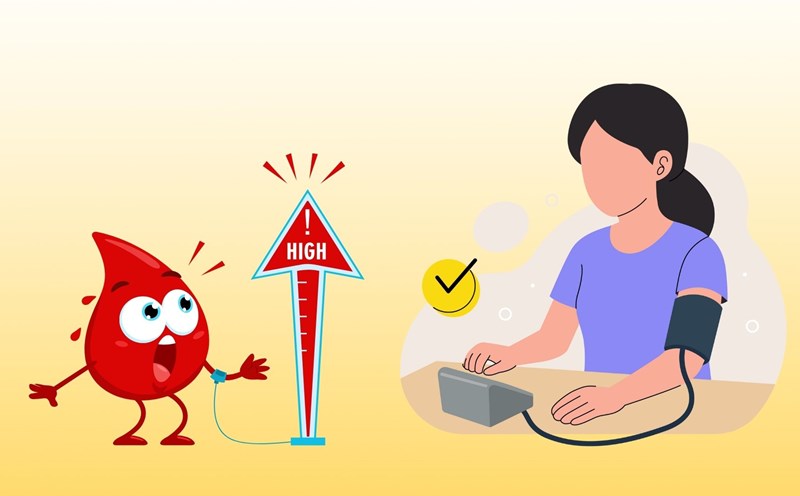
High blood pressure occurs when blood pressure that affects the artery walls is always high. This makes the heart work harder and puts a burden on blood vessels throughout the body. A person is determined to have high blood pressure when the temperature measured at a medical facility is 140/90 mmHg or higher. If the index is between 120-139/80-89 mmHg, it is considered a pre-hypertension, while below 120/80 mmHg is a stable level.
The disease often progresses silently, with few signs, but if not controlled, it will increase the risk of heart attack, stroke or kidney failure. Not only affecting the cardiovascular system, prolonged high blood pressure can also have a negative impact on vision. Because the eyes have a small and sensitive blood vessel system, they are easily affected when blood pressure constantly increases.
Some initial symptoms in the eyes caused by high blood pressure may include: narrowing or twisted retina blood vessels, eye bleeding, leakage of fluid from weak blood vessels, bulging optic nerve, appearance of white streaks like cotton on the retina due to anemia...
When blood pressure increases too much, blood flow to the eyes is interrupted, easily developing into hypertensive retinopathy. This is a condition of retinal vascular damage that leads to blurred vision, bleeding, and more seriously, can cause permanent loss of vision. Some other possible consequences include:
- Zocaloid: Emities accumulate in the zocaloid phase causing swelling and deformation
- Reduced blood flow: Affects the retina and optic nerve
- retina Bong: The retina may peel off the supporting tissue, negatively affecting vision
- Mourning: Severe, prolonged high blood pressure can lead to permanent loss of vision
- Optical neuropathy due to local anemia: Reduced blood flow to the optic nerve causes sudden changes in vision
In addition, high blood pressure also increases the risk of clogged arteries, retinal vein blockage and eye complications that are often associated with diabetes. People with genetic factors or seeing unusual signs of vision should have their eyes checked periodically. Examination by an ophthalmologist helps detect early and prevent damage from getting worse.