
In the kitchen of Ms. Lo Thi Hanh's family (in Sop Cop commune, Son La province), bitter eggplant is often processed into boiled dishes with diagonal dipping or soup with meat, fish and vegetables available in the garden.
The eggplant fruit is green, and has a distinct bitter taste when eaten. According to Ms. Hanh, people who have never tasted it are often cautious from the first bite.
However, if you know how to choose fruits and process them properly, the bitter taste is not too harsh but leaves a slightly sweet aftertaste.
Some people taste it, just bite it and frown, asking why it's so bitter but still eat it. But for people who are used to it, that bitterness makes up the uniqueness of the dish," Ms. Hanh shared.
The simplest way to prepare it is to boil eggplant and dip it diagonally. Eggplant is carefully selected, remove stems, wash thoroughly and then put in a pot to boil until just cooked. If cooked for too long, the fruit easily becomes soft and mushy, losing its crispness.
The accompanying bowl of chẩm chéo is made from salt, chili, garlic, mắc khén and some herbs. The spicy, salty taste and characteristic aroma of mắc khén help balance the bitterness of eggplant. When eating, the user feels the bitterness spreading on the tip of the tongue, followed by the pungent and slightly numbness.
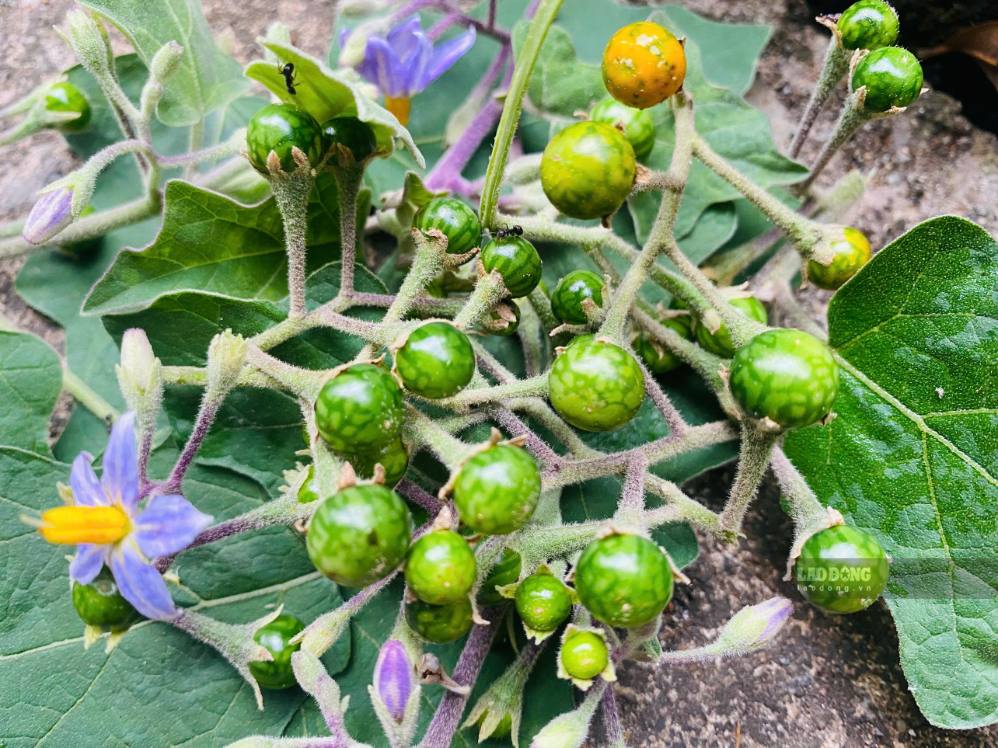
In addition to boiled dishes, Ms. Hanh's family also uses bitter eggplant to cook soup. Depending on the available ingredients, eggplant can be cooked with meat, fish or wild vegetables.
The cook adds eggplant when the broth has boiled, boils until just soft and limits stirring vigorously so that the fruit does not become mushy.
Bitter eggplant used to be mainly grown in gardens or picked from fields by people. The dish is not fussy, the ingredients are easy to find, so it often appears in daily meals.
Ms. Hanh recalled that when she was young, she did not like this eggplant dish because it was too bitter. Seeing adults eating it deliciously, she curiously tasted it and gradually got used to it.
When she grew up and got married, bitter eggplant became one of the dishes she occasionally cooked for her husband and children.
The dish is not expensive but reminds me of my parents and the crowded meals of the past. Some days, just a plate of boiled eggplant, a bowl of chẩm chéo with a hot pot of rice, and the whole family eats very well," Ms. Hanh said.
Young family members were initially wary of the bitter taste. She did not force her children to eat but often let them try small pieces, explaining that this is a familiar dish of local people.
Through each time they go to the kitchen with their mother, the children gradually learn how to pick eggplant, mix cross-fried eggplant and understand more about the cuisine of their homeland.
Today, food in meals is increasingly abundant, but bitter eggplant is still kept by many highland families.
That fruit that seems hard to eat not only brings a different flavor but is also associated with fields, kitchens and memories of reunions of many generations.


