
Not only is it a reunion meal, the Tet feast is also a gathering place for the quintessence of culture, beliefs and family affection, preserved through generations.
The Tet feast is the beginning of union members
When Tet comes, no matter how far they go, Vietnamese people also want to return home and gather around the first feast of the year. In traditional beliefs, the feast is not only for living people but also a solemn invitation to ancestors and deceased grandparents. Therefore, each dish is prepared carefully and thoughtfully, containing respect and wishing for a new year of peace and prosperity.
The Tet feast is usually offered to the ancestral altar at the moment of New Year's Eve or the morning of the first day of Tet. The incense spreads, the prayers echo in the quiet space, and then the whole family sits down together, starting the new year with a warm meal. That is the moment when all worries of the old year seem to be put aside, giving way to faith and hope.
The soul of the Tet feast
Speaking of Vietnamese Tet feasts, banh chung is indispensable. The square shape of the cake symbolizes earth, the green color of dong leaves evokes proliferation, and the filling with sticky rice, green beans, and pork expresses the desire for fullness and prosperity.
From many days before Tet, the atmosphere of wrapping banh chung has been bustling throughout the countryside. The whole family gathers around a stack of lush green dong leaves, a basket of white rice, a pot of golden beans. Adults guide, children help, both doing and telling old stories. On the night of cooking banh chung, the fire is red and pink, warming both the yard and people's hearts. Banh chung is therefore not only a dish, but also a memory, a bond connecting generations in each Vietnamese family.
The richness of the three-region feast
The Tet feast tray carries the common features of national culture, but each region has its own way of expressing it, reflecting natural conditions, history and typical lifestyles.
In the North, the feast is usually solemn, balanced, and harmonious yin - yang. Besides banh chung, there are familiar dishes such as golden brown boiled chicken, gio lua, bamboo shoot soup, spring rolls, pickled onions. The fatty, salty, and sour taste is moderately controlled, creating a gentle and delicate overall.
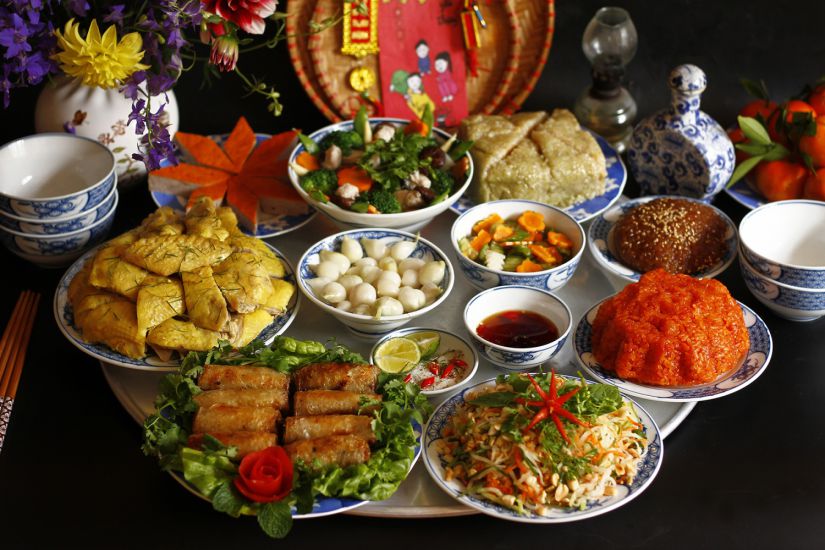
The Central region is inherently suffering from many harshnesses of nature, so the Tet feast here is imbued with a spirit of cherishing and richness. Dishes such as banh tet, fermented pork roll, tré, braised pork with fish sauce, and pickled vegetables appear commonly. The salty and spicy flavor not only helps preserve food for a long time, but also reflects the persistent and hardworking will of the people of the Central region.
Meanwhile, the South brings a generous and sweet Tet feast. Braised pork with eggs and coconut water, bitter melon soup stuffed with meat, banh tet, pickled scallions... are indispensable dishes. The sweet and fatty taste of coconut water, the slightly bitter taste of bitter melon sends the wish " bitter melon, happiness come", the new year all hardships remain behind.
It is no coincidence that Tet dishes are chosen and preserved through many generations. In the feast, each dish carries a layer of its own meaning.
Pickled onions and pickled scallions with a mild sour taste help balance protein-rich dishes, and at the same time symbolize harmony and harmonie in the family. Bamboo shoot soup and pork bean soup evoke fullness and prosperity. Boiled chicken whole shows completeness and a fulfilling start. In the South, the pot of braised meat with golden eggs and clear broth is also a symbol of cohesion, because that pot of meat is often cooked large, eaten throughout the Tet days, always warm on the stove.
Tet feast in modern life
Today, the busy pace of life makes many families choose simpler feasts, even pre-ordered from services. However, the spirit of the Tet feast is still intact. Whether there are few or many dishes, the most important thing is still the presence of family members, the moment of sitting down together, raising cups to wish each other a peaceful new year.
In many cities, Tet feasts are also transformed into healthier directions, reducing grease, increasing green vegetables, suitable for modern lifestyles. However, in the memory of many people, the most complete Tet flavor is still the smell of newly picked banh chung, hot bowls of soup steaming and cheerful laughter around the first meal of the year.
The Tet feast not only nourishes the body, but also nourishes the soul of Vietnamese people. In each dish is a story about the origin, about the morality of "drinking water, remembering the source", about the desire for peace and happiness. Even if society changes, even if the form is simpler, the Tet feast is still a sustainable cultural support, reminding everyone to remember their home, about values that are never old.
And perhaps, it is in the moment when the whole family gathers around the Tet feast that we can most clearly feel the meaning of the two words "reunion" - the sacred thing that has made up the soul of Vietnamese Tet for generations.


