
Do not let some places lack, some places have excess teachers.
On September 4, the People's Committee of Ca Mau province organized a conference to summarize the plan to arrange public educational institutions in the province.
Speaking at the conference, Secretary of the Ca Mau Provincial Party Committee Nguyen Ho Hai emphasized that the arrangement of educational institutions is not only aimed at reducing focal points but more importantly, reorganizing the educational space, improving management efficiency, and better using staff, facilities and investment resources.
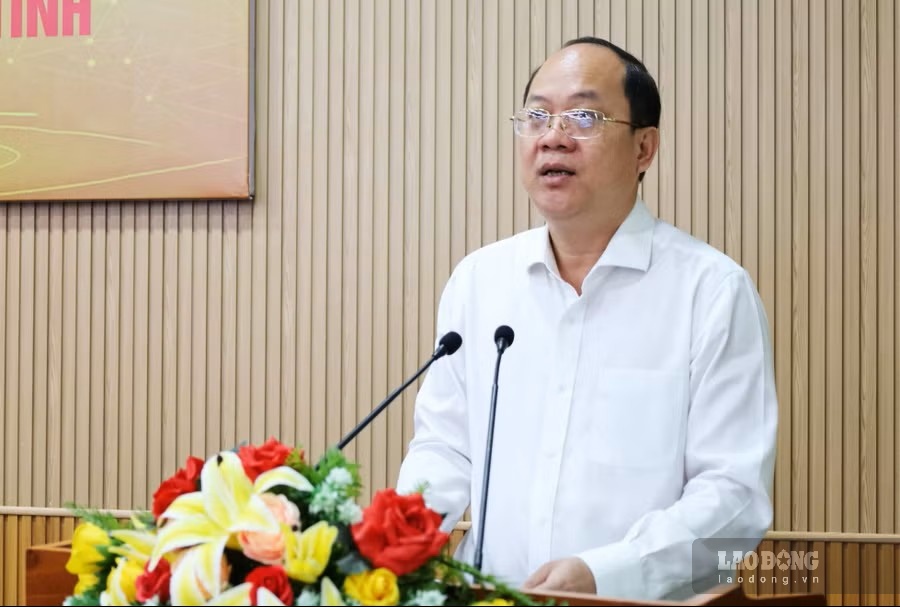
According to Mr. Nguyen Ho Hai, the arrangement must create conditions to organize 2-session/day teaching, semi-boarding and build schools that meet national standards. This is "a revolution", creating an important premise for Ca Mau to make a breakthrough in education and training development according to Resolution No. 71-NQ/TW dated August 22, 2025 of the Politburo.
Ca Mau Provincial Party Secretary requested that the 2026-2027 school year must not only be a new school year in terms of time but also a new school year in terms of thinking, working methods and quality.
The Education sector must proactively and drastically innovate management thinking; shift from administrative management to development management, from counting work to measuring results. Innovation must also go into substance from within each school, each class, each teacher and each learner.
Mr. Nguyen Ho Hai also requested the Education sector to promote digital transformation, especially the application of controlled artificial intelligence (AI) in educational institutions.
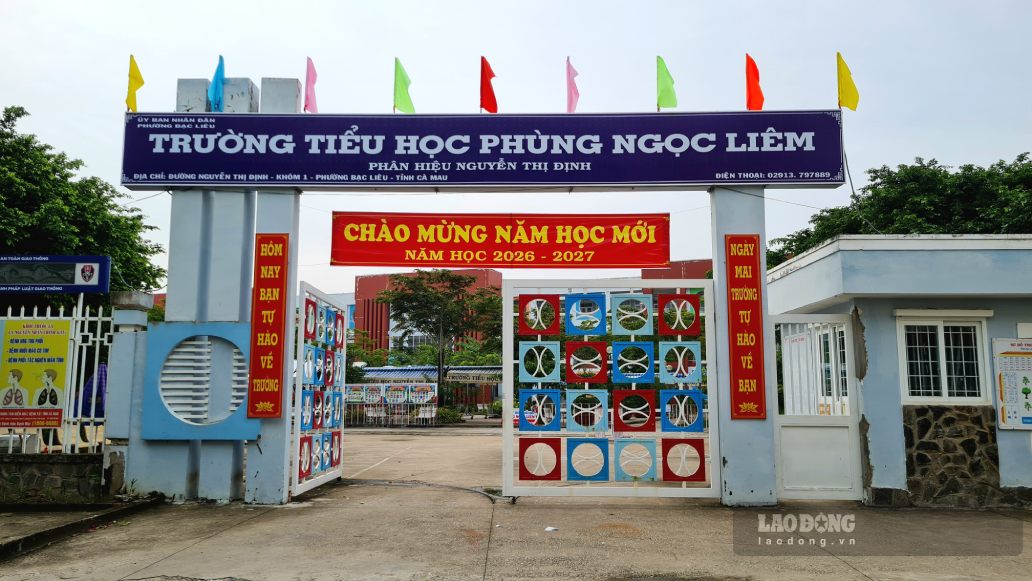
Along with management innovation, the sector needs to review and fully implement regimes and policies for children, students, and trainees; proactively support solutions for those who are still in difficult circumstances, ensuring that children have sufficient essential conditions to go to school, study and live.
One task that the Provincial Party Secretary especially noted is to stabilize the organization, improve the staff and urgently overcome the situation of local teacher surplus and shortage.
“Do not let the teacher shortage affect the quality of teaching and learning, do not let the situation where there is a surplus of teachers while other areas lack teachers occur,” Mr. Nguyen Ho Hai emphasized.
Ca Mau reduces more than half of public educational institutions
According to the Department of Education and Training of Ca Mau province, the province has completed the arrangement of public educational institutions on schedule. 19/64 communes and wards have implemented arrangement in the direction of leaving 1 school per level of education.
After arrangement, the whole province still has 359 public educational institutions, a decrease of 387 institutions, equivalent to 51.88%.
In which, preschool level still has 94 facilities, a decrease of 102 facilities; primary level still has 110 facilities, a decrease of 197 facilities. Secondary level, including both primary and secondary schools, still has 104 facilities, a decrease of 70 facilities.
High school block, including both secondary and high schools, is 43 schools, a decrease of 6 schools. Continuing Education Center is 1 center, a decrease of 7 centers. Specialized schools are 4 schools. Vocational education is 2 colleges.
Bac Lieu University is kept unchanged, but its internal organization is consolidated, and its functions and tasks are re-regulated to meet the requirements of higher education innovation.
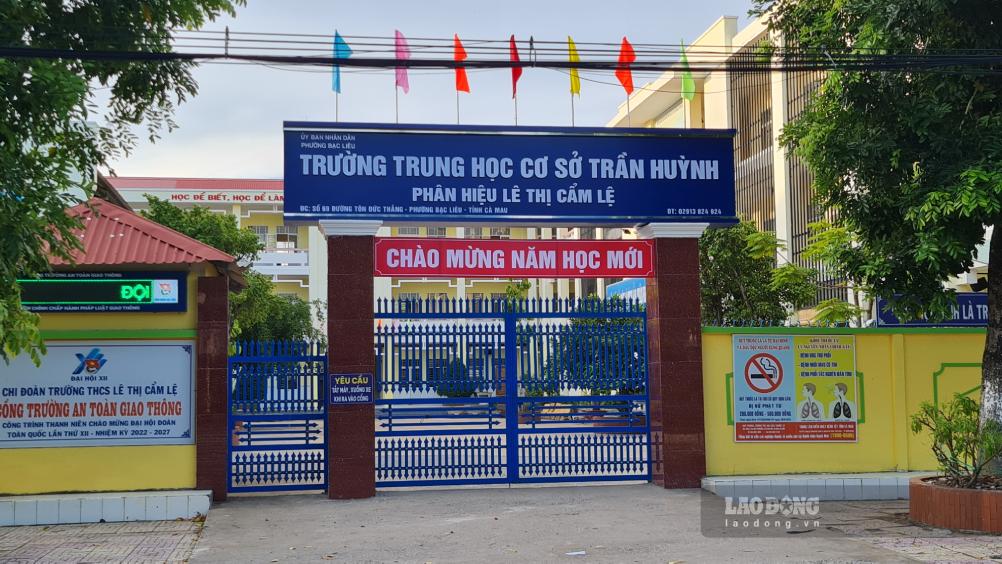
After arrangement, in the 2026-2027 school year, the whole province has about 397,255 learners. Including 48,969 preschoolers, 153,583 primary school students, 123,124 secondary school students and 58,186 high school students.
The total number of managers, teachers, and staff at public preschool, general, and continuing education institutions is 24,197 people, a decrease of 158 people compared to before the arrangement.
Notably, the number of management officials who are principals and vice-principals is 1,005 people, a decrease of 634 people. The whole province currently has 21,490 teachers and 1,702 employees in this block.
The sharp reduction in the number of management officials is implemented in the process of arranging and reorganizing the school network. This is one of the contents set out along with the requirement to innovate education management methods, towards more effective use of staff and resources, instead of just mechanically reducing the number of focal points.


