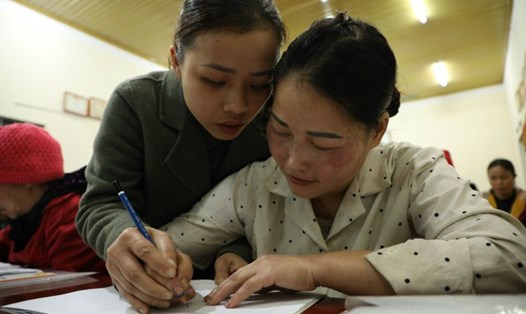
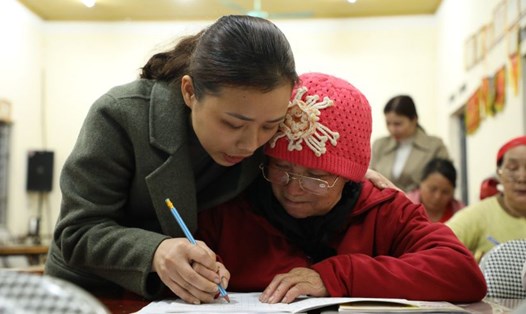
The Journey to find the Book
Late at night, when the laughter in small houses gradually disappeared, Ms. Trieu Thi Nai (60 years old, Khuoi Boc village, Xuan La commune, Pac Nam district) quietly prepared books and flashlights. Wearing a thin shirt, she follows a small dirt road, step by step stepping to the classroom to erase illiteracy.
She said that on first day in class, she held a book and found it strange, and her familiar hands were stiff when holding a pen. I sweat when I write a word.
"When I first went to school, it was very hard, about my limbs aches, I thought or stopped giving up. But then I could not read the money, I did not understand the papers, even though I was far away, I still told myself to try to go to school.
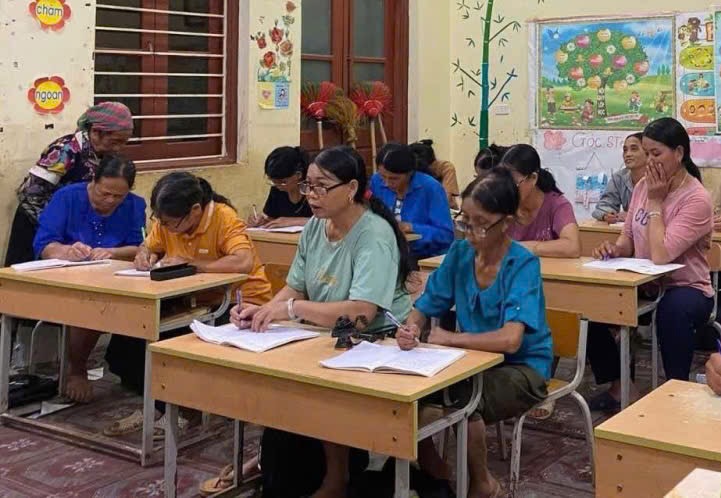
Not only Ms. Nai, many people in the village also persistently go to class despite hard work. Most of them are older women, who have not had the opportunity to study due to circumstances.
Now that life is less difficult, they want to know how to read and write to make it more convenient for them in their daily lives.
Not only Xuan La commune, in many other localities in Bac Kan province, illiteracy classes also attract a large number of people to participate.
Ms. Ban Thi Ly, a resident of Don Phong commune (Bach Thong district) said that studying not only helps people know how to read and write, but is also an example for their children and grandchildren to follow.

"Previously, I didn't know how to read and write, I was afraid to go to the market or do anything, and I had to ask someone else to get my children's school documents. Now I know how to write my name, know how to read, and I am very happy, Ms. Ly shared.
Thanks to knowledge of letters, people can record their own books when buying and selling. Since then, many households have improved their income and boldly applied modern technology to production.
For them, each word not only helps change their lives but also opens up new opportunities.
Realizing dreams
Implementing the National Target Program for Socio-Economic Development of Ethnic Minority and Mountainous Areas, local authorities have coordinated with teachers in the commune to organize many blind removal classes right in the village.
The illiteracy class in Khuoi Boc village has 28 students from the H'Mong and Dao ethnic groups, of which the youngest student is 24 years old, the oldest is 66 years old and most of them are women.
Teacher Nong Thi Thuong, who directly teaches and shares, shared that in the early days, holding a pen for the people was not easy.
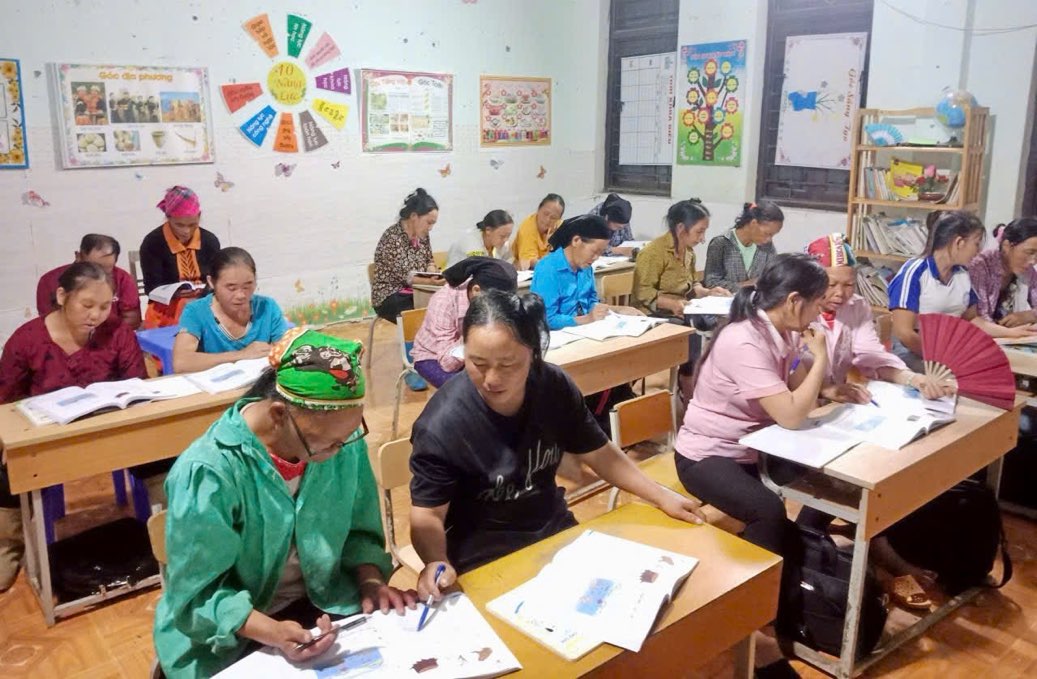
"The women are used to holding hoes, knives, and needles, so their hands are very stiff. When I write a word, I feel nervous, and only when someone practiced for a long time can I write my name," she said.
After more than three months, many people have been able to read the newspaper, write their names, and calculate simply. This gives them confidence and helps them become more proactive in their lives.
Not only in Pac Nam district, but in many other localities of Bac Kan province, the movement to eliminate illiteracy is also being strongly implemented.
Ms. Ta Thi Duyen - Vice Chairman of the People's Council of Don Phong commune (Bach Thong district) shared: "At first, it was very difficult to mobilize people to participate in classes. They are busy making a living, afraid of getting old, afraid of not being able to learn, and afraid of not being used to holding a pen. But when they clearly understood the benefits of being literate, many people enthusiastically participated."
Thanks to blind removal classes, the illiteracy rate in the area has decreased significantly. By the end of 2022, Bac Kan still has 4.48% of its population un literate, and the province has basically met the standards for level 2 illiteracy.
Thanks to their perseverance and determination to find words and words, the people here have gradually realized their dream of knowing how to read and write, helping them become more confident in life.