
On the afternoon of May 28, at the Government Headquarters, Member of the Party Central Committee, Deputy Prime Minister Le Tien Chau chaired a meeting on the preparation for the 2026 high school graduation exam (THPT) and the preparation for the 2026-2027 school year.
According to a report by the Ministry of Education and Training, the exam supervision will take place on the 10th, 11th, and 12th of June. In which, on June 10, exam procedures will be completed; on June 11, the Literature exam will be held in the morning and the Math exam in the afternoon; on June 12, two elective subjects will be organized.
Exam grading work is carried out according to the general plan from June 13 to June 30. 6. Announcing exam results at 8:00 am on July 1; about 12 days earlier than the previous year to help candidates and training institutions be more proactive in university and college admissions.
This year's exam has 1,223,776 registered candidates, an increase of 61,642 candidates compared to last year.
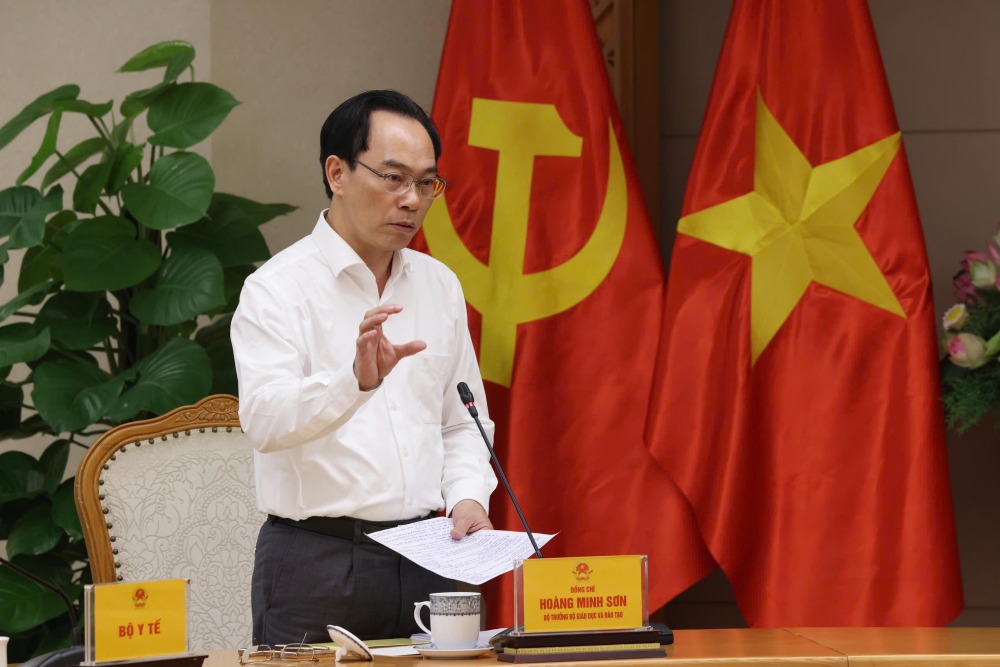
Regarding the preparation for the exam, the Deputy Prime Minister noted that it is absolutely necessary not to be subjective in the preparation and implementation of the exam, especially in the post-merger context. Prevention and combat of fraud using high technology and artificial intelligence must be considered a key risk of this year's exam.
The Ministry of Education and Training coordinates with the Ministry of Public Security to develop a thematic training plan on identifying new fraudulent devices and controlling items entering the exam room.
The Ministry of Public Security proactively monitors cyberspace, detects and handles fraudulent equipment trading lines early; handles them to warn and prevent.
Regarding the preparation for the new school year, the Deputy Prime Minister assigned the Ministry of Education and Training to urgently complete the overall plan to prepare for the 2026-2027 school year. Any task that is delayed must clearly state the cause, the responsible agency and the deadline for handling.
Regarding the teaching staff, identifying teacher shortages as the biggest bottleneck of the next school year, the Deputy Prime Minister requested the Ministry of Education and Training to preside over and coordinate with the Ministry of Home Affairs, the Ministry of Finance and localities to review to each locality, each level of education, and each subject.
First of all, it is necessary to recruit all the staff who have been assigned but have not been used, not to let the situation of both teacher shortage and slow recruitment occur.
Regarding unified textbooks, the Ministry of Education and Training is fully responsible for the quality of content, printing progress, distribution, cost, digital learning materials and support plans for disadvantaged students.
It is necessary to ensure that books reach teachers and students before August 15, 2026; not to let book shortages, price fever, waste, group interests or social frustrations arise," the Deputy Prime Minister directed.
Before the opening ceremony, there must be a plan to ensure school places for students, especially elementary school students; absolutely do not let students have no places to study due to lack of schools, lack of classes; do not put into use works that do not ensure safety. The Ministry of Education and Training summarizes the list of seriously lacking areas to report to the Government for direction.
The Deputy Prime Minister noted the issue of AI application in education. AI is an inevitable trend, which needs to be exploited to innovate teaching, support teachers, and personalize learning. In Vietnam, many universities have considered AI as a compulsory subject.
However, if management is not done well, it will lead to a situation where teachers use AI to create questions, students use AI to solve questions, do homework, and even cheat in tests and exams.
Therefore, the Ministry urgently completes guidelines and regulations on AI application in education, from general education to university; considering AI as a supporting tool, not replacing the role of teachers, not replacing the capacity of learners.


