
Commitment to completion on August 30, 2026
August 30, 2026 is set as the deadline for 6 inter-level ethnic minority boarding schools in A Vuong, Tay Giang, Hung Son, La Eee, Dac Pring and La De (Da Nang) to complete, ready to welcome students into the new school year.
These are 6 projects with a total investment of more than 1,500 billion VND, with a scale of 141 classrooms, serving about 4,800 highland students. With dangerous terrain, harsh weather, and high material transportation costs, this is one of the most difficult education investment programs in Da Nang today.
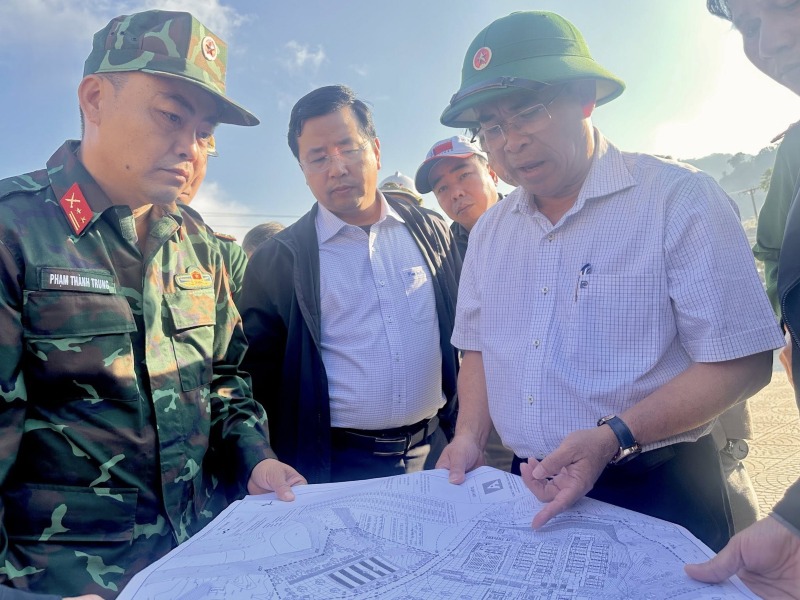
At the recent emulation agreement signing ceremony, Vice Chairman of Da Nang City People's Committee Tran Anh Tuan requested relevant units not to cite unfavorable weather conditions to slow down construction progress.
In mountainous areas, heavy rain, slippery roads, slow material advances, and labor shortages are real difficulties. But if we continue to see that as a reason to delay progress, the ultimate sufferers will still be mountainous students.
City leaders also emphasized that progress must go hand in hand with quality. Six schools not only need to be durable, safe, and aesthetically pleasing, but also must be suitable for regional living habits and culture.

Previously, Da Nang Party Secretary Le Ngoc Quang requested units not to be subjective, not to completely depend on the contractor's commitments, but to proactively control factors that may affect the progress. The overarching spirit is to both build the project and immediately prepare conditions for teachers, equipment, enrollment, and student mobilization, so that the boarding school can be completed and operated immediately.
Cannot erect strange concrete blocks in the middle of the mountains and forests
At Tay Giang school site, the construction atmosphere these days is urgent. Teams of workers divide up to process iron and steel, erect formwork, and transport materials. Engineers closely follow the construction site, review the progress of each item and handle arising problems on the spot.
Engineer Tran Thanh Hung, who is sticking to the Tay Giang construction site, said that the pressure in the mountainous area is very high. "Some days when it's sunny, we have to work until evening, some days when it rains, transportation and construction organization are immediately disrupted. But the city's deadline is very clear, so the brothers only have a way to calculate carefully every day, make up for each part of the work, not to miss the beat," he said.
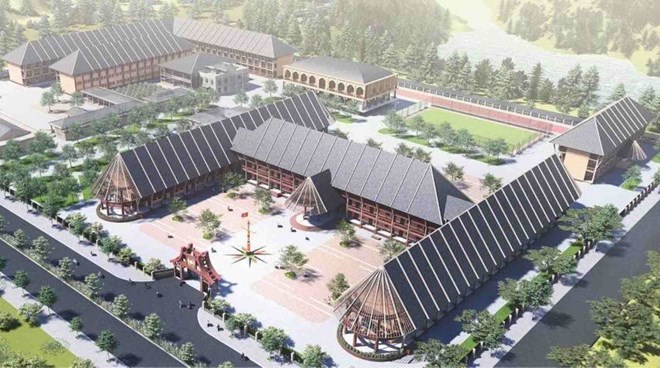
The difficulty is not only running the progress, but also how to ensure that the school, when completed, does not become a lost project in the village.
For ethnic minority students, school is not just a place to study and then go home. It is also a place to eat, stay, and live for many days. Therefore, from classrooms, dormitories, kitchens, playgrounds, corridors to toilets, solutions to prevent moisture, prevent rain, and prevent cold... all must be calculated based on the actual living conditions of the highlands.
The city's requirement is that the school must be suitable for regional culture. Therefore, we not only look at the drawings, but also have to consider how students live, how they travel, which space needs to be close, airy, and easy to use. Building schools for highlands cannot simply bring up urban thinking," engineer Hung shared.
Wishing for a decent school for children to cling to education
At the grassroots level, the authorities of highland communes understand the meaning of the project very well. They not only worry about site clearance, ensuring security and order, mobilizing people's consensus, but also have to prepare input for a whole new school system.
Mr. Zo Ram Buon - Chairman of Hung Son Commune People's Committee - said that what people want most is for their children to have stable places to study, no longer a scene of lack of rooms, lack of accommodation, lack of living conditions. "If schools are better, it will be easier to mobilize students to go to class, and parents will be more assured. Many households are willing to coordinate and hand over land because they understand that this project serves their own children," he said.

As for students, the dream is even simpler: to study in a spacious classroom, have a clean playground, and a spacious dormitory so that staying at school is less tiring.
Behind 6 projects worth more than 1,500 billion VND is not only the story of building schools. It is an effort to shorten the educational gap between the plains and mountainous areas; it is Da Nang's commitment to people in border areas with specific projects.


