
New requirements for mobilizing and allocating capital for double-digit growth targets
2026 is considered an important milestone in Vietnam's economic development process, when the goal of double-digit growth is set with very high determination. In that context, the issue of mobilizing and allocating resources to the economy has become a central requirement in policy management and implementation of development programs.
To achieve high growth targets, the first requirement is to mobilize maximum resources for economic development. This includes resources from the state sector, the private sector as well as foreign direct investment (FDI) capital. Mobilizing these resources at the same time is of particular importance in creating a large enough investment capital scale to meet the development needs of the economy in the coming period.
However, the capital problem in the context of double-digit growth does not just stop at expanding the scale of capital mobilization. Another important requirement is to ensure a balance between broad growth and deep growth. In many previous periods, the growth model of the economy tended to rely heavily on investment expansion. When the growth target is raised, if this approach is continued, it may lead to unwanted consequences. Therefore, reorienting the growth model towards focusing on efficiency and quality of development becomes a necessary requirement.
In addition, rapid growth also needs to be accompanied by requirements for the sustainability of the economy. Expanding capital mobilization and promoting investment if not well controlled can lead to macroeconomic risks such as inflation, increased public debt, bad debts in the financial system or losses, waste and negativity in investment activities. Therefore, along with the goal of expanding resources for growth, ensuring the efficiency of capital use and maintaining macroeconomic stability is a very important requirement.
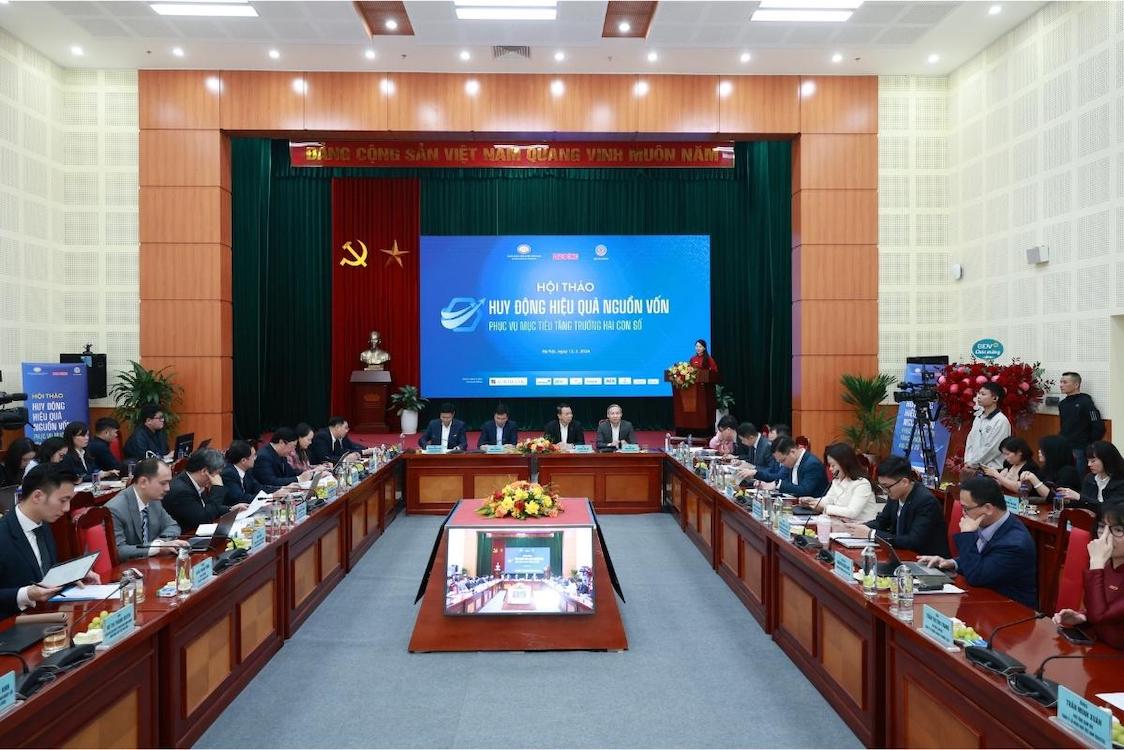
Another aspect that also needs special attention is the requirement to manage the financial - monetary market in the context of stronger capital mobilization and allocation activities. When the capital demand of the economy increases, pressure on the financial market may increase, thereby appearing fluctuations such as exchange rate fluctuations, competition between capital sources or imbalance in resource allocation. Without appropriate regulatory mechanisms, these factors may reduce the efficiency of the capital mobilization process and affect the overall stability of the economy.
Therefore, in the context of the two-digit growth target being set, the capital problem is not simply increasing the scale of capital mobilization but also the issue of organizing and effectively managing the process of mobilizing and allocating resources. This requires close coordination between macroeconomic policies, between different capital sources in the economy as well as between actors participating in the investment and development process.
It can be said that the capital picture in the coming period will become more complex and set higher requirements than before. In those conditions, building an effective, transparent and sustainable mechanism for mobilizing and allocating resources will play a key role in ensuring the economy has sufficient resources to achieve its growth goals in the coming years.
Deepening development orientation and priority investment areas
In the context of the economic growth target being raised to double digits, an important requirement is to shift more strongly to a deep growth model. This is not only to improve the quality of growth but also to help ensure the sustainability of the economy in the long term.
Reality in recent years shows that some new sectors of the economy are growing very rapidly, of which the digital economy is a notable example. According to experts' assessment, in the past three years, the growth of the digital economy has reached about 20% or less per year. This shows that the development potential of new economic models is still very large and may become one of the important drivers of growth in the coming time.
From that perspective, one of the important orientations of investment in the coming period is to focus on improving innovation capacity and promoting the application of technology in the economy. Strengthening access to and application of technology not only helps improve labor productivity but also creates new production and business models, in line with the development trend of the digital economy and the knowledge economy.
Besides innovation and technology, investing in infrastructure system development is also particularly important for in-depth growth. Infrastructure here not only includes hard infrastructure such as transportation, but also includes soft infrastructure of socio-economic life. These can include factors such as human resource quality, policy system, as well as infrastructure platforms associated with information technology and digital economy. When these factors are developed synchronously, the economy will have more favorable conditions to improve productivity and competitiveness.
Another factor emphasized is the development of data systems. In the context of increasingly strong digital transformation, data has become an important resource of the economy. Building and effectively exploiting data systems not only contributes to promoting the digital economy and data economy, but also helps improve the efficiency of management and administration of socio-economic activities.
In addition to technology, infrastructure and data factors, in-depth investment orientation is also associated with the formation of large-scale enterprises and corporations, capable of playing a leading role in the economy. Prioritizing investment and supporting large enterprises and corporations – including state-owned enterprises, multi-ownership enterprises and private enterprises – can contribute to creating new supply chains, while forming growth locomotives for economic sectors.
Large-scale and highly competitive enterprises not only play an important role in expanding markets and enhancing the position of the economy, but also have the ability to spread technology, creating development momentum for smaller enterprises in the value chain. Therefore, the formation and development of leading enterprises is considered one of the important factors to promote the growth model in depth.
Overall, in-depth development in the coming period needs to be implemented through a series of focused investment orientations, including innovation, technology application, infrastructure development, data system building and forming leading enterprises. When these factors are deployed synchronously, the economy will have more favorable conditions to improve growth quality and create new development drivers in the coming period.
Major bottlenecks in the capital problem of the current economy
Although the need to mobilize resources for economic development is increasing, in reality, the mobilization and allocation of capital in the economy is still facing many different bottlenecks. These bottlenecks not only come from businesses but also relate to the structure of the financial market, access to capital as well as the operation of capital channels in the economy.
First of all, one of the major limitations today is that the financial internal strength of the business sector is still relatively weak. Most businesses in the economy are small in scale, have limited financial capacity and mainly operate in the form of small-capital enterprises. This makes the ability to mobilize capital through widespread capital contributions or through the joint-stock company model still limited. When the financial internal strength is not strong enough, businesses also face many difficulties in expanding investment scale and developing production.
In addition, Vietnam's capital market, especially the stock market and corporate bond market, has not yet developed commensurate with the needs of the economy. Although the market has made progress in recent times, the level of market confidence as well as the diversity of investment products is still limited. Meanwhile, a number of major incidents occurring in the market recently have had a certain impact on investor confidence. When investor confidence has not been fully strengthened, the ability to raise capital through the capital market is also limited.
Another bottleneck lies in the ability of businesses to access bank credit capital, especially for the small and medium-sized enterprise sector. The rest faces difficulties due to lack of collateral or not fully meeting the requirements for transparency in financial management and cash flow. This makes it difficult for many businesses, despite having capital needs for production and business activities, to access formal capital sources.
In addition, the allocation of capital flows in the economy is also being influenced by speculative investment trends in some sectors. In the past, investment in real estate or speculative financial activities have attracted a significant amount of social capital. When capital flows tend to shift to speculative activities, resources for the production and business sector may be narrowed. This reduces the overall efficiency of the resource allocation process in the economy.
Another issue is the imbalance of interests between entities participating in the financial-credit system. Relations between lending institutions and borrowing businesses in some cases still lack coordination and harmonious benefit sharing. When this relationship is not built on cooperation and transparency, liquidity risks and credit risks can increase, thereby affecting the stability of the financial system.
The above factors show that the capital problem of the economy is not only a matter of capital mobilization scale but also related to the structure of the financial market, enterprises' access to capital and the efficiency of resource allocation throughout the economy. Removing these bottlenecks is important for improving the efficiency of capital mobilization and use, thereby creating more favorable conditions for economic development in the coming period.
Capital structure for growth and the regulatory role of the State
To ensure resources for the goal of high growth in the coming period, an important requirement is to build a reasonable capital structure, including effective coordination between sectors of the economy. The organization and allocation of resources need to be placed in the overall economic development orientations identified in major resolutions of the Central Government, especially orientations related to the development of the state economy and the private economy.
In the structure of capital sources for growth, resources from the state sector, especially public investment, need to be focused on areas of fundamental significance for the development of the economy. These are infrastructure sectors and key sectors that play a role in ensuring autonomy as well as the long-term development potential of the economy. When state resources are invested in the right direction in these sectors, they not only directly create new production capacity but also play a role in creating a foundation and spreading to attract other sources of social capital.
In addition to the role of the state sector, the private economic sector also needs to be facilitated to participate in the economic development process. Fields in which the private sector is capable of effectively participating need to be expanded to enable this sector to play its role. In many cases, the combination of state and private sector resources through appropriate forms of cooperation can create higher efficiency in mobilizing and using capital for development.
In addition, the orientation of capital sources also needs to be linked to the goal of promoting production and improving the capacity of the economy. Investment resources need to be focused on areas that are capable of creating breakthroughs in technology, development models as well as the productivity of economic sectors. When resources are allocated to areas that are capable of creating high added value and have a widespread impact, the efficiency of social investment will be improved.
In addition to domestic resources, attracting and effectively using foreign direct investment capital is also an important factor in the capital structure for growth. FDI capital not only brings financial resources but can also contribute to promoting technology transfer, market expansion and strengthening the linkage of the economy with the global value chain. At the same time, effectively exploiting the resources of Vietnamese people abroad can also supplement resources for economic development.
In addition, it is necessary to combine domestic and foreign investment. When domestic enterprises gradually expand investment activities to the international market, this not only helps expand market share but also contributes to strengthening supply chains and developing sustainable economic partners. In the context of the global economy increasingly closely linked, the flexible combination of domestic and foreign resources will create more favorable conditions for the development process of the economy.
From the above analysis, it can be seen that the structure of capital sources for growth cannot only rely on a single capital channel but needs a harmonious coordination between many different resources. The regulating and orienting role of the state in this process is very important, especially in identifying priority investment sectors and creating a favorable environment for social capital sources to be mobilized and used effectively. When resources are organized and allocated reasonably, the economy will have better conditions to achieve growth goals in the coming period.
The role of public investment, policy space and resource allocation orientation
In the capital structure for economic growth, public investment continues to play an important role, especially in the early stages of the implementation of the double-digit growth target. This is one of the resources that can be prepared and deployed relatively quickly, and can also create direct impacts on the socio-economic development process.
In the context of strongly increasing capital demand for development investment, promoting public investment can create important drivers for growth. Infrastructure projects and large-scale state investment programs have the potential to create spillover effects on many sectors of the economy, thereby promoting production and business activities and creating more development space for the private sector.
However, reality over the years shows that the progress of public investment implementation still has certain limitations. One of the issues often mentioned is the slow disbursement of public investment capital, even many projects tend to concentrate disbursement in the late stage of the year. This situation not only reduces the efficiency of the investment process but can also create pressure on project implementation progress, thereby increasing the risk of errors or inefficiency in the implementation process.
Therefore, in addition to increasing the scale of public investment and orienting priority areas correctly, improving the efficiency of public investment organization and management is an important requirement. Management procedures and processes need to be simplified, while promoting digitization in the process of project management and implementation. This is to create conditions for projects to be implemented right from the beginning of the year, instead of focusing disbursement in the last months of the year as before.
Along with that, clarifying the responsibilities of relevant agencies and organizations in the project implementation process is also important. When the responsibilities of each subject are clearly defined, the implementation process will become more transparent and effective. In addition, the allocation of capital sources also needs to be carried out flexibly to ensure that projects have sufficient resources to implement on schedule, while limiting the situation of capital being backlogged or prolonged in the implementation process.
Another issue that needs to be considered is the room for macroeconomic policies, especially credit and public investment policies. According to assessments by international organizations, the room for monetary policy, especially credit, is currently relatively limited when the total outstanding credit balance compared to Vietnam's GDP is at a high level compared to many economies. This shows that the continued expansion of credit needs to be carefully considered to avoid risks such as increasing bad debts or forming asset bubbles.
Regarding public investment, although it has been strengthened in the past, the expansion of investment scale also needs to be linked to the ability to balance the budget and the efficiency of capital use. In the context that budget revenue sources are under great pressure and fiscal balances need to be ensured, excessively increasing public investment can create certain risks to macroeconomic stability.
Therefore, instead of just focusing on expanding the scale of capital sources, the focus of policies in the coming period needs to be more directed towards improving the efficiency of using investment capital. This is especially important for public investment, because the efficiency of investment projects not only affects the efficiency of using state resources but also affects the overall efficiency of the entire economy.
In the process of allocating resources for development, some areas have been identified as important priorities. These include infrastructure development, technology promotion, supporting export production, supporting the small and medium-sized enterprise sector, promoting production to replace imports and developing new economic models. These are considered areas capable of creating strong spillover effects on the economy, while contributing to improving competitiveness and growth sustainability.
Overall, in the context of the economic growth target being raised to a higher level, the mobilization and effective use of investment resources becomes a key factor. Public investment, along with other resources of the economy, needs to be organized and allocated reasonably to ensure not only achieving growth targets but also maintaining the stability and sustainability of the economy in the long term.


