
In that flow, Gia Lai is facing a historical development turning point. As "bottlenecks" in transport infrastructure are gradually removed, a new development space is opening up, positioning Gia Lai as the focal point of convergence of industry, logistics and important exports of the region.
Transport infrastructure – strategic lever for the Central Highlands
One of the biggest breakthroughs today is the Pleiku - Quy Nhon expressway, a strategic connecting axis between the Central Highlands and the South Central Coast region. When completed, this expressway will not only shorten travel time, reduce logistics costs, but also restructure the entire production - export value chain of Gia Lai and the surrounding area.
From a locality "far from seaports", Gia Lai is getting closer than ever to logistics centers, deep-water seaports, and large-scale industrial parks. This is a prerequisite for high-tech agriculture, deep processing industry, renewable energy and supporting industries of the Central Highlands to enter a new, sustainable and high value-added development stage.
Synchronous planning – creating an inter-regional development axis
According to the National Overall Plan and Regional Plan, the development orientation is no longer limited to administrative boundaries, but strongly shifts to a development mindset according to axis and economic corridor. In which, the old Gia Lai - Binh Dinh axis is identified as an important corridor, connecting the highlands with the sea, linking production with logistics, and linking industry with export.
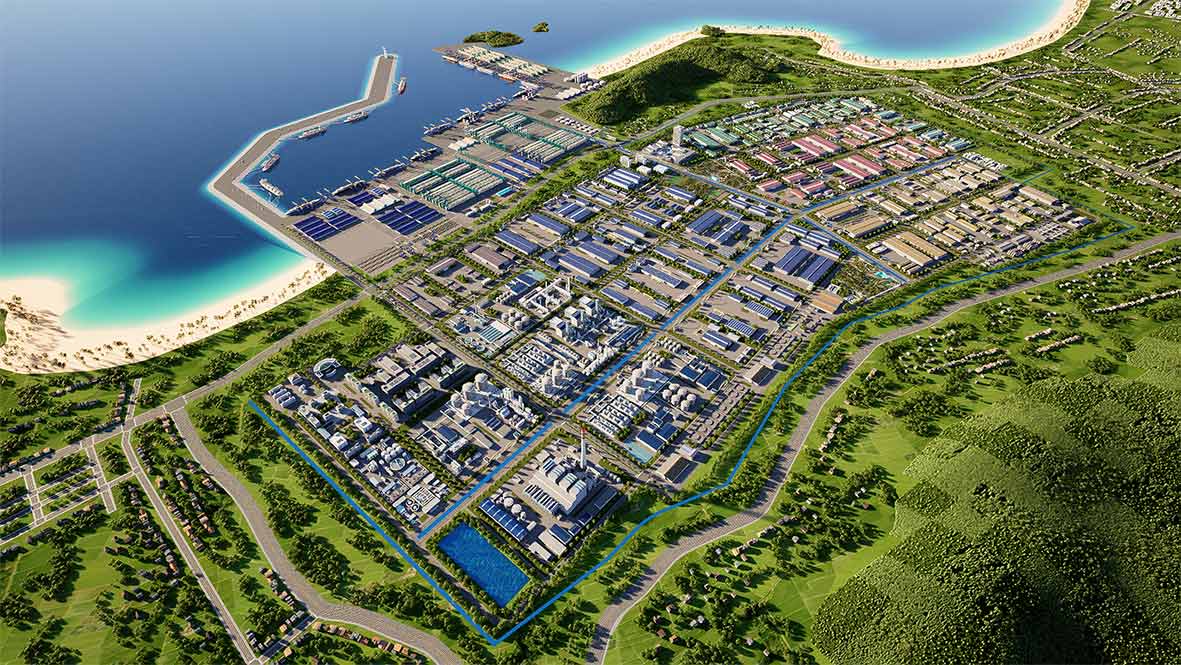
In the downstream area of this development axis, the Phu My Dong area (old Binh Dinh) is emerging as a strategic convergence point: the intersection of National Highway 1A, National Highway 19C, the North-South expressway in the East, the Pleiku - Quy Nhon expressway, along with the planning of seaports, industrial parks and logistics centers.
This synchronization in planning and infrastructure creates conditions for Gia Lai not only to "reach out to the sea" with shortened transport routes, but also to truly "reach out to the sea" with industrial thinking and proactively integrate into the global value chain.
Industry as a pillar – elevating Gia Lai's position
In the new context, industrial development is no longer an option, but an inevitable requirement for Gia Lai to break through. The processing industry of agricultural and forestry products, energy, supporting industries and logistics need to be placed at the center of the long-term development strategy.
The formation and development of industrial parks, seaports, and logistics centers in Phu My Dong will play a "supporting" role, helping Gia Lai:
- Strongly reduce logistics costs;
- Attract investment in deep processing;
- Expanding export markets;
- Deeper participation in national and global supply chains.
This is also a vivid proof of the policy of "infrastructure ahead - industry as pillar - supporting services behind", in line with the spirit of the Party's resolutions and the sustainable development orientation of the country.
From policy to reality
Gia Lai is facing a historic opportunity to transform from a "raw material area" to a modern production - deep processing - export area, closely linked to the industrial - seaport - logistics ecosystem of the South Central Coast region.
The issue raised is not only infrastructure investment, but also synchronous development thinking, close links between localities, maximizing the comparative advantages of each region, in which Phu My plays the role of "gateway" to liberate production capacity, while Gia Lai is a strategic "backyard" with abundant resources. The synergy between the system of industrial parks, modern seaports and continuous transport infrastructure is the key link helping Gia Lai break away from the crude export thinking and rise to become a deep processing center of the region.
When infrastructure has opened the way, planning has oriented, then industry is the pillar for Gia Lai to rise up, contributing more and more to the overall growth of the country, true to the spirit of "fast but sustainable development" that the Party and State have identified.
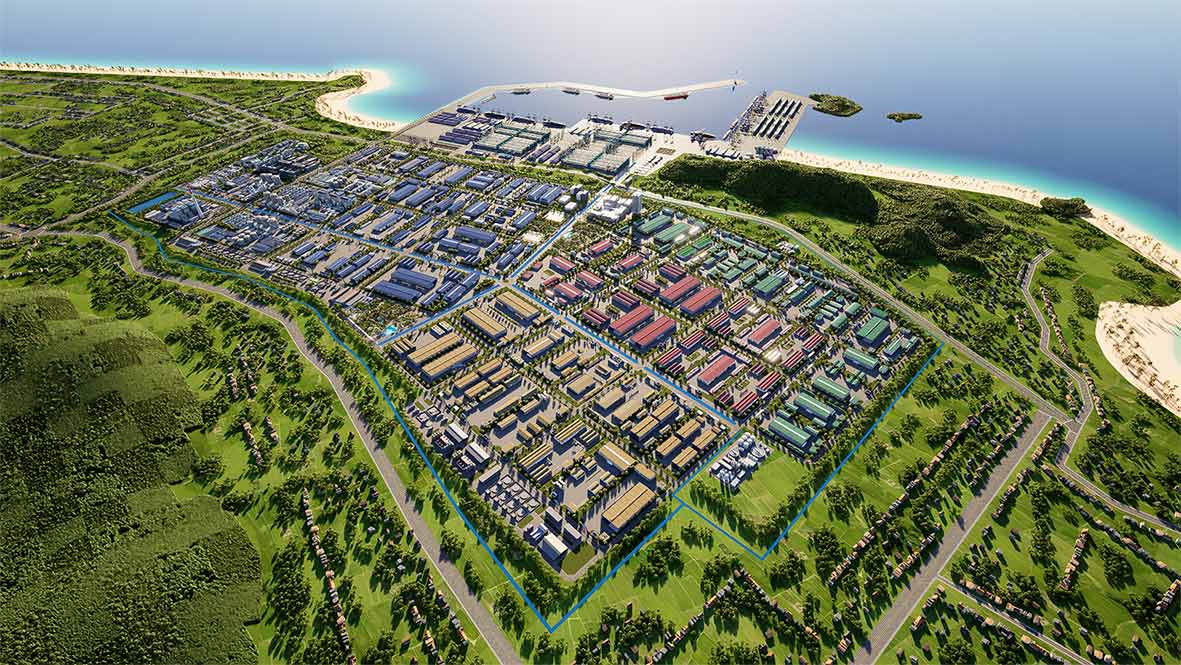
The Phu My Deep-Water Port - Logistics - Industrial Park Ecosystem in Phu My Dong commune, Gia Lai province, is positioned as an integrated industrial - logistics infrastructure complex, playing the role of a strategic transshipment hub of the South Central Coast and Central Highlands regions. With the advantage of a deep-water port, direct connection to the inter-regional transportation system and well-planned industrial land fund, the project cluster not only meets large-scale production - import and export needs but also contributes to completing the supply chain, reducing logistics costs, creating motivation to attract investment and promoting sustainable economic growth for the entire region.


