At the end of 2025, Lao Dong Newspaper published a series of articles "Exposing tax evasion tricks, need to soon close loopholes to avoid revenue loss". The series of articles reflects the reality that the proportion of businesses reporting losses is high and has lasted for many years, in which more than half of FDI businesses operating in Vietnam declared losses. Through analyzing data and financial data of some businesses, the series of articles points out unusual signs such as prolonged losses but still expanding in scale, revenue increases but "thin" profits, related party transaction costs and financial costs increase sharply.
The series of articles does not only stop at reflecting phenomena but also goes deep into pointing out "loopholes" in policies, limitations in comparative data, linked transaction analysis capacity and inter-sectoral coordination mechanisms, to have solutions to combat tax revenue loss.
After being published, the articles received widespread attention among experts, management agencies and the business community; many analysis contents were exchanged at policy forums and in working sessions on anti-transfer pricing and linked transaction management.
Lao Dong Newspaper also received feedback from the Ministry of Finance and local tax management agencies to review the current tax management mechanism for businesses, not only in the legal framework but also in the enforcement capacity and monitoring tools.
Upgrading the legal framework against transfer pricing
Talking to Lao Dong Newspaper, the Ministry of Finance said that the budget revenue in 2025 of the FDI enterprise sector reached 323,460 billion VND, accounting for 12.1% of the total budget revenue in 2025, with a positive trend and positive growth, making an important contribution to the country's budget revenue. FDI enterprises not only play a role as a channel for mobilizing foreign direct investment to promote economic development but also hold a significant position in the budget revenue structure in many key localities.
Regarding investment incentives and policies to attract foreign investment capital, according to the current Investment Law, incentive policies are applied generally, there is no discrimination between economic sectors, between domestic enterprises and enterprises with foreign investment capital.
However, there are still many challenges in ensuring that the FDI sector properly complies with tax obligations. According to the Ministry of Finance, transfer pricing activities are not only a challenge for developing countries but also a challenge for developed countries. In recent years, many countries have implemented legalization solutions to combat tax avoidance, improve the efficiency of transfer pricing management as recommended within the framework of the Project on combating profit transfer and tax base erosion (BEPS). In Vietnam, Decree 132/2020/ND-CP (amended and supplemented in Decree 20/2025/ND-CP) is a legal basis to ensure consistency in the legal system, contributing to overcoming shortcomings in the management of related party businesses.
Although tax management policies for businesses with related party transactions are increasingly being improved, the Ministry of Finance acknowledges that the acts of arranging transactions of corporations are becoming increasingly sophisticated and complex in order to avoid corporate income tax, posing a major challenge for tax management.
From the perspective of implementation, there are still some limitations. The team of tax officials working in management and inspection of transfer pricing is still lacking in both quantity and in-depth analysis skills. Meanwhile, businesses, especially FDI businesses, are often equipped with professional financial, accounting, and legal teams and have the support of domestic and foreign consulting organizations, leading to a significant gap in capacity between management agencies and taxpayers.
Differences in tax policies between countries, especially differences in corporate income tax rates, are fundamental causes leading to transfer pricing and tax avoidance. In addition, regulations on tax inspection and examination in the field of transfer pricing are still time-bound, not really suitable for the complexity and large scale of inspections for related party businesses.
Information and data limitations are also major barriers in tax management for related party transactions. The lack of reliable information sources on cross-border transactions and financial data of parent companies abroad reduces the effectiveness of risk analysis and transfer pricing control.
According to the Ministry of Finance, the Coca-Cola Vietnam case, as well as some cases that have been handled in the past, are typical cases showing the challenges in tax management for multinational enterprises, and at the same time provide many lessons for policy improvement and management efficiency improvement.
The Ministry of Finance determines that in the coming time, it will continue to improve the legal framework on tax management for related party transactions; strengthen risk management and thematic inspection for enterprises with high transfer pricing risks; promote a prior agreement mechanism on the method of determining taxable prices (APA); improve the professional capacity of tax authorities and strengthen cooperation and international information exchange.
The consistent viewpoint of the Ministry of Finance is: "Resolutely combat transfer pricing, combat tax base erosion, ensure a transparent, stable and fair investment environment, and create conditions for businesses to comply with the law and develop sustainably in Vietnam".
Local experience
According to Mr. Nguyen Tien Truong - Chief Tax Officer of Hai Phong City, in 2025, there are 1,768 valid foreign investment projects in the city, with a total registered capital of 50.79 billion USD. The production and business activities of the FDI enterprise sector have had many positive changes, making important contributions to the socio-economic growth of Hai Phong as well as the whole country.
However, besides the achieved results, there are still many FDI enterprises that declare losses for many consecutive years, even some enterprises have never incurred corporate income tax obligations since their establishment, although they still expand production and business scale. These are major tax risks, enterprises use transfer pricing tools, creating a situation of fake losses - real profits causing state budget revenue loss" - Head of Hai Phong City Tax Department assessed.
Regarding solutions, the leaders of Hai Phong City Tax Department said that the unit has proactively implemented many solutions in anti-transfer pricing work. The focus is on building and implementing specialized management topics for businesses with related party transactions, including issuing plans to strengthen tax management for businesses with related party transactions in the area. The implementation is carried out methodically, with focus and key points, in order to improve tax management efficiency and limit budget revenue loss.
In parallel with that, the City Tax Department focuses on improving the quality of human resources for tax inspection and examination for enterprises with related party transactions; and at the same time promote support and guidance for taxpayers to properly implement tax management regulations, especially regulations related to determining related party transaction prices.
From practical implementation, Hai Phong City Tax Department draws three lessons to avoid tax revenue loss:
First, develop a clear plan and thematic program, specifically defining the goals, contents, subjects, implementation time and responsibilities of each department; ensure a unified management process, from risk assessment, subject selection to inspection, examination and result evaluation.
Second, focus on building a team of in-depth officials in joint transaction management, forming specialized groups, combining experienced officials and young officials to sustainably improve professional capacity.
Third, strengthen support and guidance for businesses to properly implement tax regulations; and at the same time continue to invest and improve databases, apply information technology, exploit industry data and comparative data to improve the efficiency of risk management in the transfer pricing sector.
Attracting investment goes hand in hand with the requirement of legal compliance

According to Dr. Vo Tri Thanh (photo) - former Deputy Director of the Central Institute for Economic Management Research, Director of the Institute for Brand and Competitiveness Strategy Research, the fact that more than half of FDI enterprises report losses needs to be viewed comprehensively.
This can be seen as a noteworthy paradox: Although most businesses report losses, Vietnam continues to be an attractive investment destination, FDI enterprises do not withdraw but expand their scale, increase capital and make long-term investment commitments. This reflects Vietnam's efforts to improve the investment environment, as well as showing the attractiveness and competitiveness of the economy in the region.
This phenomenon shows that foreign investors still appreciate the business environment, stability and prospects of the Vietnamese market compared to many other countries. However, on the contrary, it is also necessary to recognize that the prolonged loss reporting situation is related to many issues in the behavior, management and supervision of the FDI enterprise sector.
One of the major challenges is the risk of transfer pricing. Vietnam has taken important steps to control this issue, including participating in the global minimum tax mechanism to limit profit transfer behavior of multinational corporations. In parallel with that, Vietnam has also established investment support funds to maintain attractiveness, ensuring harmony between tax evasion prevention requirements and the goal of attracting high-quality FDI.
Dr. Vo Tri Thanh said that in the context of increasingly fierce competition to attract global capital flows, Vietnam not only needs technical measures on taxes but also needs to continue to upgrade the investment environment, improve institutions, and operate in accordance with international standards and signed commitments. This requires a cautious, flexible and consistent approach.
In addition, it is necessary to build a complete, transparent data system and have a more balanced communication method about the FDI sector. Communication not only reflects the contribution and spreading role of this sector to the economy, but also must point out inappropriate points in business behavior, especially signs of transfer pricing and tax evasion.
When mentioning some typical cases that have been sanctioned in the past, Dr. Vo Tri Thanh assessed that strict, transparent, legally regulated and in accordance with international standards handling is necessary. This clearly shows the message that Vietnam always creates conditions for investors, but at the same time requires businesses to be "decent players", comply with the law and have the responsibility to contribute commensurately to the economy where they operate.
Building a database to combat transfer pricing
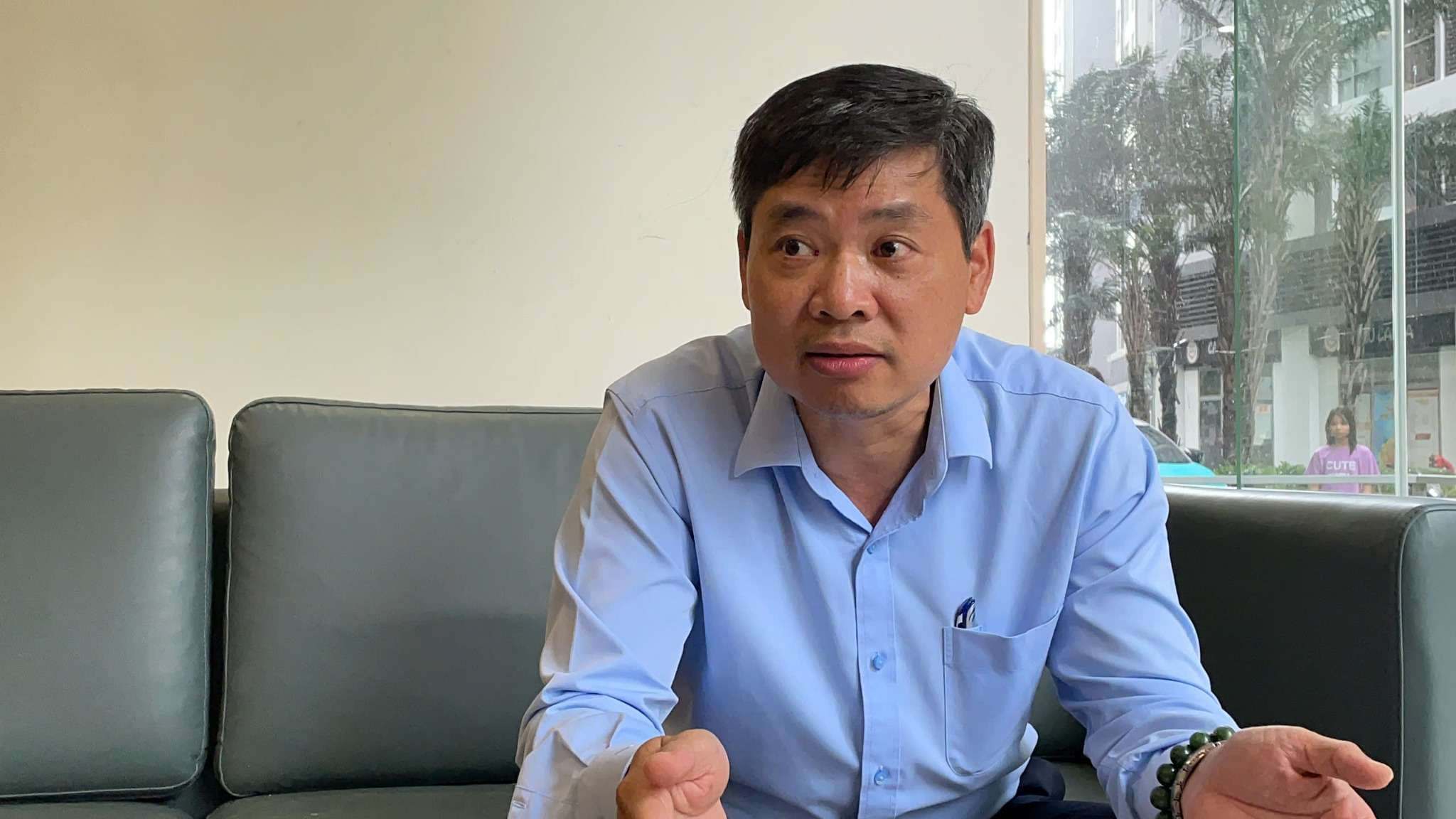
Regarding solutions to control and limit transfer pricing, according to Assoc. Prof. Dr. Phan Huu Nghi - Deputy Director of the Institute of Banking - Finance, National Economics University, it is necessary to approach comprehensively, based on seven key groups of solutions.
First, apply the principle of independent transaction as a consistent foundation. According to Assoc. Prof. Dr. Phan Huu Nghi, the core solution in transfer pricing control must be based on the principle of independent transaction. That is, when two enterprises do not have a linkage relationship, the buying - selling price between them is considered the market price. On that basis, when transactions arise between related parties, the management agency will compare with independent transactions to determine a reasonable price level.
Second, apply the price comparison method when there are market data. When there is a comparable independent transaction, the tax authority will use the price comparison method. If the same type of goods is sold by a business to an associated partner at a price significantly lower than the price sold to an independent partner, then that difference will be adjusted. However, this method is only effective when there are sufficient comparative data.
Third, apply the resale price method in case there is no direct comparative price. When a business sells goods to an intermediary unit and then this unit sells them to the market, the management agency can base on the final selling price, minus the reasonable profit margin of the commercial stage, to determine the initial reasonable purchase price.
Fourth, use the cost addition method to determine the minimum price. In case the above two methods cannot be applied, the tax authority will consider the entire cost of product formation, including direct costs, indirect costs and management costs, and then add a reasonable profit level. If the business declares a selling price lower than this level, it is considered inappropriate. However, this method requires detailed accounting data and in-depth analysis of the business's cost structure.
Fifth, apply the method of profit distribution and profit margin comparison. When the value chain is complex and the above methods are not feasible, the management agency will analyze the entire value chain, from production to consumption, to allocate corresponding profits to each stage. At the same time, the profit margin of the enterprise is compared with similar enterprises in the same industry to determine a reasonable profit level. This is a method that requires large data and high analytical capacity.
Sixth, strengthen the recognition of substantive linkage relationships. According to Assoc. Prof. Dr. Phan Huu Nghi, linkage relationships are not only reflected in capital ownership ratio but also in control rights, loan-lending relationships, guarantees, exclusive supply, or other contract bindings. Therefore, management agencies need to look at the nature of transactions, not just rely on legal forms, to correctly identify linkage relationships and scope of regulation.
Seventh, shift from handling thinking to early prevention and warning. The final orientation solution is to shift from the approach of "handling when it has occurred" to "preventing early". Accordingly, building a database, monitoring risk indicators, and identifying typical transfer pricing models will help management agencies detect risks early, reduce dependence on prolonged inspections, and limit disputes. This is also an approach consistent with international practices and modern tax management trends.
Vietnam needs a strong enough investment incentive system
Regarding solutions to reform the investment incentive system in parallel with ensuring budget discipline, according to the viewpoint of the Foreign Investment Agency, in the short term, it is necessary to focus on reviewing and perfecting the tax law system and tax incentive policies, building a specific and detailed roadmap for applying the global minimum tax based on international experience and in accordance with Vietnamese practice.
In addition, it is necessary to soon issue a Decree on the establishment, management and use of the Investment Support Fund to ensure the competitiveness and attractiveness of the Vietnamese investment environment to retain and create peace of mind for existing and new strategic investors; at the same time, selectively attract investment in projects with advanced technology, new technology, high technology, clean technology, modern management, with high added value, with spillover effects, connecting global production and supply chains.
Promptly review, amend, and supplement to submit to competent authorities for promulgation regulations on minimum domestic supplementary tax meeting standards to protect Vietnam's right to tax, prevent tax flows to other countries and supplement revenue sources for the State budget, create capital for infrastructure investment, and create a more attractive environment for foreign investors.
At the same time, promote propaganda that Vietnam is a potential, safe and attractive investment destination with a system of superior investment incentive policies, competitive compared to countries in the region and in the world.
In the long term, the Foreign Investment Agency believes that it is necessary to improve the incentive system in a selective, stable and transparent direction, instead of spreading out. The focus is on reforming tax policies according to international standards, combining cost-based support forms such as subsidies, tax refunds, investment support for high-tech projects, innovation and spillover value. At the same time, it is necessary to adjust incentive policies in the direction of focusing on key areas, associated with actual efficiency, instead of mass expansion. In addition, improving infrastructure, ensuring stable energy sources, perfecting the mechanism to support high-quality labor and creating favorable procedures, credit is also identified as important pillars to enhance the attractiveness and sustainability of the investment environment.